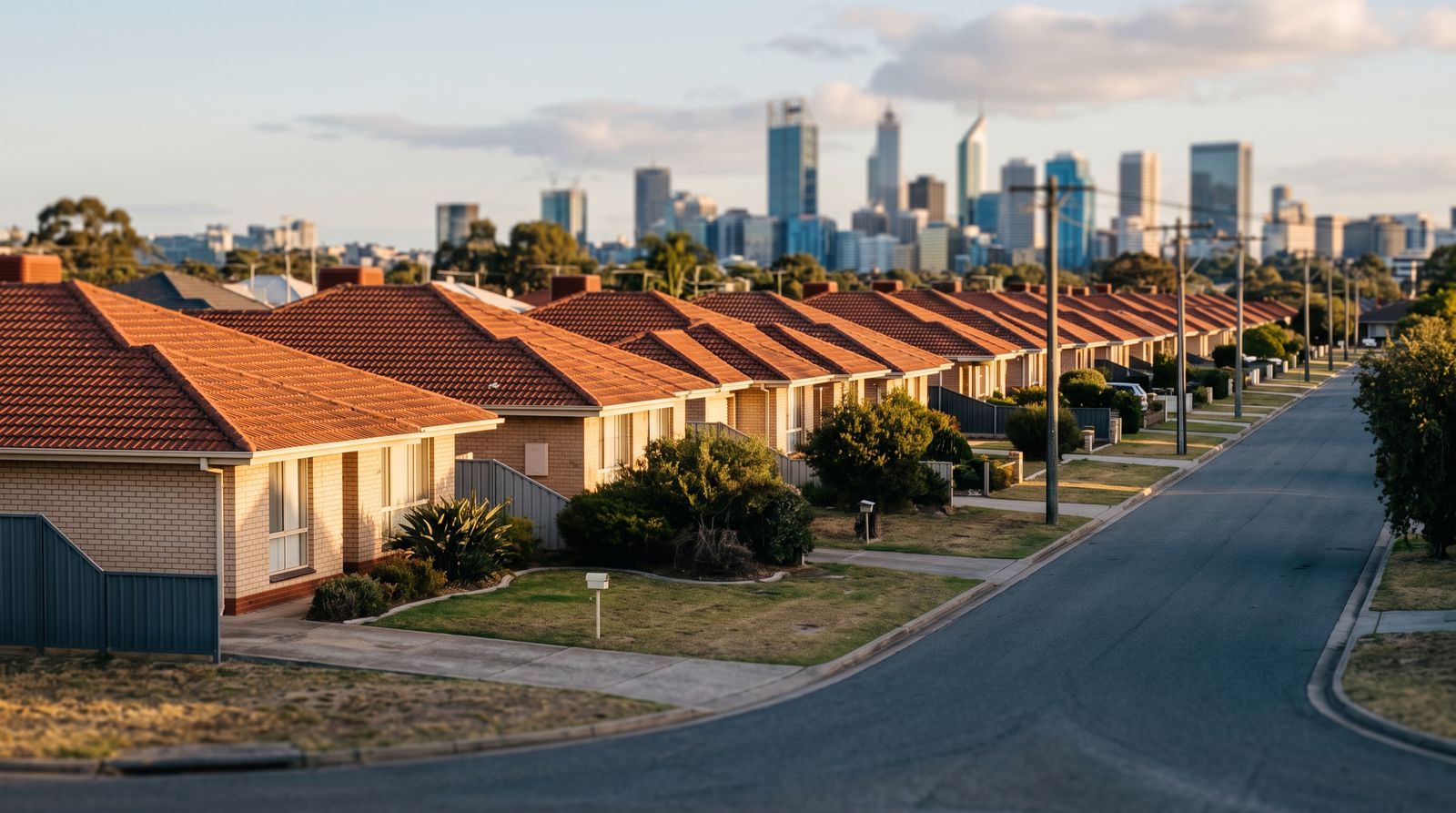
On Friday in Sydney, Blackstone announced that funds managed by three of its arms — Credit & Insurance, Tactical Opportunities, and Real Estate Debt Strategies — had signed a definitive agreement covering HSBC’s A$36 billion (US$25 billion) Australian home loan portfolio. The buyer is a vehicle called Virgo BidCo, wholly owned by funds managed by Blackstone affiliates. Completion is expected in the first half of 2027, subject to regulatory approval, with the final price adjusted at closing for new originations.
Blackstone described it as the largest home loan portfolio transaction globally. That claim is doing less work than the sentence Bloomberg published today, citing the Australian Financial Review: ANZ and National Australia Bank are among the lenders bankrolling it, part of a debt stack that also includes foreign banks. Blackstone has reportedly arranged at least A$30 billion in senior debt through a privately offered residential mortgage-backed securitisation.
Read that back slowly. Two of Australia’s big four banks are financing roughly 83 cents on the dollar of a mortgage book that a bank used to own outright.
Our take: This is not a bank selling loans. It is retail banking being taken apart into three separate businesses owned by three separate companies. HSBC originated the loans. Blackstone’s funds now own the credit risk. Pepper Money, a non-bank lender founded in 2000, will service the borrowers. And the money to hold the whole thing is coming, in large part, from the same domestic banking system that was supposedly stepping back. Nothing about the risk left Australia. It changed which balance sheet reports it — and which regulator sees it. A A$36 billion book inside a licensed bank is examined by APRA under capital rules written after 2008. The same book inside Virgo BidCo, funded by a private RMBS, is examined by the people who bought the paper.
Why HSBC is walking
The sale is the loudest move yet in the restructuring Georges Elhedery has been running since he took over as HSBC group chief executive in September 2024 — a reorganisation along East-West lines that has already meant exits from sub-scale investment banking in the US. Australian retail was capital-intensive, sub-scale, and competing against four entrenched domestic incumbents. HSBC says the disposal will produce only “an immaterial loss” for the group.
The rest of the Australian retail franchise goes too. Transaction accounts, savings and term deposits, credit cards, foreign currency accounts, and wealth and investment products all close in phases over the next 18 months. What HSBC keeps is the profitable end: corporate and institutional banking, private banking, and asset management, still under the HSBC brand.
That is the trade every large bank is now being offered. Keep the fee businesses. Sell the balance sheet to someone who does not have to hold capital against it.
Who is actually buying
Blackstone manages over $1.3 trillion in assets and has been explicit that international expansion is the priority for its private credit business. Dan Leiter, who heads international for Blackstone Credit & Insurance, framed the deal as “a testament to the power of our franchise and our conviction in the growing opportunities in credit across Asia.” Asset-based finance — consumer loans, mortgages, receivables — is the fastest-moving front in private credit, and a prime Australian mortgage book is about the cleanest collateral on the menu.
For borrowers, the visible change is a new name on the statement. Pepper Money, which has originated and serviced third-party loans for more than 26 years, becomes the loan manager at completion and will advertise roles that current HSBC Australia staff can apply for. Blackstone says customers will keep “competitively priced loans.” That promise is a commercial intention, not a contractual rate lock, and it is worth watching against a market where the price of a mortgage is doing strange things on both sides of the Pacific.
What to watch
- The regulator’s posture. APRA has to bless a transfer that moves A$36 billion of housing credit outside the prudential perimeter while leaving two of the banks it supervises funding the buyer. Any conditions attached are the real news.
- The securitisation terms. At least A$30 billion of senior debt on a A$36 billion book is thin equity by bank standards. Advance rates and spreads, when they surface, price how safe this paper is actually considered.
- Whether the copycats arrive. If this closes cleanly, every mid-tier bank in Europe and Asia with a sub-scale consumer book has a template and a phone number.
- Servicing quality through transition. Portfolio transfers go wrong at the servicing layer, not the credit layer. Arrears handling in 2027 is the number that matters.
- The 18-month wind-down. Deposits, cards and FX accounts closing in phases is a lot of customer disruption running alongside a record-sized handover.
The largest home loan trade in history did not involve a single bank buying another bank. It involved a fund buying the loans, a non-bank servicing them, and two banks lending against them. That is what a mortgage market looks like when the balance sheet becomes the product.