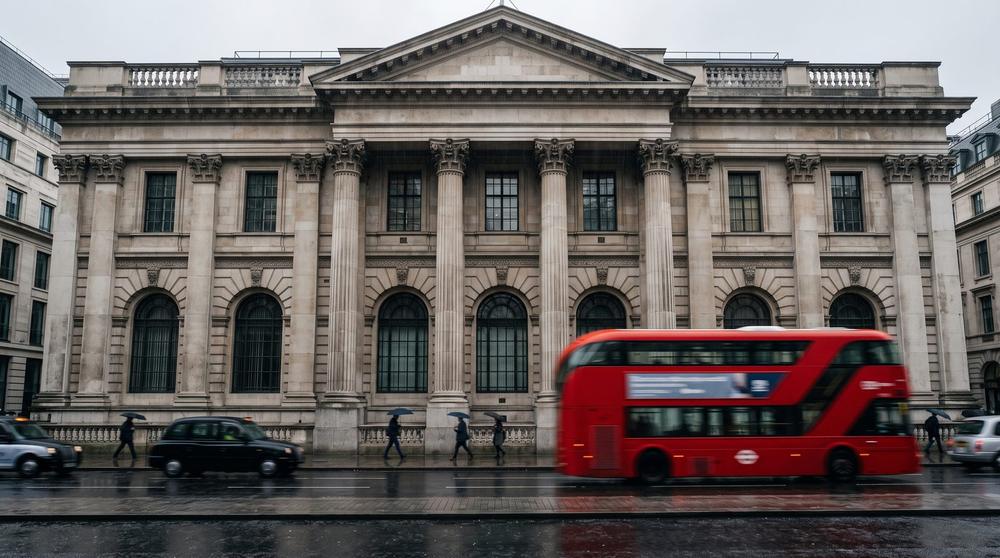
The Bank of England held Bank Rate at 3.75% this morning, 6–3, with Megan Greene, Catherine Mann and Huw Pill voting again for an immediate quarter-point rise to 4% — the identical split to 30 July. A day after the Fed hiked for the first time since 2023, that reads as divergence. It isn't the story.
The story is the other vote, which was 9–0. The Committee signed off a long-term plan to wind its gilt holdings down to zero for monetary policy purposes — and paused all sales until April while it consults the Treasury on selling gilts directly to the Debt Management Office at market prices, instead of running its own auctions.
Ten-year gilt yields had climbed to 5.294% on Wednesday, the highest since June 2008. They fell on the announcement. Sterling weakened: markets had priced hawkish, and got a hold plus a bond-market rescue dressed as housekeeping.
Our take: A central bank that stops auctioning long bonds while long yields sit at an 18-year high is telling you something the rate decision doesn't. The Bank is no longer confident it can sell duration into this market without moving the price against the Chancellor. Selling straight to the DMO removes the auction — and with it the public scoreboard of how badly each sale goes. Cleaner plumbing, less information. For anyone with a UK cost of capital, the rate held but the long end just got a new, quieter buyer of last resort.
The arithmetic of the unwind
Of the £488bn of gilts still on the books, the Bank has split the pile three ways: £120bn maturing in 2049 or later stays permanently, backing banknotes; £222bn maturing by 2034 is simply allowed to run off; the remaining £146bn gets sold. That works out at roughly £20bn a year of active sales and about £46bn a year of total unwind including maturities.
Compare that with the £70bn shifted over the past twelve months. This is a deceleration of roughly a third, announced on the day the Fed told markets it has more tightening to do. Two central banks, same week, opposite directions on the bit that actually sets long borrowing costs.
Inflation is the hawks' case, and it is getting stronger
UK CPI rose to 3.1% in August and the Bank says it is likely to climb further over coming quarters. The Committee judged the risks to inflation tilted further to the upside than at the July report, and said it stands ready to act to keep inflation on track for 2%. That is a hold with a warning label attached, which is how you get three dissents twice in a row.
November is where it gets tested. If inflation keeps drifting up and the hawks pick up a fourth vote, the Bank ends up hiking into a long end it has just admitted it cannot sell into freely — the same squeeze the US thirty-year auction exposed from the supply side.
What to watch
- The DMO consultation. Direct sales at market prices sound technical. They change who absorbs duration and how visibly. Terms matter more than the headline.
- The fourth dissenter. Greene, Mann and Pill have been consistent. A fourth name in November flips the balance.
- Gilt yields into April. With active sales paused, the next six months are a clean test of whether 5%+ yields were about supply or about fiscal credibility.
- Sterling. Higher yields have stopped supporting the pound. If that decoupling holds, it is a signal about imported inflation, not a currency trade.
One decision, two messages. The rate said patience. The bond plan said something closer to caution — and the bond plan was unanimous.