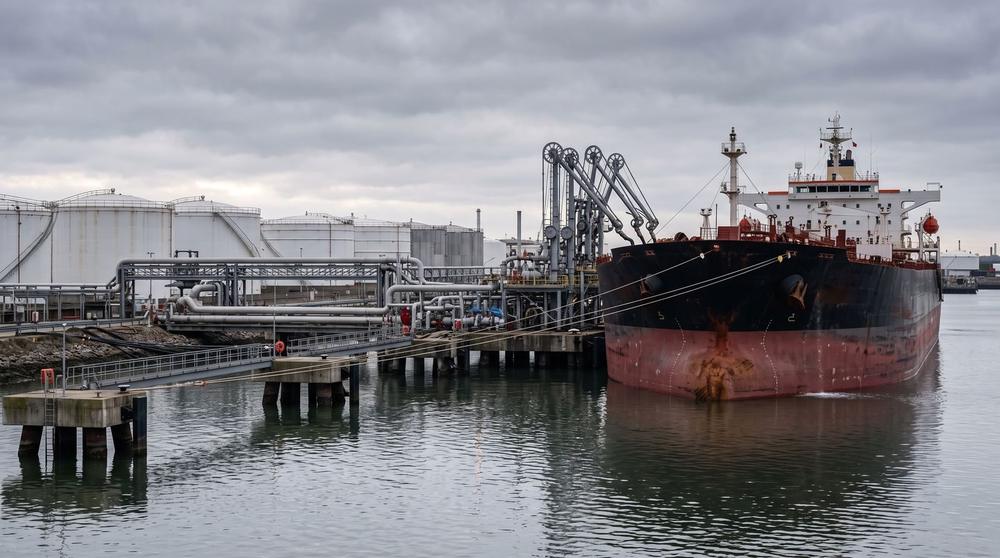
Brent fell about 2% in European hours on Monday, to $107.57 a barrel by 0619 GMT, after settling on Friday at its highest level since 19 May and briefly trading at $110. WTI fell 1.9% to $99.46 over the same stretch. By mid-morning both had clawed part of it back — Brent at $108.52, down 1.2%, and WTI at $101.28, down 13 cents — which tells you how thin the conviction behind the move was.
The trigger was American. President Trump signed an executive order on Friday waiving certain sanctions and tariffs on Russia imposed under the Graham Act. It follows an arrangement with Vladimir Putin to export Russian diesel to the United States and elsewhere, starting at roughly 2.3 million barrels this month and rising to about 7.6 million barrels a month, according to Reuters. Secretary of State Marco Rubio said the administration would take up to 60 days to assess what the sanctions and tariffs were doing to the global economy.
Note what the waiver is and is not. It adds refined product — diesel — to a market whose problem this month is crude leaving the Gulf. Kpler put Gulf crude flows at a seven-day average of about 8.5 million barrels a day last week, against more than 20 million the week before, with at least 10 confirmed incidents involving commercial vessels in the same period.
Our take: This is a political supply announcement meeting a physical supply problem, and they are not the same market. Diesel barrels arriving in November do nothing about tankers that will not sail through Hormuz in October, which is why a 2% drop was half given back inside four hours. The read-across for anyone modelling input costs: the crude curve is now carrying a policy premium that can be waived by executive order and a physical discount that cannot. Hedge the second one. The first is a headline risk, in both directions, with a 3 November date on it.
The analysts are all pointing at the same calendar
UBS’s Giovanni Staunovo noted that continuing strikes on vessels in the Strait and flows still below pre-conflict levels are holding prices up. SEB’s Bjarne Schieldrop argued the recent recovery in Hormuz export volumes may not last, on the view that Iran escalates ahead of the 3 November US midterms. Priyanka Sachdeva of Phillip Nova was blunter about Washington’s side of it: “Trump’s move looks like another desperate attempt to keep oil prices in check ahead of the US midterm elections,” adding that it does little about the physical disruption at Hormuz.
DBS expects crude to trade in a $100–$110 band into the midterms, which is both a forecast and an admission that nobody expects either side of this — the waiver or the Strait — to resolve before the vote.
Why a two-dollar move matters more than usual this week
Oil above $100 was the macro story of last week even as the equity damage got blamed on semiconductors. Wholesale prices rose 6.3% in the most recent print, the Fed meets this month, and crude is the input that feeds the inflation path the fastest. A Brent handle that starts with a 10 rather than an 11 going into a Fed week is worth more to rate expectations than it looks on the chart.
It is also the second time in four sessions that the oil market has been moved by an announcement from Washington rather than a barrel. Last Thursday it was 17 million barrels offered from the Strategic Petroleum Reserve. Friday it was a sanctions waiver. Neither changed what is happening to ships.
What to watch
- Whether the diesel actually ships. The 2.3-million-barrel figure for this month is the only near-term test of whether the waiver is a supply event or a press release.
- Rubio’s 60-day clock. It expires well after the midterms, which is the point. A reimposition inside that window would be the genuine surprise.
- Kpler’s weekly Gulf flow number. It went from 20 million barrels a day to 8.5 million in a week. That series, not the headline price, is the supply signal.
- Energy’s contribution to this week’s earnings. With Meta, Tesla and Netflix all reporting, a falling crude price quietly helps every industrial guide issued after Wednesday.