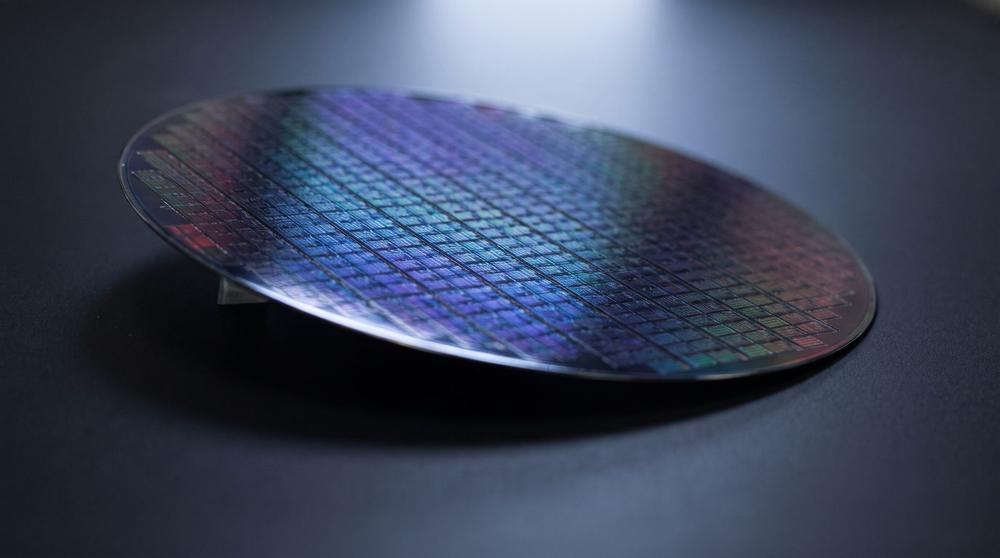
The Philadelphia Semiconductor Index broke an eight-session losing streak on Monday — its longest since October 2008. Over those eight sessions, from 7 to 16 October, the index fell 15.7% to close Friday at 11,137.29, capping a week down 11.4% that erased close to $2trn of combined market value. Micron alone lost 14.6% across the week. On Monday the chip ETFs were up roughly 3%, the Nasdaq led the major indexes higher, and the Dow closed lower.
The proximate catalyst was one sell-side note. JPMorgan’s Harlan Sur upgraded Intel from Underweight to Neutral, describing the risk-reward as much more balanced after a fall of roughly 36% from the stock’s June peak.
The price target attached to that upgrade is $85. Intel closed Friday at $89.85.
Our take: Read those two numbers together, because they are the session in miniature. An upgrade is not a buy, and a $85 target against an $89.85 close means the analyst who just raised his rating still models the stock below where it was already trading. The index rallied on it regardless — which is what a bounce in the most oversold names looks like, not a resolution. And the thing that caused the selloff did not get resolved. Across eight sessions the market repriced two questions: whether AI capital spending earns its return, and what it costs to borrow for it. Neither was answered on Monday. CoreWeave’s bonds have been yielding around 15% and its credit default swaps hit distress levels last week; Goldman Sachs upgraded the equity anyway on Monday, which mostly tells you the credit desks and the equity desks are looking at the same company and disagreeing. Meanwhile the Dow finished down on a day the Nasdaq rose. A genuine risk-on session does not have that shape. This was money going back into the eight-day losers, and it needs a fact to stand on.
What to watch
- Whether the bounce holds without a second catalyst. One rating change bought one session. If Tuesday needs another note to stay green, the repricing is not finished.
- Lam Research, Texas Instruments and Western Digital this week — orders, not EPS. Equipment bookings are the closest thing to a forward read on whether the fabs are still committing.
- Meta’s capital spending guidance on Wednesday. Meta and Tesla both report, and the capex line is the number the last eight sessions were actually arguing about. Netflix goes first, on Tuesday.
- CoreWeave’s bond yields. Whether roughly 15% turns out to be a ceiling or a floor decides how much AI infrastructure gets financed at all next quarter.
- Breadth, not the headline index. A Nasdaq-up, Dow-down day is leadership narrowing, which is how the previous drawdown started.
Eight consecutive down sessions can be sentiment, and sentiment reverses on a note. Capital spending guidance cannot. By Thursday morning this week will have produced actual numbers from companies with order books, and those are the ones worth repricing on.