Two companies announced the same transaction this morning and put two different prices on it. Devon Energy said it is selling its Eagle Ford assets for $4.2bn in cash. Crescent Energy said it is buying them for an estimated net purchase price of about $3.85bn. Neither release explains the $350m between those sentences.
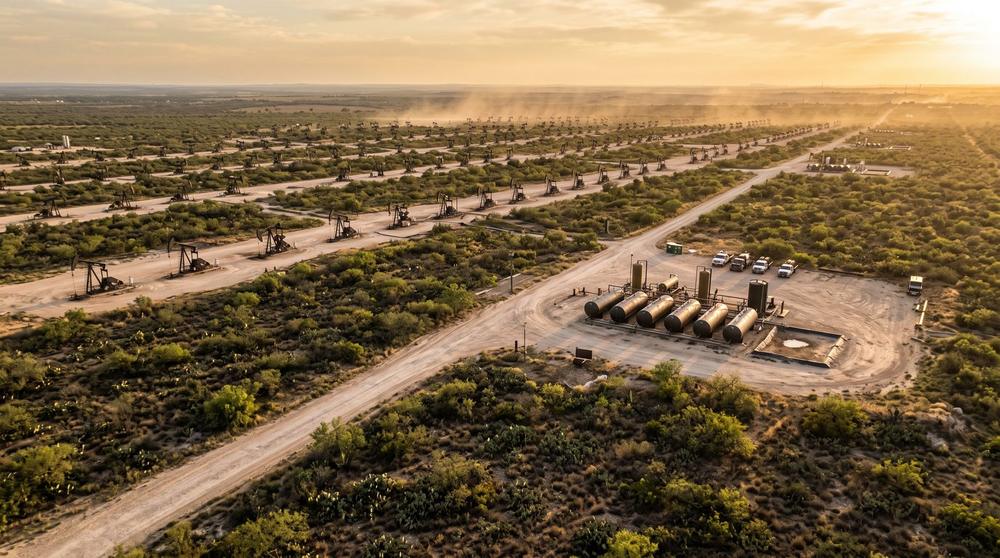
The assets are about 90,000 net acres in Karnes, DeWitt and Gonzales counties in South Texas — roughly 4% of Devon’s total production on a barrel-of-oil-equivalent basis, and about 68,000 boe/d of net production on Crescent’s count, with more than 600 Tier 1 net drilling locations normalised to 10,000-foot laterals. They sit directly alongside Crescent’s existing Karnes Trough operations. The package also carries Devon-owned mineral interests that will fold into Crescent Royalties.
The deal has an effective date of July 1, 2026, and is expected to close around year-end on Devon’s timetable, in the fourth quarter or early 2027 on Crescent’s. That three-month-plus gap between effective date and closing is where prices usually diverge: a buyer takes credit for cash the properties have already thrown off since the effective date. Neither company said that is the explanation here. If you are modelling this, the $3.85bn is the number Crescent expects to wire; the $4.2bn is the number Devon is marking the assets at.
Who is paying, and with what
Crescent launched a $1bn public offering of Class A common stock alongside the announcement, with a 30-day underwriter option for up to $150m more. KKR-affiliated Independence Energy Aggregator, which holds about 7.9% of the Class A shares, indicated interest in buying up to $500m of it. J.P. Morgan, KKR Capital Markets and Raymond James are joint bookrunners. If the Devon deal does not close, the proceeds go to general corporate purposes including repaying subsidiary debt.
So a quarter of the purchase price is new equity, issued off a $13.47 close the day before, while the company tells investors the financing structure and the assets’ free cash flow will support debt reduction and progress toward an investment-grade profile. Crescent expects about $140m in annual synergies — drilling and completions, lease operating expense, marketing. On a $3.85bn ticket that is a 3.6% annual return from integration alone, before a single incremental barrel.
Our take: Devon is the more interesting side. Chief executive Clay Gaspar said the price came in above the company’s internal hold-case valuation, including potential strategic upside — which is the politest available way of saying the buyer paid more than the asset was worth to us. After-tax proceeds go to accelerated buybacks and debt reduction, and Devon says the sale lowers its corporate breakeven and slows its base decline rate. That is a seller shortening its asset list to make the remaining list look better per share. With WTI near $91 and Brent above $103, it is also a seller taking cash at the top of a price move rather than drilling into it.
What to watch
- The purchase price adjustment at closing. If the final number lands nearer $4.2bn than $3.85bn, the interim cash flow credit was smaller than Crescent assumed.
- Where the equity prices. A $1bn raise on a roughly $13 stock is meaningful dilution; the clearing price tells you what the market thinks of the synergy case.
- Devon’s split between buybacks and debt. Neither release gave the allocation. Q3 earnings land November 5.
- Whether the regulators care. Crescent is consolidating acreage next to its own. Closing is subject to regulatory approval, and adjacency cuts both ways.