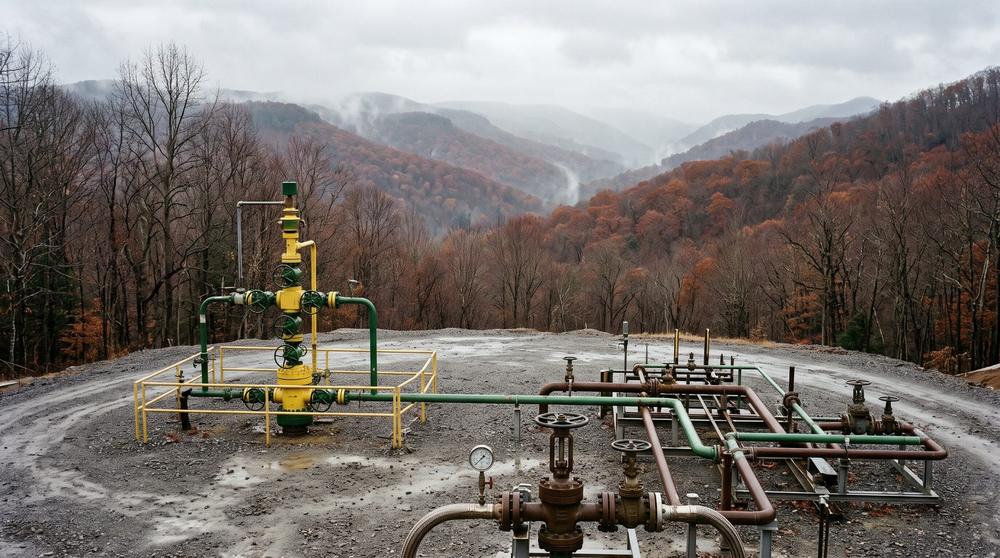
EQT said on Monday it will acquire Range Resources in an all-stock deal, creating what both companies call the largest natural gas producer in the United States. Range holders receive 0.987 EQT shares each — an implied $54.91 a share, roughly a 20.6% premium to Friday’s close. Reuters puts the equity value near $12.8 billion; the combined pro forma enterprise value is more than $50 billion.
The market split on it immediately. Range jumped about 10% premarket. EQT fell 4.6%. In an all-stock deal that is the usual arithmetic: the acquirer’s shareholders fund the premium, and they end up holding about 73% of the combined company against Range’s 27%.
The scale case is straightforward. More than 9 Bcfe/d of net production, nearly 3 million net acres in Appalachia, more than 3,700 miles of midstream pipe and what EQT describes as more than 30 years of inventory. Management expects $325 million of annual synergies within two years, with a stated path beyond $600 million longer term.
The number that decides it
None of that is the test. The test sits further down the release: the combined company’s unlevered free cash flow breakeven drops below $2 per MMBtu, with roughly $20 billion of cumulative free cash flow projected over five years at recent strip pricing, and BBB-quality credit metrics expected at closing.
A sub-$2 breakeven is a bet that gas prices will stay volatile and that being the cheapest producer is worth more than being the biggest. Toby Rice, EQT’s chief executive, leaned on exactly that, describing the company as “the lowest-cost natural gas producer in the industry” and the combination as one that “creates a must-own energy company.” Range’s Dennis Degner framed it as opening “opportunities to build long-term value neither could fully realize independently.”
Our take: Read the press release, then read the coverage, and you find a gap. Reuters notes that data-centre demand has improved the outlook for US gas. EQT’s own announcement never says “data centre” — it says “Appalachian demand growth” and “end users of natural gas.” That restraint looks deliberate, and it is the most useful thing in the document. You do not underwrite a $50 billion combination on load that has been announced but not contracted. The sub-$2 breakeven is what makes the deal survive if the demand arrives late, or smaller than the forecasts.
The mechanics from here
EQT’s executive team runs the combined company, and the headquarters stays in Canonsburg, Pennsylvania. Two Range representatives join the EQT board, Degner among them. The deal needs regulatory clearance and approval from both shareholder bases, and EQT will file a Form S-4 with the SEC. Closing is expected in the first quarter of 2027.
That is a long window for a fixed exchange ratio. Range holders are not being paid $54.91 — they are being paid 0.987 of whatever EQT is worth on the day it closes. Monday’s 4.6% drop in the acquirer is the reminder that the headline premium is a quote, not a guarantee.
What to watch
- The S-4. It carries the projections and the banker analyses behind the exchange ratio — the first real look at what each side thinks gas is worth in 2028.
- Antitrust review of an Appalachian concentration. Nearly 3 million net acres in a single basin invites a question even when the commodity is fungible.
- Whether the demand gets contracted. Firm, long-dated supply agreements with power buyers would validate the thesis the release declined to state out loud.
- EQT’s share price into the vote. A fixed ratio and a 20%-plus premium only hold if the acquirer’s stock does.