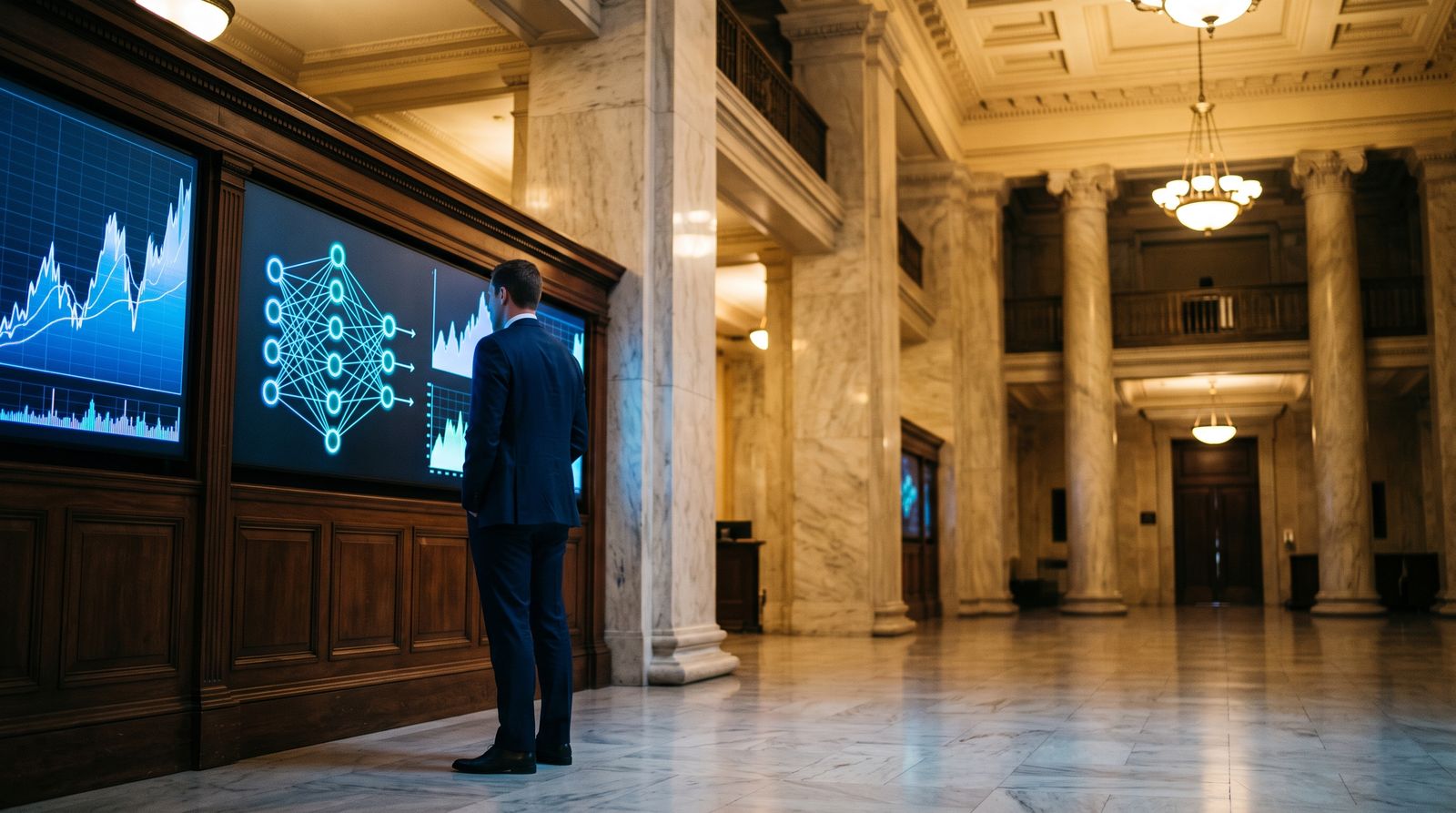
On July 9, new Fed Chair Kevin Warsh unveiled five external task forces to conduct the broadest review of U.S. monetary policy in years. Four of them are the usual central-bank plumbing — communications, the balance sheet, data, the inflation framework. The fifth, Productivity and Jobs, is the one that matters here: its charge is to assess how new general-purpose technologies, artificial intelligence chief among them, are reshaping output, employment and growth — and to feed that read back into the Fed’s policy judgments. Co-leading it are Marc Andreessen, cofounder of venture firm Andreessen Horowitz; Charles I. Jones, a Stanford economics professor currently on leave at Anthropic; and Asha Sharma, a Microsoft executive vice president. The panels are told to follow the evidence and deliver findings to the Federal Open Market Committee by the end of the year.
Strip away the names and this is a bet about a single number: potential growth — how fast the economy can expand before it overheats. The Fed leans on that estimate to decide how high rates need to be, and productivity is its biggest swing factor. If AI durably lifts output per worker, the economy can run faster and cooler at the same time, which loosens the inflation constraint and, with it, the case for keeping rates high. Warsh has said as much in public: a meaningful, sustained productivity boost from AI could justify cutting. Reporting on the task forces reads them as him building the analytical scaffolding for exactly that argument.
There’s a catch, and it’s an empirical one. AI spending is enormous and the agent products are now shipping finished work, yet macro productivity data is noisy, lagging, and stubbornly hard to pin on any one technology. The panel’s job is to separate the hype from the signal — and it has until December to do it. That it’s co-led by one of AI’s largest investors invites the obvious question about which way the thumb sits on the scale; the academic and the corporate operator alongside him are the declared counterweight. Either way, the framing lands at a delicate moment, with markets already arguing over the Fed’s path for the rest of 2026.
Our take: Markets obsess over every inflation print. The quieter move is the Fed changing the lens it reads those prints through. If a Warsh-appointed panel concludes AI is a real productivity engine, that’s not a research footnote — it’s the intellectual permission slip for rate cuts, and it’s due by December. Watch the framing more than the roster: “potential growth is higher than we thought” is about the most dovish sentence a central bank can write.
What to watch
- The year-end deliverable. Findings go to the FOMC by December. That document, not the press release, is what could reframe the 2026 rate debate.
- Whether AI shows up in the data. Corporate AI spend is massive; measurable gains in output per worker are not. The panel has to prove the productivity boost is real, not just expensive.
- The conflict-of-interest optics. An a16z founder helping grade AI’s economic payoff is a live question; the Stanford economist and the Microsoft executive are the stated counterweights.
- Warsh’s rate path. He has tied AI productivity to the case for cuts before. This is the machinery that could turn that instinct into an official finding.