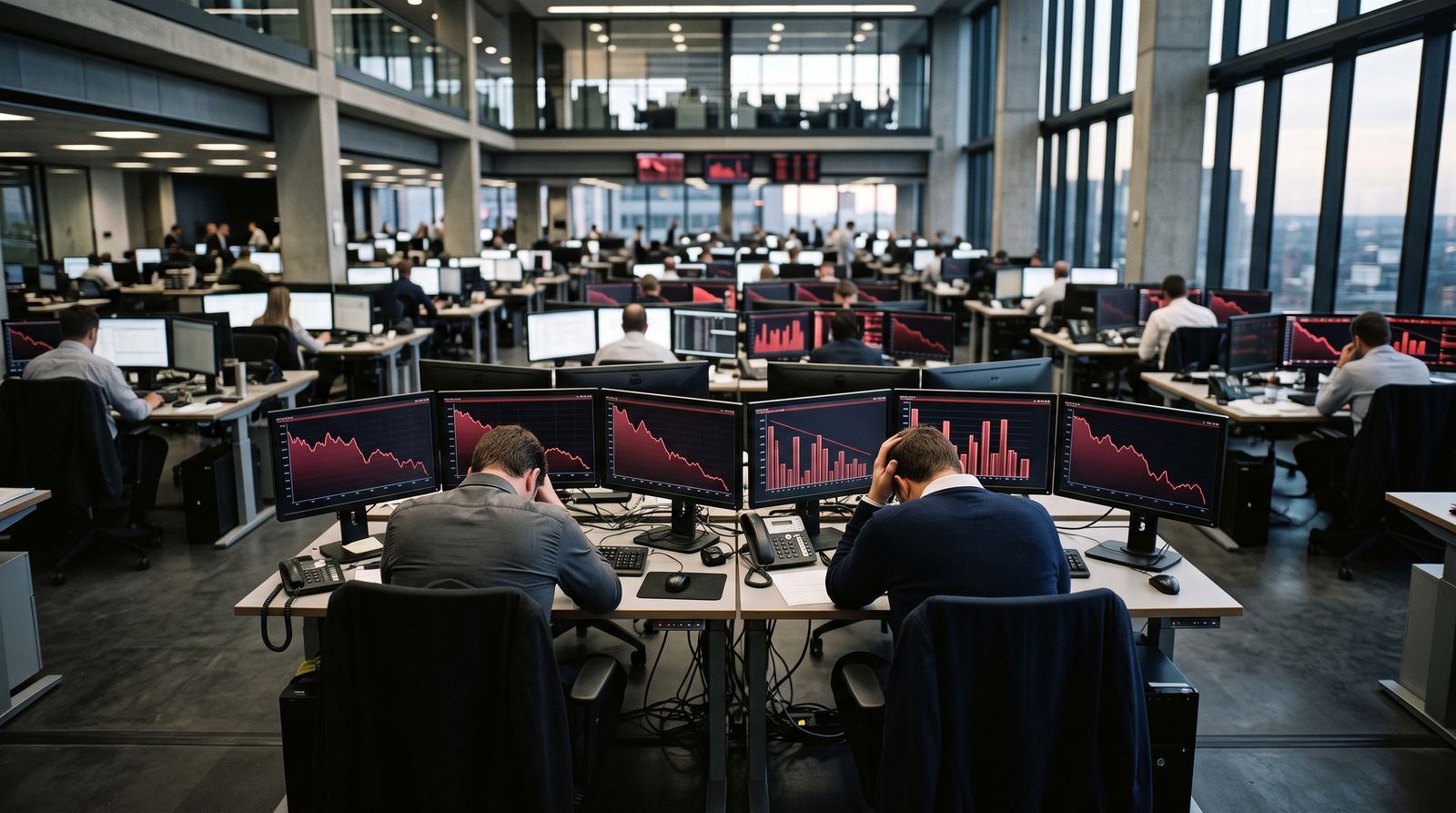
The Federal Reserve did the boring thing this afternoon and the market treated it like a warning shot. The FOMC voted 9–3 to hold the federal funds rate at 3.50%–3.75%, a fifth consecutive hold. What made it remarkable was the three votes on the losing side: Dallas Fed President Lorie Logan, Cleveland’s Beth Hammack and Minneapolis’s Neel Kashkari all dissented in favor of raising rates a quarter point.
Three dissents is unusual. Three dissents all pointing the same direction has not happened since September 2016. And unlike most modern Fed splits, this one was not about whether to ease faster — it was about whether the Fed is already too loose.
Chair Kevin Warsh, asked about the split at his press conference, was unbothered. “I asked for a good family fight, and I got one,” he said, adding that the committee agreed it has the tools and the authority to deliver stable prices and that the hold was not a sign of inertia.
The bond market did not find that reassuring
Yields told a stranger story than the decision. The 2-year Treasury yield — the maturity most sensitive to the next few Fed meetings — fell about four basis points to 4.236%, because a hold today trims the odds of a September hike. The long end went the other way. The 10-year rose roughly five basis points to 4.657%. The 30-year jumped 10.5 basis points to 5.201% and touched 5.244% intraday, its highest level since July 2007.
That is a curve steepening on inflation risk, not growth optimism. When the front end rallies and the long end sells off after a central bank stands pat, the message is not “policy is fine.” It is “you are going to be late, and we will price the consequences ourselves.”
Our take: Read the dissents and the 30-year together and you get the actual story of the day. The Fed’s own regional presidents and the Treasury market arrived at the same conclusion from opposite ends of the building: the inflation path has moved and policy has not. Warsh gets to call that a family fight because he won the vote. But a chair who has already stripped out the dot plot and forward guidance is now running a committee with three public defectors and a long bond at 2007 levels. He has removed the instruments that let him explain himself and kept the problem that requires explaining. September is no longer a scheduling detail.
The oil shock is doing the arguing
None of this is happening in a vacuum. West Texas Intermediate crude advanced 6.6% to settle at $84.46 a barrel after President Trump said the U.S. would hit Iran “hard” in response to the attempted strike on American forces. That is the second energy repricing this week, and it lands directly on the inflation forecasts the three dissenters were reading.
Equities took it badly. The Dow Jones Industrial Average closed down 1,153.18 points, or 2.19%, at 51,594.14. The S&P 500 fell 1.52% to 7,316.15. The Nasdaq Composite dropped 1.74% to 24,442.94. Energy and technology were the worst-performing corners of the tape — an unusual pairing that makes sense only if you accept that the same higher-for-longer discount rate punishing growth multiples is sitting alongside a crude move that raises costs for everyone else.
What to watch
- The 30-year, not the 2-year. If 5.244% becomes a floor rather than a spike, the term premium story is real and every long-duration asset reprices behind it.
- Whether the three dissenters go public. Regional presidents give speeches. Logan, Hammack and Kashkari now have a documented position to defend, and the next few weeks of Fed speak will either harden or dissolve the September hike trade.
- Crude above $85. The Fed can look through one supply shock. Two in a month starts showing up in expectations surveys, which is the number Warsh has said he actually watches.
- The absence of a dot plot. With no projections to anchor to, every FOMC communication between now and September carries more weight than it was designed to carry.
The decision itself changed nothing about the cost of money today. The vote count changed what the market thinks the cost of money will be later — and the long end moved first.