Ferrari shipped 3,366 cars in the second quarter, down from 3,494 a year earlier. Net revenues were €1,938 million, up 8% — 11% at constant currency. EBITDA came in at €755 million, up 7%, for a 39.0% margin. Operating profit was €605 million at a 31.2% margin, up 10% reported and 16% in constant currency. Management then raised full-year guidance and the stock rose about 2% on Thursday after gaining as much as 5% before the open.
Fewer units. More money. That is not a rounding error — it is the entire business model, stated plainly for anyone who still thinks of this as a car company.
The delivery decline was planned. Ferrari is mid-changeover: the 296 GTS and Roma Spider are winding down while the Amalfi and 849 Testarossa ramp up, and the first all-electric model is coming behind them. Deliveries of the 12Cilindri, the 12Cilindri Spider, the Purosangue and the 296 Speciale family all rose. A volume manufacturer running that transition would be posting a revenue hole and an apology. Ferrari posted a record and a guidance raise.
The margin lives in the options list
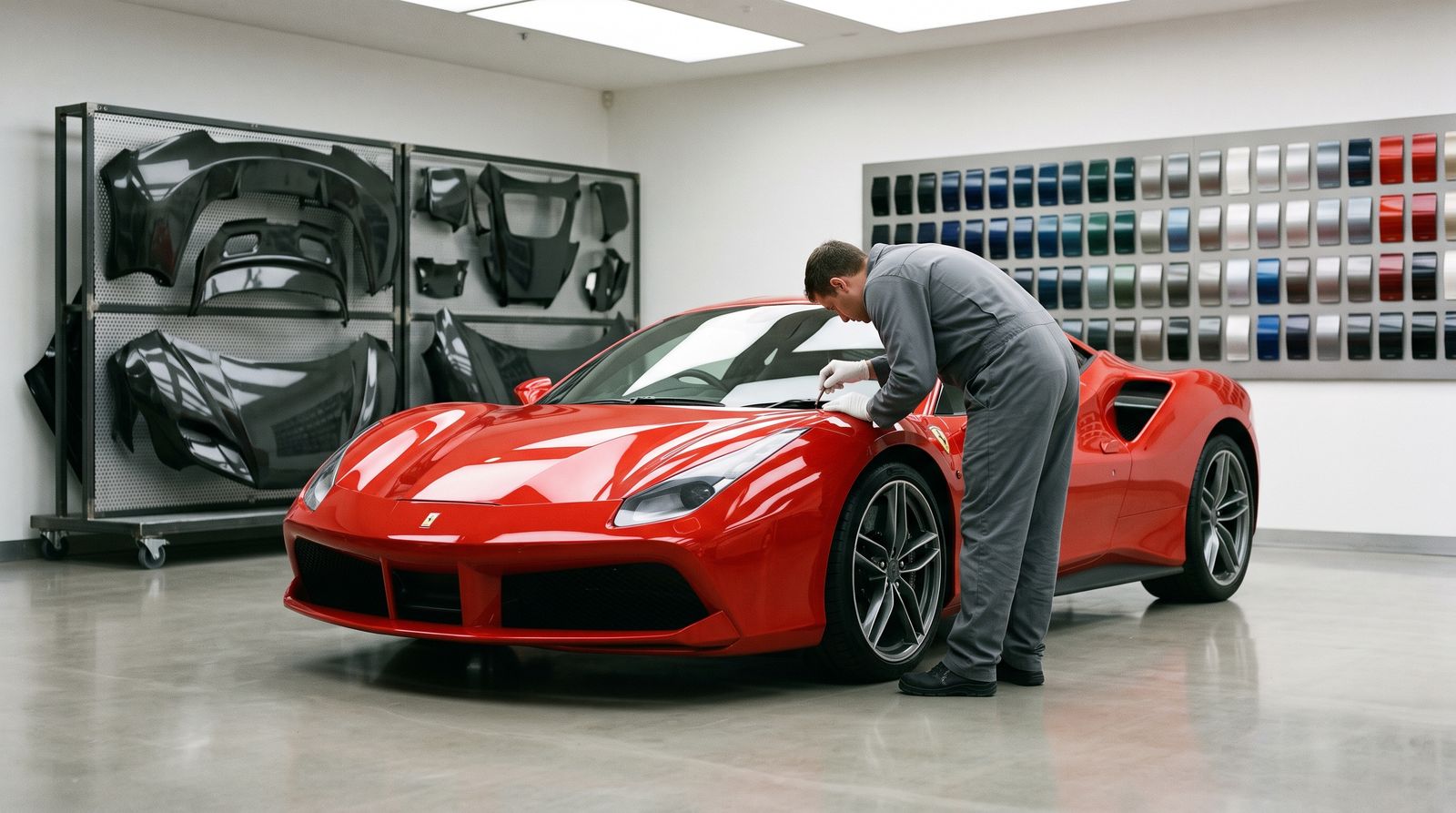
Personalizations came in ahead of plan and now account for more than 20% of cars and spare-parts revenue — driven, management said, by carbon fibre and paint. Read that number again. One dollar in five from the core business is not the car. It is the specification of the car: the exposed weave, the bespoke color, the stitching, the thing the buyer chose because they could.
That revenue carries almost none of the incremental cost of building another vehicle, which is why EBITDA margin sits at 39% while unit volume goes backwards. It is also why the order book being full through 2027, as CEO Benedetto Vigna reiterated, is worth more than an order book of the same size at a mass-market brand: Ferrari knows roughly what it will build and has already sold the upgrades.
The raise was modest and specific. Full-year net revenue goes to roughly €7.60 billion from €7.50 billion, adjusted EBITDA to at least €2.97 billion from €2.93 billion, and adjusted diluted EPS to at least €9.68 from €9.45. The company attributed the change to stronger-than-expected personalization revenue and less currency pressure than it had assumed, net of hedges.
Our take: Every business eventually has to answer one question: do you grow by selling more units, or by selling the same units for more? Ferrari has spent a decade building the second answer and this quarter is the cleanest proof yet — volume fell 3.7% and profit went up. Compare that with Ford, whose revenue fell 4% while operating profit rose 17% on cost discipline and mix, or with Garmin keeping 30 cents on the dollar without a data center. Different industries, same lesson in a week when the market is grading everyone on how much they spend: the durable businesses are the ones where the customer, not the seller, decides to pay more. Scarcity is a strategy. A waiting list is a balance sheet item. Ferrari’s risk is the flip side of the same coin — when 20% of your revenue depends on discretionary upgrades, a soft luxury cycle shows up in the margin before it ever shows up in the delivery count.
What to watch
- The personalization share. Above 20% is the new baseline. If it holds through the changeover and into the electric launch, the multiple is defensible. If it slips two points, the margin story slips with it.
- Deliveries in the back half. The Amalfi and 849 Testarossa ramps have to cover the 296 GTS and Roma Spider wind-down. Volume down by design is fine; volume down because the new cars are late is not.
- How the electric car is priced and specced. The personalization engine has never been tested on a battery platform. Whether buyers option an EV the way they option a V12 is the single biggest unknown in the model.
- Currency. Part of the raise came from lighter FX pressure than assumed, net of hedges. That is a tailwind Ferrari did not earn, and it can reverse.