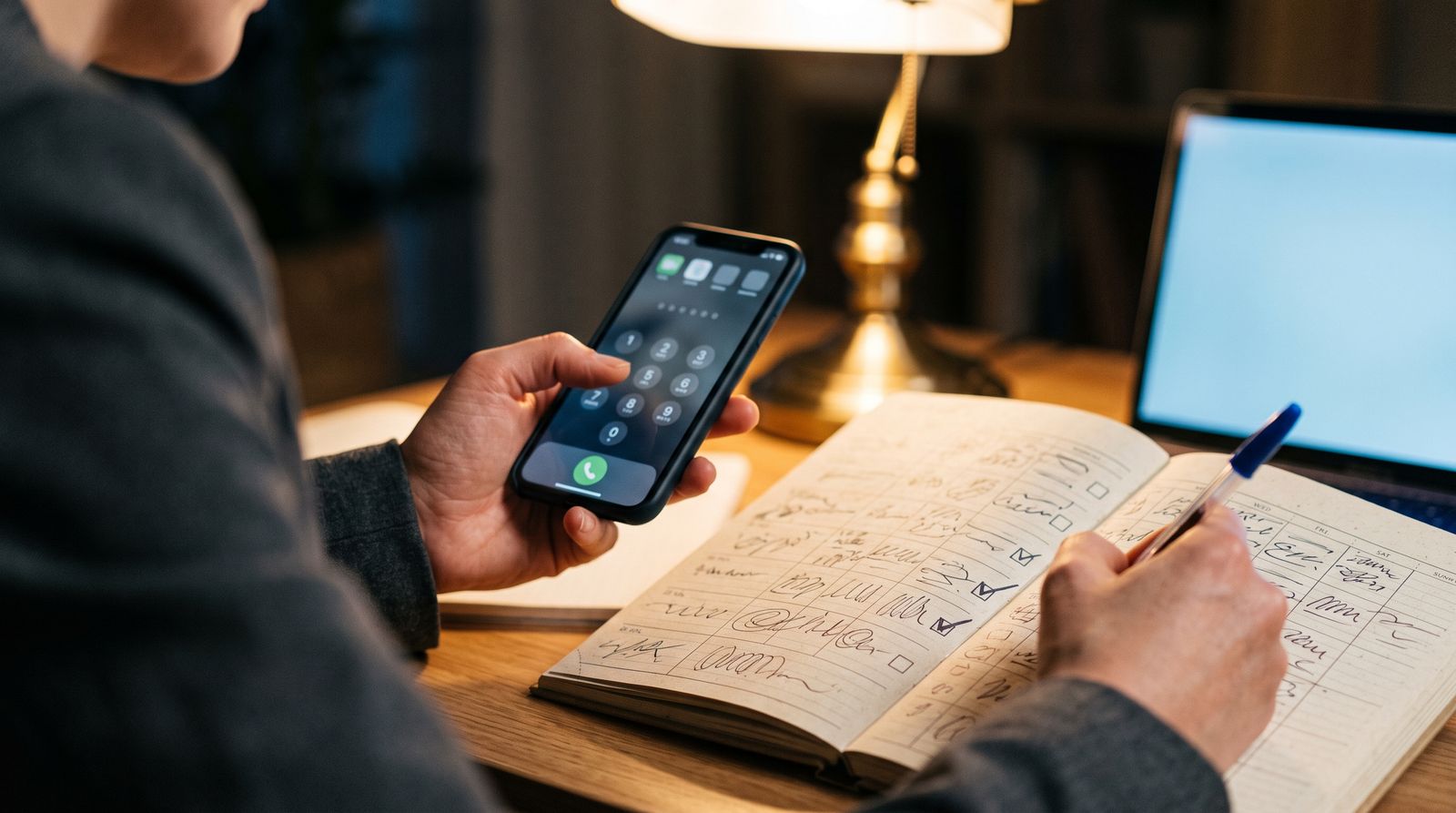
Here’s an uncomfortable audit. Open your sent folder and count the conversations from the last 90 days that ended with interest — a “this looks interesting,” a “let me check with my partner,” a “circle back next month.” Now count how many of those people ever heard from you again. For most freelancers, founders, and salespeople, the second number is embarrassingly close to zero. Not because they decided not to follow up. Because nobody decided anything. The thread just… stopped.
The instinct is to read silence as rejection. It almost never is. Silence usually means your deal fell out of the buyer’s working memory — they got busy, the quarter turned, a kid got sick, a bigger fire started. Rejection is a decision. Silence is a queue position. Follow-up is simply the act of moving yourself back to the front of the queue, and the people who treat it as a system instead of a personality trait win deals from people who are more talented, cheaper, and better connected than they are.
The core principle: follow-up run from memory collapses exactly when it matters — when you have too many open threads to remember. The fix isn’t discipline. It’s a default cadence, a script library, and a tracker, so that following up requires zero decisions. Systems beat willpower every time you’re busy, and you’re always busy.
Step 1 — Never end a touch without scheduling the next one
The prime rule. Every conversation, email, or proposal ends one of two ways: with a mutual next step (“I’ll send the proposal Thursday; let’s talk Tuesday at 2”) or, failing that, with a unilateral one — a date you put in your own tracker that says when they’ll hear from you again. The buyer doesn’t need to agree to your unilateral next step. It exists so the thread has an owner, and the owner is you. A deal with no scheduled next touch isn’t a deal. It’s a memory.
Step 2 — Run the default cadence: 0-3-7-14-30
You don’t need to invent a cadence per prospect. You need one default you can override:
- Day 0 (same day): recap what was said, confirm the next step in one line. Two sentences, sent within hours.
- Day 3: first nudge if they went quiet — and it must carry something useful (see the scripts below).
- Day 7: switch channels. If email died, call. If calls die, a short LinkedIn message or voice note. Same message, different door.
- Day 14: the deadline-with-a-reason note. Real reasons only: your calendar, a price change, a slot closing.
- Day 30: close the file — politely, in writing. This is the touch most people never send, and it revives more deals than any other.
After Day 30, the thread moves to a “keep-warm” lane: one genuinely useful touch a quarter, forever, until they buy or say stop. That lane is where next year’s revenue lives. If this cadence feeds off outbound work, pair it with the cold outreach playbook — outreach without follow-up is just typing.
Step 3 — Every touch must add value. “Just checking in” is a withdrawal.
Each message either adds value or burns goodwill; there is no neutral. Four scripts that cover most of the cadence:
1. The Day-0 recap: “Great talking today. You want X solved by [date], the sticking point is Y, and I’m sending the proposal Thursday. If I got any of that wrong, tell me now.” It confirms scope, surfaces objections early, and quietly demonstrates you listen.
2. The useful thing (Day 3): “Was thinking about your Y problem — this [example / teardown / short answer] is how someone in your spot handled it. No response needed.” The last three words are the trick. A touch that demands nothing gets read, remembered, and often answered.
3. The deadline with a reason (Day 14): “Heads-up: I’m booking [month] now and have two project slots left. If you want one, I need a yes by the 25th — after that the timeline moves to [later month].” Never fake this. A real constraint moves decisions; an invented one, once smelled, kills trust permanently. If you keep needing fake urgency, your offer is priced wrong — that’s a pricing problem, not a follow-up problem.
4. The clean break (Day 30): “I’m closing the file on this for now — no hard feelings, timing is everything. If it resurfaces in the fall, I’d be glad to pick it back up.” It costs you nothing, reads as pure confidence, and has a strange property every closer eventually discovers: the clean break gets replies that four nudges couldn’t.
Step 4 — The tracker: five columns, fifteen minutes a day
No CRM required. A spreadsheet with five columns: Name · Last touch · Next touch date · Channel · Status (active / warm / closed). The operating rules: every open thread has a next-touch date, no exceptions; the sheet gets fifteen minutes every morning — send today’s touches, set the next dates, done; and nothing leaves the sheet except to “won,” “lost,” or “keep-warm.” If a thread has no next-touch date, you’ve already lost it — you just haven’t admitted it yet.
A worked example
A freelance designer finishes July with 12 open conversations. Monday morning, the sheet says: three threads owe a Day-3 useful-thing note (she sends a relevant portfolio piece to each — eight minutes), one thread hits Day 7 (email died, so she calls; voicemail counts, and she logs it), one hits Day 14 (she has one August slot left — true — so the deadline note goes out), and two hit Day 30 (clean breaks, both moved to keep-warm). Total time: about fifteen minutes. One Day-3 recipient replies same day — “perfect timing, can we talk Thursday?” Tuesday, one of the clean breaks answers: “Don’t close it — budget cleared Friday.” Two live deals from fifteen minutes of system, zero charisma involved. Multiply by 50 working weeks and you understand why the boring sheet outperforms talent. It’s the same compounding logic as landing your first ten customers — small, consistent motions that stack.
Failure modes (read these twice)
- The empty nudge. “Just bumping this!” adds nothing and teaches the buyer your emails are skippable. Every touch carries a recap, a resource, a reason, or a release.
- Apologizing for existing. “Sorry to bother you again…” reframes your follow-up as a nuisance. You’re not bothering anyone; you’re running your business. Write like it.
- Cadence collapse after one silence. The system exists precisely for the moment you feel like quitting. The Day-7 channel switch exists because inboxes die and phones don’t.
- Reading silence as “no.” A “no” is a gift — log it, close the file, move on. Silence is not a “no,” and treating it as one is how you donate deals to whoever follows up sixth.
- The zombie pipeline. The opposite sin: never closing anything, so 40 “active” threads inflate your confidence while none have a next-touch date. The Day-30 clean break is what keeps the sheet honest.
Bottom line: follow-up is the highest-ROI motion in business because the hard part — getting a stranger interested — is already paid for. Fifteen minutes a day, five columns, four scripts, one rule: no thread without a next-touch date. Run it for 30 days and count what comes back from the dead.