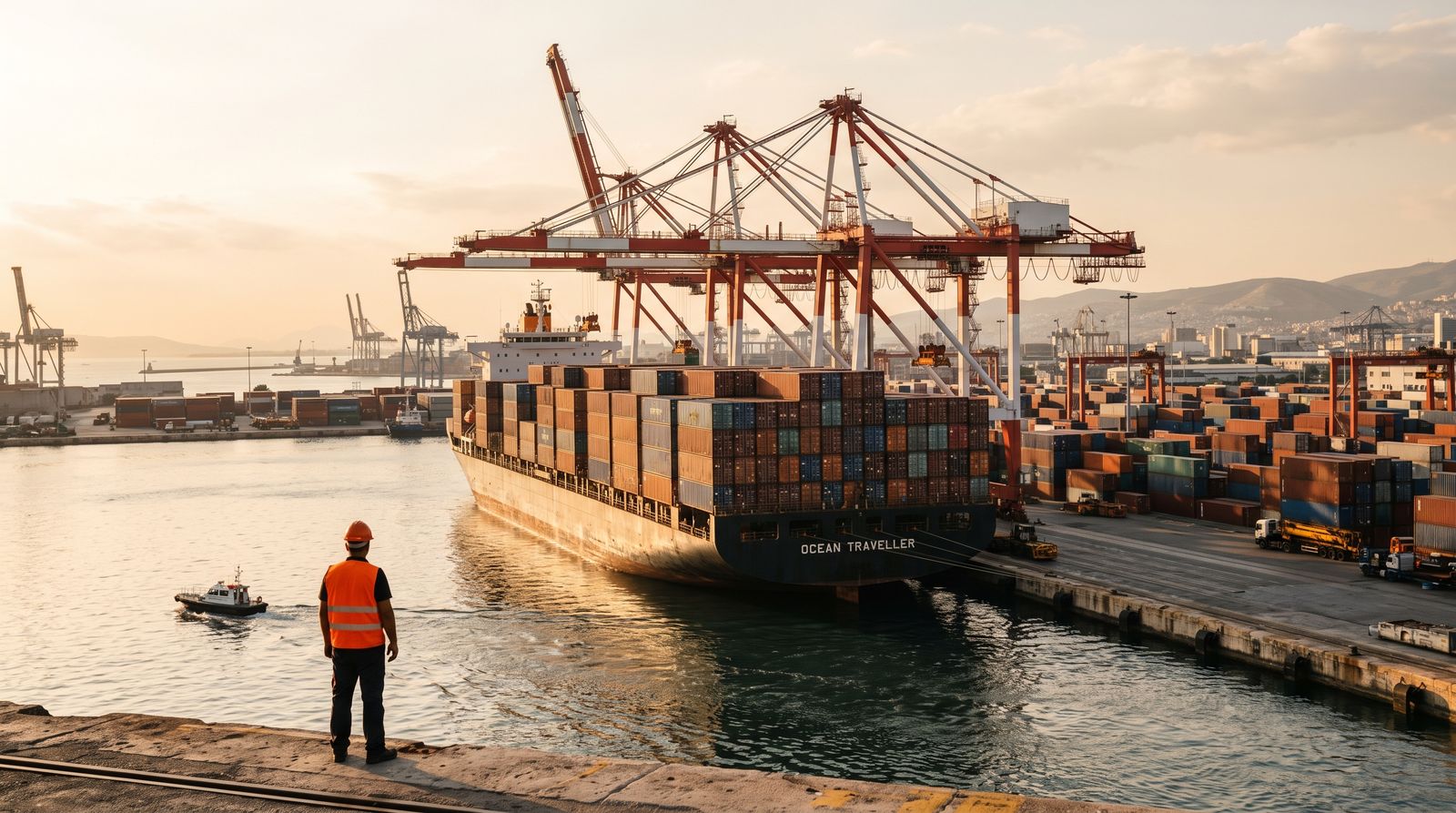
The blanket 10% tariff that had underpinned US trade policy was set to lapse Friday after Congress declined to extend it. It did lapse. And on the same day, a replacement took effect: new Section 301 duties of 10% to 12.5% on goods entering the US from 60 economies, applied over what the administration calls their failure to adopt and enforce bans on imports made with forced labor.
The split is the interesting part. Seventeen partners — Argentina, Bangladesh, Cambodia, Canada, Ecuador, El Salvador, Guatemala, Honduras, India, Indonesia, Jordan, Malaysia, Mexico, Pakistan, Sri Lanka, the United Kingdom and Trinidad and Tobago — draw the lower 10% rate, having adopted or committed to adopt forced-labor import restrictions. The rest land at 12.5%. Together the covered economies represent roughly 99% of what America imports. There are limited exemptions and a short transit exception for cargo already on the water.
Markets treated it as noise. The Dow rose about 0.7% and the S&P 500 roughly 0.5% Friday, with the tape far more interested in crude giving back 5% on renewed US–Iran talk than in a tariff schedule that had been telegraphed for days.
A different legal door, the same room
Trade policy has spent two years cycling through statutory authorities — emergency powers, national security, reciprocity — as courts and Congress narrowed each one. Reframing the same duties as labor-standards enforcement is a durable move, because forced-labor prohibitions enjoy bipartisan support and are far harder to challenge as pretextual. The rate is roughly what it was. The justification is what changed, and justifications are what survive litigation.
Our take: Stop modeling tariffs as an event and start modeling them as a fixed cost. Three separate legal theories have now produced roughly the same double-digit rate on nearly everything that lands in a US port; if the authority keeps changing and the number doesn’t, the number is the policy. That reframing has a practical edge for anyone importing goods: the 2.5-point spread between compliant and non-compliant origins is now a supplier-selection input, not a compliance footnote. Documented labor practices just became a pricing advantage — the same way domestic steel found one when protection showed up on the income statement.
What to watch
- Reclassification pressure. Countries at 12.5% can move to 10% by adopting forced-labor import bans. Expect fast legislative activity in the 41 economies on the wrong side of that line — and expect the US to hold the rate until enforcement, not announcements, follows.
- Where the 2.5 points land. Apparel, electronics assembly and agricultural inputs carry the most forced-labor exposure. Those are the categories where sourcing actually shifts.
- Legal challenges. Section 301 is well-trodden ground, but the forced-labor framing at this breadth is not. Watch for the first importer suit.
- The USMCA overlay. Canada and Mexico both drew the 10% tier while the agreement itself sits under review. Two negotiations, one leverage stack.