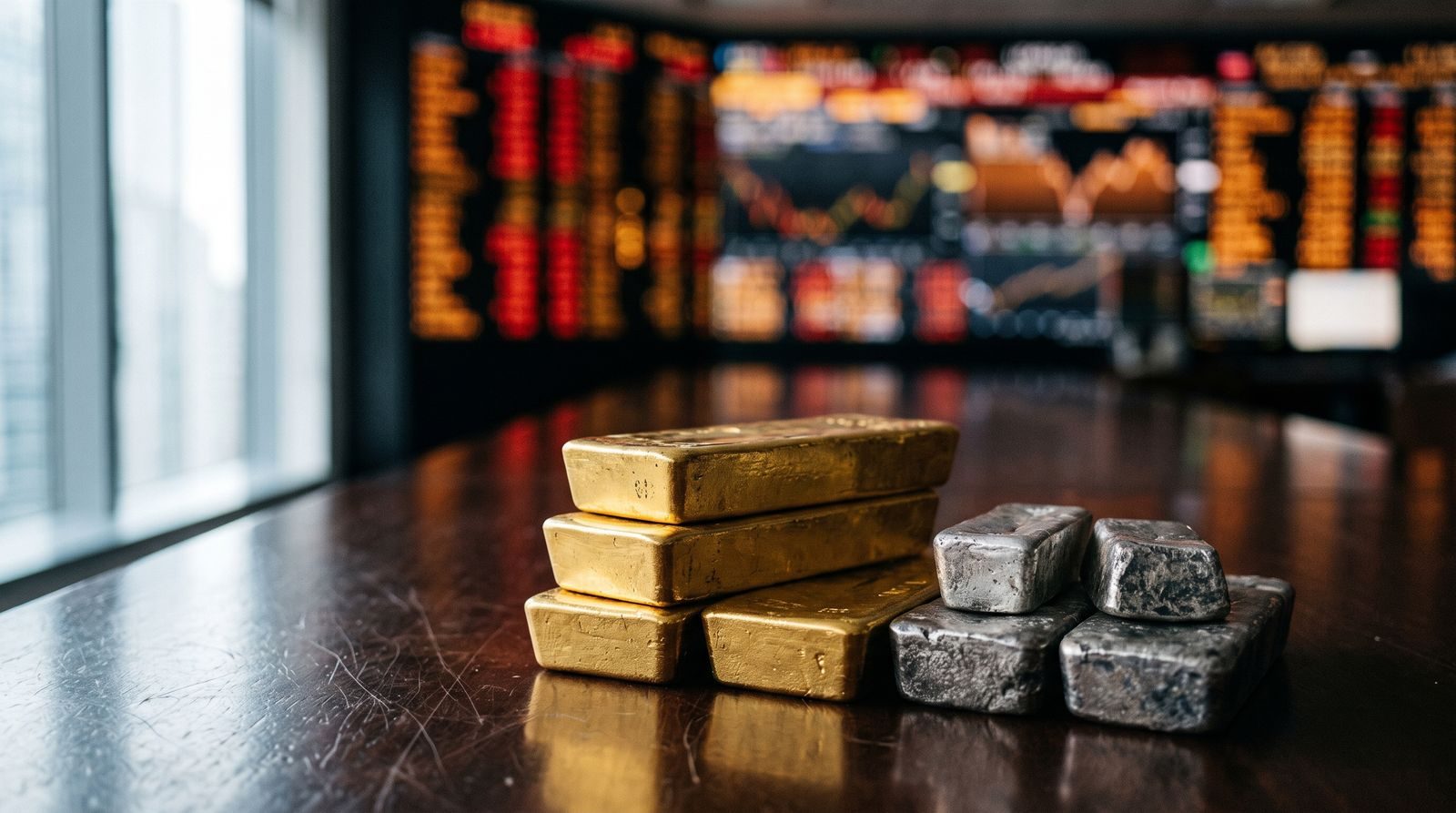
Spot gold traded near $4,590.51 an ounce in Friday morning New York trade, up about $74 and roughly 1.6% on the day, and pushed above $4,600 as the session went on — its highest level since mid–May, with futures reaching for a three–month high. Silver ran harder: $69.63, up 2.2%, and it was still near $69.70 on Friday evening. The gold–silver ratio compressed to about 66, which is the tell that this was a broad metals bid rather than one nervous trade in bullion.
Three days earlier, on Wednesday, the Treasury Department recorded total federal debt above $40 trillion for the first time. The same afternoon, Treasury said it would at least double the size of its liquidity–support buybacks of 10– to 30–year debt. Long–end yields fell. The dollar fell. Gold went up.
Put in that order, the week reads less like a safe–haven scramble and more like a straightforward repricing of the dollar — and of the government that issues it.
A trillion every five months
The pace is the story, not the number. Per the Associated Press, the $40 trillion mark landed five months after the US hit $39 trillion in March, which itself came five months after $38 trillion in October. That is a trillion dollars of new federal debt roughly every 150 days, driven by defence spending, Social Security and Medicare, and the interest bill on everything borrowed already.
The Bipartisan Policy Center expects the statutory debt limit of $41.1 trillion to be reached somewhere between late winter and mid–summer 2027, which puts another congressional vote on the calendar. Its president, Margaret Spellings, put the fiscal path bluntly in a statement: “Our current fiscal trajectory is plainly unsustainable, and that’s the best–case scenario.” The OECD’s recent data has the US fiscal position as the weakest in the developed world.
The White House pushed back. Spokesman Kush Desai said the administration “has been focused on slashing waste, fraud, and abuse in federal spending while accelerating economic growth to get America’s debt–to–GDP ratio trending in the right direction.”
Why the buyback matters more than the milestone
Debt milestones get headlines and then get forgotten. What markets actually reacted to was the Treasury stepping into the long end to cap yields — a fiscal authority doing something that looks, from a distance, a lot like monetary policy, at a moment when the Fed under Kevin Warsh has explicitly stepped back from forward guidance.
That rescue lasted about one session before 30–year yields round–tripped. But the signal survived the reversal: if the cost and duration of the debt load now shapes what Washington does, then the currency is the adjustment valve. Metals are the cleanest expression of that view available to anyone with a brokerage account.
Our take: This is not the gold trade people are used to describing. There is no fresh war premium being priced — the Middle East risk premium has been draining out for weeks, and gold went up anyway. Strip out the geopolitics and what is left is a bet against the purchasing power of the dollar, made in a week when the issuer added a trillion to its tab and then bought its own bonds to keep the yield down. Silver outrunning gold says the same thing with more leverage.
What to watch
- Warsh at Jackson Hole, 28 August. His first keynote as Fed chair, and the first real chance to hear whether the central bank sees the Treasury’s buybacks as helpful or as encroachment.
- The next long–end auction. Buybacks support the secondary market; auctions test actual demand. That is where the foreign bid shows up or does not.
- The gold–silver ratio. Near 66 and compressing. If it widens back out while gold holds, the industrial side of silver is what cracked, not the monetary thesis.
- Debt–limit calendar. A $41.1 trillion ceiling arriving in 2027 means the political fight starts being priced well before it starts being fought.
None of this is a call on where metal prices go next. It is a note on what the market appears to be pricing: not a crisis, but a slow, visible erosion in the credibility of the borrower at the centre of the financial system.