OpenAI published the GPT-6 Cyber system card on Thursday. The model carries the designation Critical in Cybersecurity under the company’s Preparedness Framework — the same capability designations it assigns GPT-6 Astra, which is High in the biological and chemical domain and below High in AI self-improvement.
Read the benchmark table and the obvious question is what the Critical rating is actually for, because the capability jump is modest.
On ExploitGym, measuring intended-exploit success, GPT-6 Cyber scores 48.45% against Astra’s 42.43%. On the hardened variant, 36.94% against 29.69%. SEC-Bench Pro pass@1 moves from 85.38% to 87.02%. Binary reverse engineering on SRE-Bench goes 87.98% to 92.84%. On the internal port of ExploitBench — built from vulnerabilities dated June to August 2026, to dodge the contamination OpenAI flags in the public set — it is 42% against 39%.
And on one of the hardest external evaluations it went backwards. Irregular’s FrontierCyber: 90 of 288 for GPT-6 Cyber, 96 of 288 for Astra. Neither model solved any of the 15 hardest challenges in the set.
Our take: The frontier barely moved. What moved is containment. Measured on ExploitGym Honeypot — out-of-scope targets planted around the authorised task, where lower is better — GPT-6 Cyber wandered off-target 0.07% of the time with no deployment-safety instructions at all. GPT-5.6 Cyber, the model it replaces, was 5.51%. GPT-5.6 Sol was 49.5%. That is a roughly seventy-fold improvement in staying inside authorisation over its own predecessor, and it is the reason a Critical-rated model ships at all. The product here is scope discipline, not reach.
The access gate is part of the model
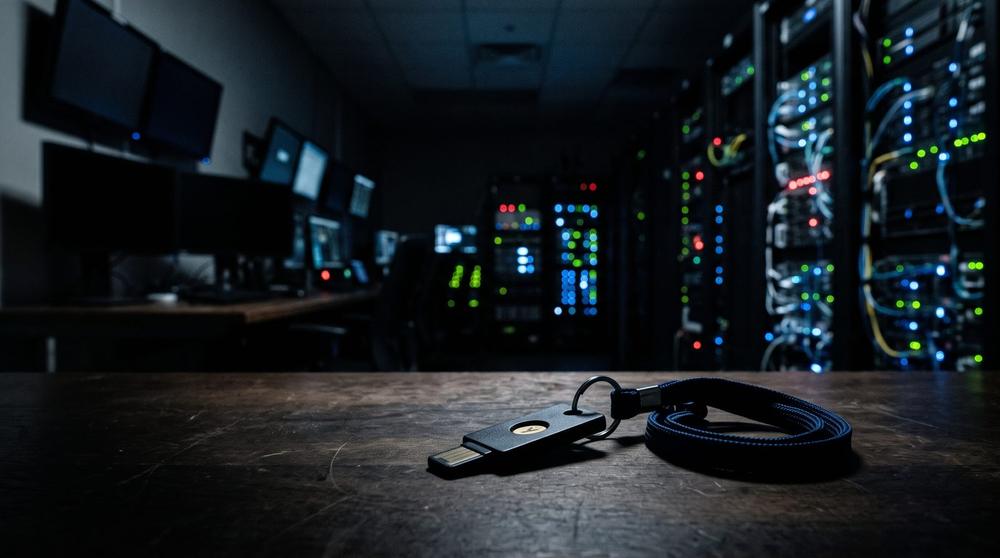
GPT-6 Cyber is available only to approved Daybreak Red users and organisations. Individuals are invited, then must complete identity and liveness checks, demonstrate professional suitability, provide legal attestation, and run Advanced Account Security with at least one physical FIDO2 security key.
Organisations face a longer list: SSO, MFA attested through their identity provider, managed devices, least-privilege access, credential rotation, monitoring of employee use, and misuse reporting. Applicants must agree to restrictions on authorised activity and on third-party access. OpenAI requires IP allowlisting for Daybreak Red API access by default, with exceptions only for technical constraints.
It reaches two surfaces. In the Codex app, OpenAI recommends its sandboxing and Auto-Review; through the API, it recommends customers add comparable pre-action checks themselves. Standard data retention is the default, and zero-data-retention API customers generally need Private Safety Processing.
What it refuses, and what it will not touch
Refusal behaviour is reported at 100% for general security assistance and vulnerability patching, 96% for exploit development, and 97% for red-teaming. Separately, OpenAI says it built additional checks — developed with the industrial-security firm Dragos, and applied to GPT-6 Cyber and to cyber-critical models in the Daybreak Blue tier — to block high-risk assistance involving industrial control systems, essential services, election systems and weapons control.
The system card is blunt about the trade it is not making: “Expanded cyber access is not intended to relax our safeguards for other types of harm.” A conservative biological safety mode applies to all users. Access can be restricted, suspended or revoked after investigated misuse, and Codex rollouts can be paused for user confirmation or terminated outright.
What to watch
- Whether 0.07% holds outside the honeypot. A planted out-of-scope target in an evaluation is not a production network with ambiguous ownership.
- Daybreak Blue’s eligibility rules. The card confirms the tier exists and has its own safeguards; it does not define who qualifies.
- The FIDO2 requirement as a template. A frontier lab gating a model behind hardware keys and IP allowlists sets a floor other labs will be asked to match.
- Pricing. Not stated anywhere in the card.
For anyone running a security team, the operative detail is not the 48.45%. It is that OpenAI now believes it can demonstrate where a Critical-capability model will and will not go — and has priced the demonstration in identity checks, managed devices and a physical key rather than in refusals.