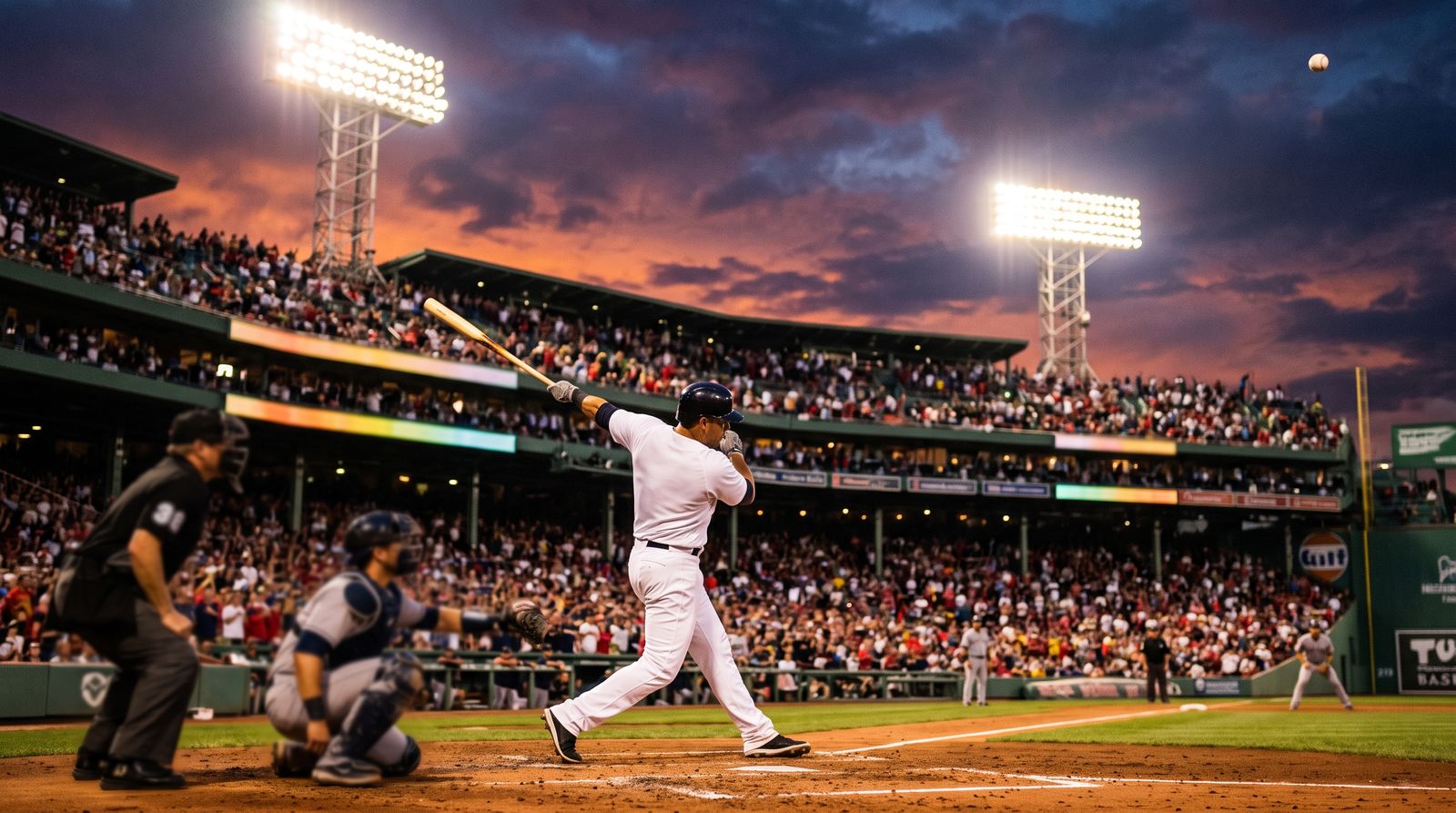
The Home Run Derby has always been a home game for someone. Tonight it is a home game for two. The 2026 T-Mobile Home Run Derby runs at Citizens Bank Park in Philadelphia — the night before Tuesday’s All-Star Game — and for the first time in the contest’s 41 years, two teammates from the same club are in the field. They are Phillies, and they are in Philadelphia: Kyle Schwarber and Bryce Harper, swinging in front of the crowd that watches them every night, and eventually swinging against each other. It is also the first Derby to stream on Netflix rather than air on cable, another piece of live sport migrating from the ESPN bundle to a subscription app.
Schwarber arrives as the headliner he earned. His 32 home runs lead the majors at the break, and he became the fastest hitter in Phillies history to reach 30 — a franchise that has employed Mike Schmidt, Ryan Howard and Harper himself. Harper, a nine-time All-Star making his third Derby appearance, won the whole thing in 2018 at home in Washington, so he knows exactly what a hometown Derby feels like. The eight-man bracket around them skews young and loud, with sluggers like the Rays’ Junior Caminero and the Royals’ Bobby Witt Jr. in the mix. MLB scrapped the clock this year: instead of racing a timer, each hitter in the first round gets 20 swings, and the four biggest totals advance. The winner walks away with a reported $1 million.
And then, on cue, the warnings start. Somebody in this field will cool off in the second half — that is nearly guaranteed — and when they do, the “Home Run Derby curse” will get the blame. The theory: all those extra hacks scramble a hitter’s swing, and the numbers fall off a cliff after the break. It is one of baseball’s stickiest pieces of folklore. It is also, on close inspection, a story people tell to explain something much more boring.
Our take: The curse is real as a pattern and fake as a cause. A Society for American Baseball Research study found that 43 of 74 Derby participants declined afterward — which sounds damning until you remember why they were invited. You get into the Derby by having the best first half of your life. Numbers that good are, almost by definition, hard to repeat; they were always going to slide back toward normal. The clean tell is the control group: sluggers who skip the Derby cool off in the second half just as much, if not more. That is regression to the mean wearing a costume. The transferable lesson has nothing to do with baseball: when a number is running historically hot — a stock, a sales month, a quarter — the smart bet is that it fades, and the dramatic event you want to blame usually had nothing to do with it. Don’t confuse the story with the cause.
What to watch
- The hometown split. The crowd is all-in on both Phillies — right up until the bracket pits them against each other. Two teammates, one trophy, one city: that subplot is why this Derby exists as a spectacle, and it has never happened before.
- Regression, live. Schwarber’s 32 first-half homers are a career-arc pace. The back half of his season, not tonight’s show, is the real test of whether that number is the new normal or a hot streak already cooling — the same math the “curse” keeps mistaking for sabotage.
- The Netflix number. This is the first Derby on Netflix instead of cable. Whenever the viewership figure lands, it is the actual business story of the night — a read on whether marquee live events keep bleeding off the traditional bundle.
- The no-clock format. Swapping the timer for a swing count (20 in round one) changes the rhythm. Watch whether pure swings-per-round means more bombs and better pacing — or just more standing around between them.
Tonight rewards the biggest, loudest version of the sport: 20 swings, a full house, and a ball park built for exactly this. What it won’t do is decide anyone’s July or August. If a Derby star slumps after the break, blame the calendar, not the contest — averages come due whether you spent Monday night swinging for the seats or resting on the couch. Performing under a spotlight is its own skill; keeping it up once the numbers cool is a different one entirely, and it’s the one that separates the clutch from the merely hot.