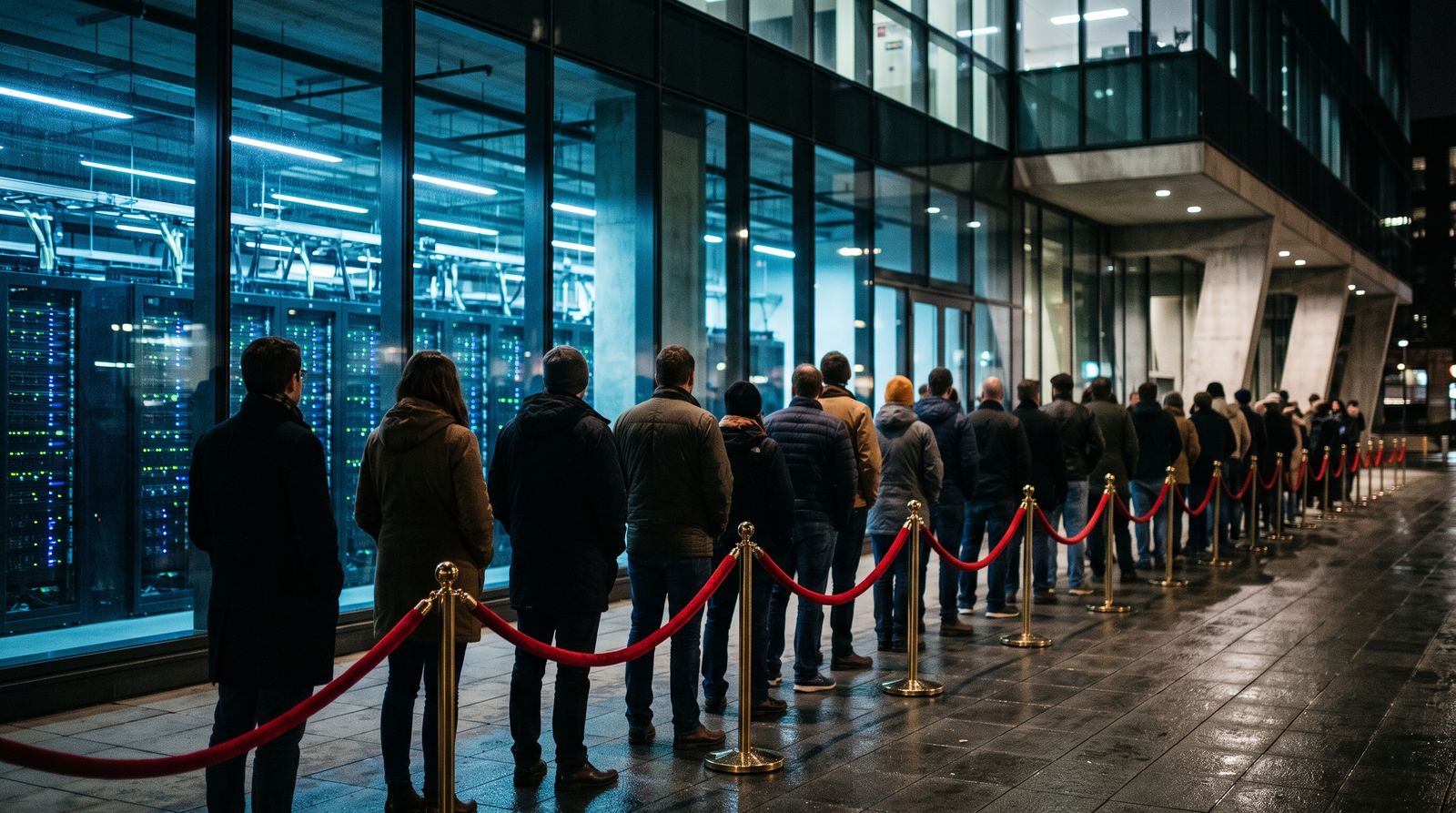
Moonshot AI stopped accepting new Kimi K3 subscribers on Sunday — roughly 48 hours after the model launched. User requests “sharply exceeded forecasts” and pushed the company’s clusters toward their limits, Moonshot said, describing “unprecedented compute challenges.” Its public version was breezier: “Kimi K3 has received far more love than we expected, and our GPUs are feeling it.”
The model doing the damage is the one that reset the frontier conversation on Friday: 2.8 trillion parameters, billed by the company as the largest open-weight system ever released. Existing paid users are protected — Moonshot says available compute is being reallocated to them — and new subscription spots will reopen “in batches” as capacity comes online. Alongside the pause, a restructure: future memberships split into two plans, one of them just for coding.
That split is the tell. K3 is built for coding and agent work — precisely the usage that hammers inference hardest, because agent loops call the model over and over. US labs have been making the same move from the other direction: Anthropic just went metered for everyone below its top tier. Compute rationing is converging from both sides of the Pacific.
“Sold out” is a great look when bankers are watching
The timing is not incidental. Reuters reported Monday that Moonshot is unwinding its offshore corporate structure ahead of a potential Hong Kong listing and has engaged Goldman Sachs and CICC, though the timetable remains fluid. The money underneath: more than $2 billion raised in May from investors including Meituan and China Mobile, over $5.5 billion lifetime, and a fresh round of up to $2 billion now being sought at a valuation that hit $30 billion in June. For a company selling that story, a capacity crisis two days into a flagship launch is the one demand signal you can’t fake.
The dark side of the story is the constraint itself. US export controls on advanced Nvidia chips cap what Chinese labs can serve, and rivals are hitting the same wall — DeepSeek has been raising external capital for compute too. Meanwhile the competition isn’t pausing anything: Alibaba, itself a Moonshot investor, debuted its 2.4-trillion-parameter Qwen 3.8 preview on Sunday, aimed at the same customers.
Our take: A sold-out sign is the most honest benchmark in AI. Every lab claims demand; Moonshot just proved it has more than it can serve — while inadvertently publishing the ceiling that export controls put on Chinese inference. Notice what’s scarce here: not the model — the weights are promised free — but the machines to run it. Open weights were supposed to commoditize intelligence. Instead, the meter moved one layer down, to compute. Whoever owns the GPUs owns the toll booth, on both sides of the Pacific.
What to watch
- Batch cadence. How fast subscription spots reopen is a live readout of how much compute Moonshot can actually add under export controls.
- Coding-tier pricing. Carving out heavy users only works if the price matches the inference bill. A steep coding plan tells you what agents really cost to serve.
- The weights drop. K3’s open weights are promised this month. A slip would suggest the crunch is worse than advertised.
- The IPO clock. Goldman and CICC are engaged, per Reuters. Every week of sold-out headlines raises the ask.