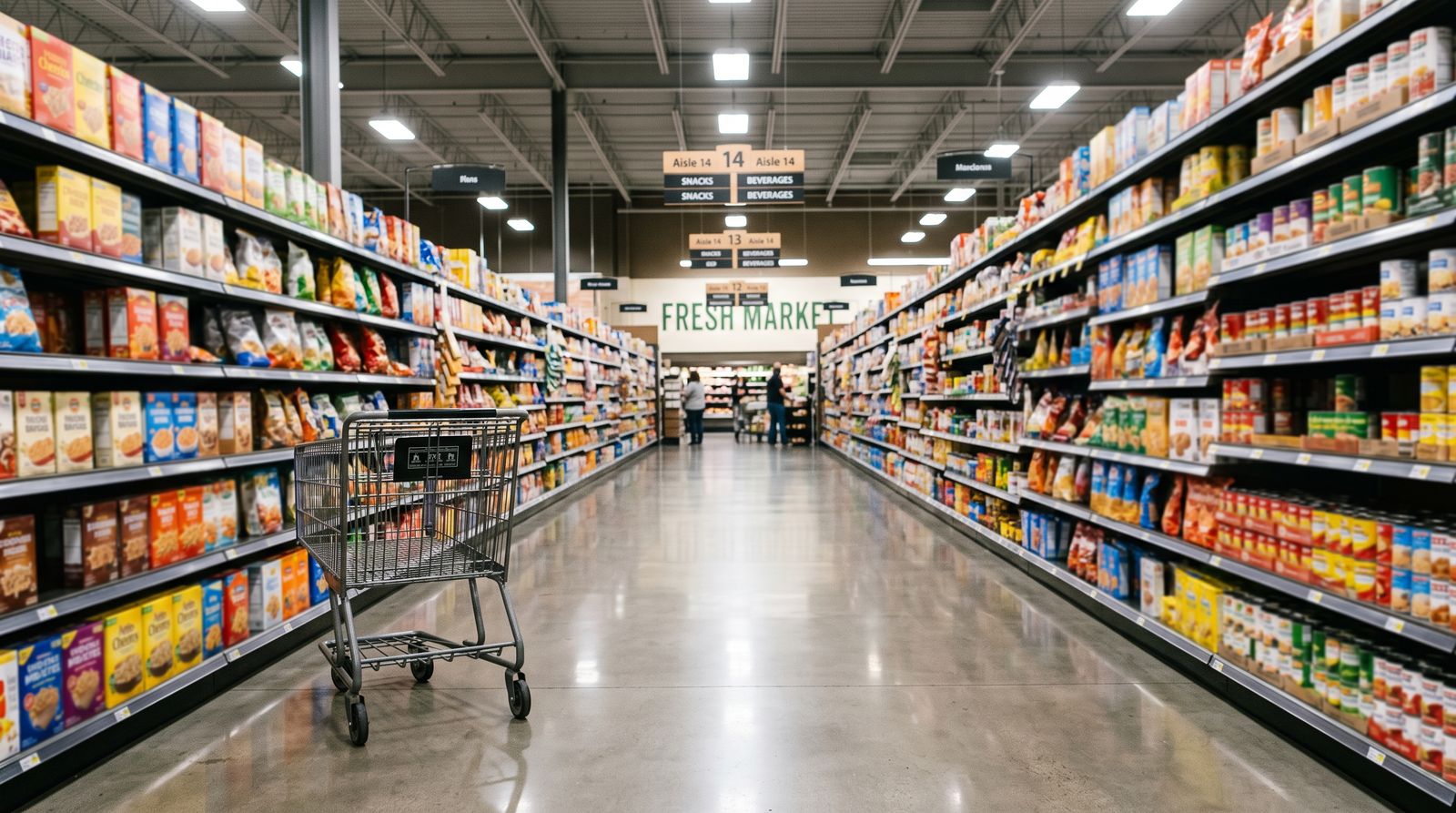
Kroger has agreed to buy Giant Eagle, the family-owned supermarket and pharmacy chain, for $1.65 billion — roughly $1.25 billion in cash plus about $400 million in assumed liabilities. The deal brings in 197 supermarkets and 11 standalone pharmacies across northern Ohio, western Pennsylvania, West Virginia, Maryland and Indiana, and around $9 billion in annual sales. Giant Eagle keeps its name and its Pittsburgh headquarters. Nothing closes soon: the transaction isn’t expected to complete until 2027, pending antitrust clearance, and both companies already expect to divest a limited number of stores to get there.
The number to hold in your head isn’t $1.65 billion. It’s $24.6 billion — the size of the Albertsons merger Kroger chased for two years, only to watch federal and state courts block it in December 2024. The FTC argued the tie-up would raise prices and weaken union bargaining power; judges in Oregon and Washington agreed. Albertsons walked away, sued Kroger for a $600 million termination fee, and Kroger countersued. It was the most expensive lesson in modern grocery retail — and Kroger clearly took notes.
Giant Eagle is that lesson applied. At one-fifteenth the price, in a handful of adjacent states rather than nationwide, with divestitures written in from day one, it is built to be approved. Kroger isn’t trying to fuse the country’s two biggest conventional grocers this time; it’s buying a strong regional operator in markets where it can absorb the overlap. Antitrust lawyers call this “fix-it-first” — offer the remedies before regulators demand them — and it is the mirror image of the all-or-nothing bet that detonated in 2024.
Our take: The Albertsons collapse didn’t end grocery consolidation — it just shrank the unit size. Kroger learned that a national mega-merger is a target painted on your back, so now it’s running the same strategy in installments: regional deals small enough to clear, each one adding a few billion in sales without a two-year court fight. Expect more of these, not fewer. Yes, the current FTC is widely read as less aggressive than the one that killed Albertsons — but the bigger change is Kroger’s. It stopped trying to win the antitrust argument and started structuring deals that never have to make it. That’s the template for the whole sector now: grow by acquisition, but keep every bite swallowable.
What to watch
- Who can still block it: a friendlier FTC isn’t the only gate. State attorneys general can sue on their own, exactly as they did against Kroger-Albertsons. Pennsylvania and Ohio are the ones to watch.
- The divestitures: which stores Kroger agrees to sell, and to whom. The Albertsons deal foundered partly on doubts its castoff buyer could actually run the stores; a credible buyer this time is the tell.
- Labor: the union says it will “monitor the process.” Analysts bet a bigger, better-capitalized Giant Eagle wins workers over — watch whether that holds.
- The next target: at $1.65 billion a deal, Kroger can do this repeatedly. Whatever regional chain it moves on next tells you how far the installment strategy runs.
It lands in a 2026 where deals keep getting done — an M&A market on pace for its biggest year ever, from a record NFL franchise sale to blockbuster media buyouts. Grocery’s version is quieter and smaller by design. After a $24.6 billion swing and a miss, Kroger has decided the surest way to keep growing is to stop making headlines with the size of its deals — and start making them with the number of them.