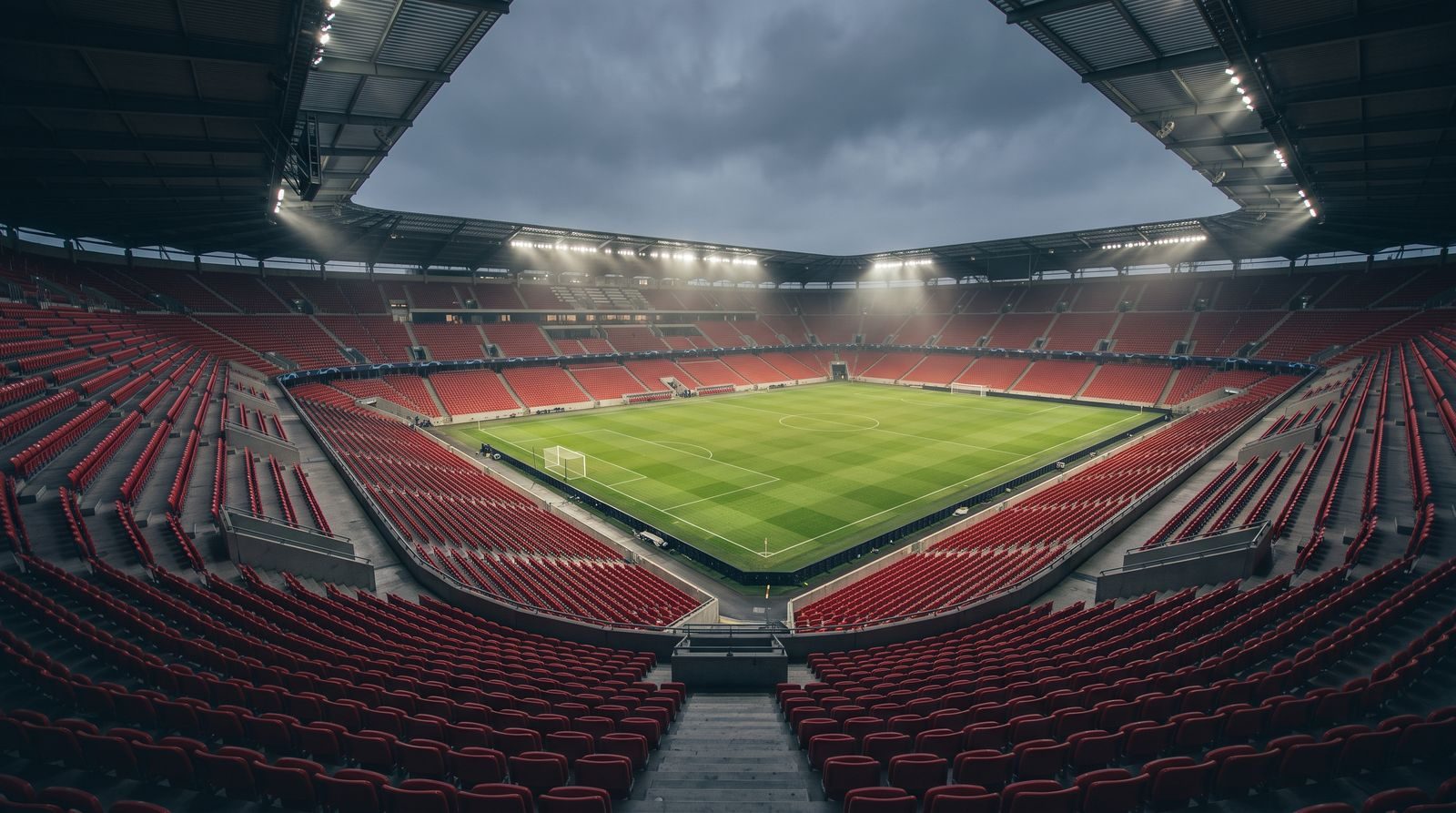
Fenway Sports Group agreed on Friday to sell roughly 30% of Liverpool FC to 1892 Holdings, a consortium assembled by former Queens Park Rangers chairman Amit Bhatia. The buyers include the Mittal family trusts, EE Capital — the family office of Facebook co-founder Eduardo Saverin and his wife Elaine — and the K5 Sports fund, in which Jeff Bezos is the lead investor. It is Bezos’s first investment in a sports team.
FSG keeps the majority and operational control. Bhatia becomes vice-chairman and joins an expanded board. On the surface it is a routine minority raise: new money in, incumbent still in charge, nothing changes on the pitch.
Then there is the clause. 1892 Holdings has an option to increase its holding and become the majority shareholder within the next twelve months, at a valuation of around $8 billion, should FSG choose to give up control. The minority stake prices at just over $7 billion. FSG has, in effect, published its own asking price and pre-selected the buyer.
Our take: This is not a stake sale, it is a staged exit with a floor under it. FSG paid £300 million for Liverpool in 2010; a $7 billion mark is roughly a twentyfold return in sterling terms before you count the option. The structure lets FSG bank real cash now, keep the trophy asset on the books, and hand over control later at a price it has already agreed to — without ever running an auction. If you own an appreciating asset and you are not sure you want to sell it yet, this is the trade you want.
Why the buyer takes the other side
An option to buy control at $8 billion is only attractive if you think the club is worth more than $8 billion inside a year. That is a bet on two things: Premier League media rights continuing to compound, and the current wave of institutional money into European football not reversing. The consortium is paying roughly $7 billion today for the right to find out.
It is also a bet on optionality itself. If Liverpool’s value stalls, 1892 simply doesn’t exercise, and it is left holding a third of one of the most liquid sports assets on earth. The downside is bounded; the upside is a control premium it never has to bid against anyone for.
The pattern, not the club
Three days earlier, Apollo agreed a $2.6 billion debt-and-equity financing with Yankee Global Enterprises — its largest US sports investment, structured explicitly so that Hal Steinbrenner remains the franchise’s control person. Same week, same shape: institutional capital arrives in size, the founding owner keeps the keys, and the governance change is deferred rather than declined.
Sports franchises have become what infrastructure was a decade ago — scarce, cash-generative, politically protected assets that private capital wants exposure to and cannot easily buy outright. Leagues cap how much investment funds can own; MLB’s limit for private equity funds is 15% of a team. So the money comes in as minority stakes, preferred structures and options. The control question doesn’t get answered. It gets scheduled.
For anyone running a family-held business with a valuation problem and a succession problem, that is the transferable part. You no longer have to choose between selling and not selling.
What to watch
- Whether the option gets exercised, and how early. Twelve months is short. An early exercise says the buyers think $8 billion was cheap; letting it lapse says the opposite, loudly.
- Where the proceeds go. FSG has consistently framed new capital as growth funding. The squad and the stadium are the two visible tests, and both show up fast.
- League-level approval and ownership rules. Nothing here looks unusual, but the option would convert a minority holder into a controlling one without a fresh sale process — a route regulators have not seen much of in English football.
- The next one. If Liverpool and the Yankees both close cleanly, expect the minority-plus-option template to show up at three or four more franchises before the season is out.