Marvell Technology told the SEC on Wednesday that it has handed Google a warrant to buy up to 58,970,000 of its shares at $206.58 apiece. Exercised in full, that is roughly $12.2 billion of stock and it would make Google Marvell’s fifth-largest shareholder.
Google is not paying $12.2 billion for the privilege. It is being handed the option in exchange for buying chips. Only 1,360,867 of those shares vest on the clock, in equal quarterly installments over the first year. The other 57.6 million vest in 240 equal tranches — one tranche for every $500 million of custom-product revenue Google and its affiliates send Marvell’s way, running from Marvell’s third quarter of fiscal 2027 through the end of fiscal 2033.
Multiply it out. Two hundred and forty tranches at $500 million each is $120 billion of purchases before the last share vests. That number, not the $12.2 billion headline, is the actual disclosure.
What Marvell is actually building
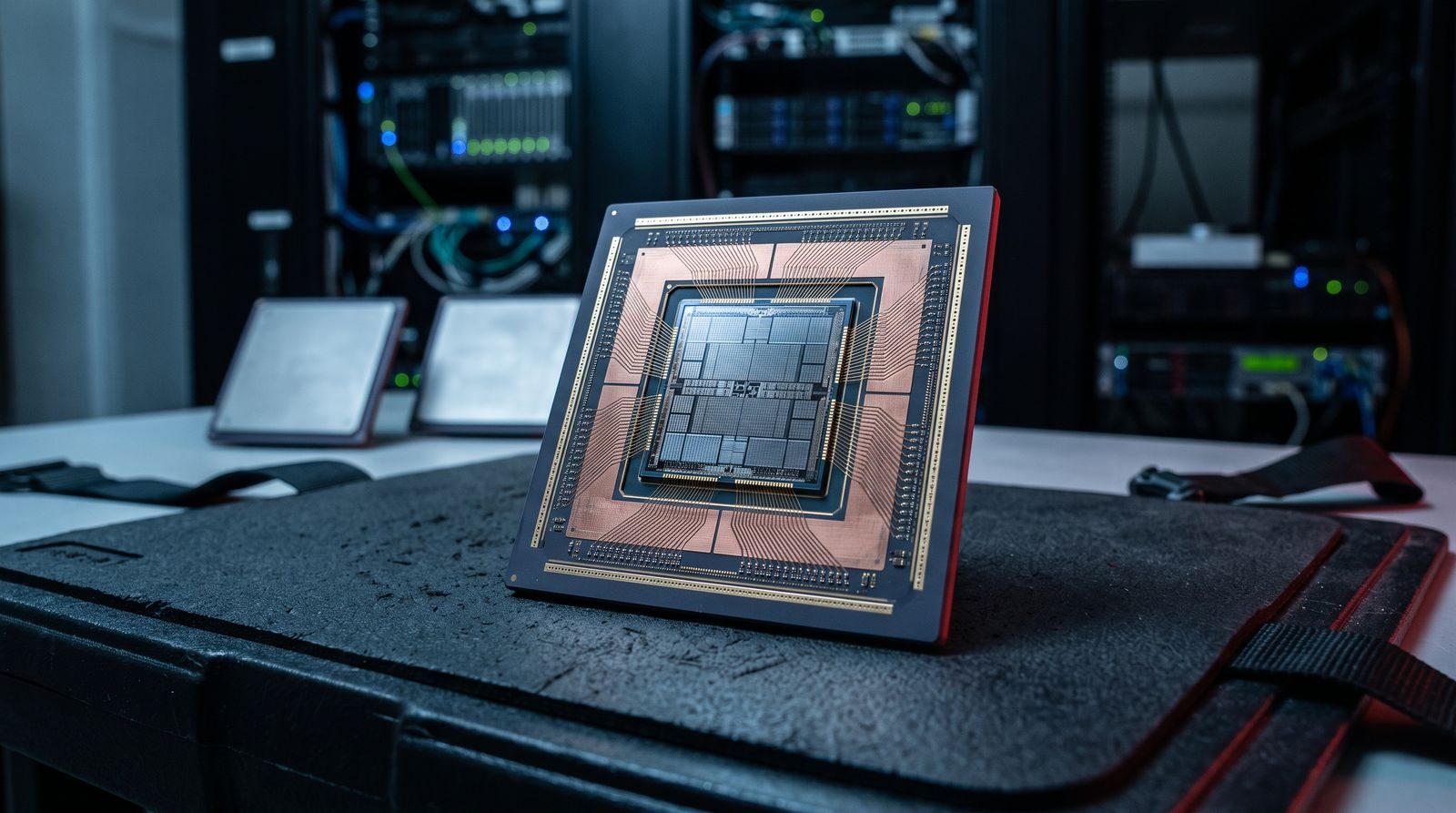
The underlying commercial agreement was signed on 29 July and covers a spread of silicon around Google’s TPU ecosystem: AI inference accelerators, storage controllers, network interface controllers, memory interface controllers and near-memory compute. That is not one part. That is most of the box around the accelerator.
Broadcom has been Google’s principal custom-silicon partner for years. It still is. But Google has now written a second supplier into the roadmap out to 2033 and attached an equity incentive to make sure that supplier stays motivated. Marvell closed Wednesday up 9.85% at $237.27. Broadcom fell 4.61%, shedding roughly $87 billion of market value on a day when nothing about its own business changed.
Our take: The warrant strike of $206.58 sits below Wednesday’s close. Google gets cheaper silicon, a second source, and a stake that appreciates as it buys — the customer now profits from its own supplier’s success. This is the same structure Nvidia has been using to bankroll its buyers, pointed in the opposite direction: down the supply chain instead of up it. The AI trade is quietly turning into a web of cross-holdings where the biggest buyers own pieces of everyone who sells to them.
Why the second-source move matters
Single-supplier custom silicon is a hostage situation with better catering. Google’s TPUs are the most credible non-Nvidia accelerator running at hyperscale, and until now the design partner behind them had enormous pricing leverage. Adding Marvell does three things at once: it caps what Broadcom can charge, it doubles the engineering capacity Google can throw at the roadmap, and it gives Google a second physical path to foundry capacity when supply is tight.
The equity warrant is the clever part. A conventional supply contract gives Marvell an incentive to hit delivery dates. A vesting schedule denominated in Google’s own purchase volume gives Marvell an incentive to make Google want to buy more — and gives Google a reason to keep buying rather than switch back. Both sides are locked in by arithmetic rather than by a penalty clause.
For Broadcom, the read is narrower than the $87 billion selloff suggests. Nothing in the filing says Google is cutting orders. What it says is that the growth from here gets split. In a market priced for one winner per socket, that is enough.
What to watch
- Marvell’s Custom Products revenue line. The vesting schedule turns it into a public scoreboard — every $500 million is one tranche.
- Whether Broadcom quantifies its Google concentration. It has historically declined to name the customer. Pressure to put a number on it just went up.
- Foundry allocation. Two design partners chasing the same advanced-node capacity is a bidding war, not a discount.
- Copycat warrants. If Amazon or Microsoft strike a similar deal with their own silicon partners, equity-for-volume becomes the standard shape of AI supply contracts.
Google spent no cash and bought optionality on both the chips and the chipmaker. The question for everyone else in the supply chain is whether they can still sell into a hyperscaler without handing over stock to do it.