Meta disclosed plans on Monday to raise up to $95 billion in equity to fund its AI infrastructure buildout. About $35 billion of it launched immediately: roughly $22.5 billion of Class A common stock and about $12.5 billion of depositary shares representing mandatory convertible preferred stock. The remaining $60 billion is an at-the-market programme in the new non-voting Class C shares, which Meta says has “not yet been established” and would not begin before the first quarter of 2027.
The stock fell about 1.8% on the day after swinging from up 2% to down in premarket trading.
Put the raise next to the balance sheet and the oddity appears. Meta produced $97 billion of operating cash flow in the first nine months of 2026 and closed September with roughly $82 billion in cash, equivalents and marketable securities. It is one of the most cash-generative companies in the world, and it is selling stock.
The structure is the story, not the headline
The Class A tranche is sold under forward sale agreements with Morgan Stanley and Goldman Sachs. That means Meta does not take the cash now and does not issue the shares now. Settlement runs in stages through November 2027. The banks borrow and sell stock today; Meta delivers shares and collects proceeds later, at a price fixed now.
The $12.5 billion of mandatory convertible preferred does something similar from the other end — it is equity that counts as equity to the rating agencies but does not hit the share count until it converts. And the $60 billion ATM is not a block trade at all; it dribbles shares into the market at prevailing prices over time, in a share class that does not yet trade.
Three instruments, one effect: Meta has booked access to $95 billion of equity while deferring almost all of the actual dilution into 2027 and beyond. Canaccord Genuity, reiterating a Buy and a $950 target, called the dilution “manageable against Meta’s growth” and the share-price pressure “largely technical rather than a change in fundamentals.” The full plan works out to a mid-single-digit percentage of shares outstanding.
The Class C shares themselves arrived last week, announced as a way to give Mark Zuckerberg liquidity against California’s proposed wealth tax without selling voting stock. One week later they are the vehicle for the largest tranche of the raise. Whatever the original purpose, the structure now has two jobs.
Our take: A company with $97 billion of nine-month operating cash flow does not raise $95 billion of equity because it is short of money this quarter. It does it because capex of $135–145 billion for 2026 cannot be funded out of cash flow at the same time as nearly doubling infrastructure capacity, and because equity is the one funding source that does not carry a maturity date. The forward-sale wrapper is the tell: Meta wants the capacity committed now and the dilution counted later, which is a reasonable thing to want and also a bet that the shares are worth more today than they will be when settlement comes.
The suppliers are on the buy side
The detail worth sitting with: Nvidia, AMD and Broadcom have each indicated non-binding interest in buying into the initial common-stock offering. Reports differ on the size — some put it at up to $5 billion each, others at up to $5 billion combined — and the indications are not commitments, so treat the number as unsettled.
The direction is not. Three companies that sell Meta accelerators and networking silicon are offering to buy the equity that pays for them. It is not circular in the accounting sense; nobody is booking the same dollar twice. But it is the same money going around a loop, and it is the third version of this pattern in a month, after Nvidia’s exposure to its own neocloud customers and the Apollo structure that bought SpaceX’s GPUs for it. The AI buildout is increasingly financed by the people selling the inputs.
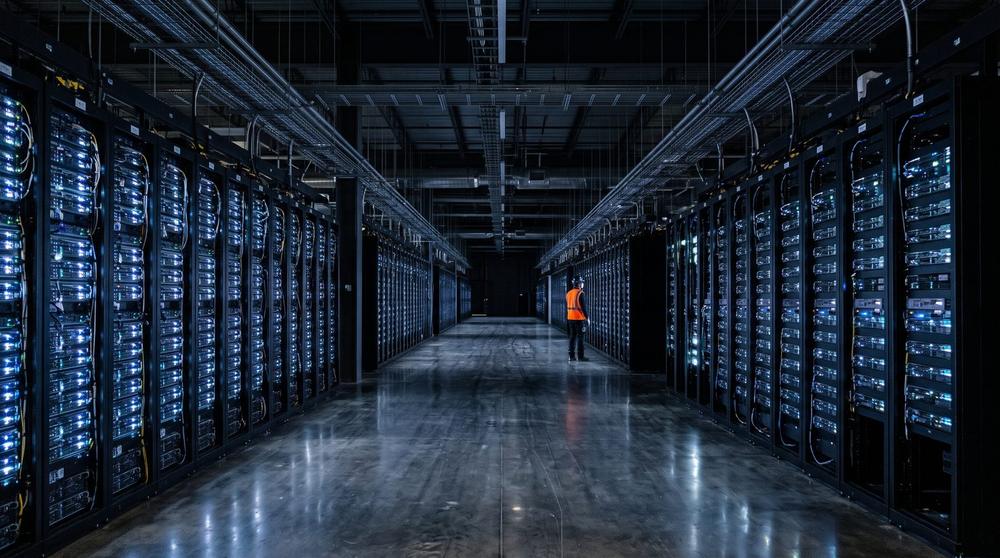
Meta says it will fund the buildout through operating cash flow, debt, partnerships and equity — all four. It runs data centres in 23 US states, is building four AI superclusters of more than a gigawatt each, and expects to nearly double total infrastructure capacity this year against last. Last quarter revenue rose 26% to about $65 billion while operating income fell 37% to $13 billion, as costs went from roughly $31 billion to $52 billion. That is the shape of a company spending ahead of the return.
What to watch
- Whether the chipmakers actually subscribe. Indications of interest are free. Allocations in the final pricing terms are not, and they are the test of whether this is real demand or a show of confidence.
- Class C trading and the ATM start date. Meta has said Q1 2027 at the earliest and that terms are undetermined. A $60 billion ATM in a brand-new non-voting class is the part of this plan with the least precedent.
- The forward-sale settlement schedule. Shares land through November 2027 at prices struck now. If the stock runs, Meta sold cheap; if it falls, holders get diluted at yesterday’s valuation.
- 2027 capex guidance. The $135–145 billion figure is for 2026. The raise implies next year is larger, and nobody has put a number on it yet.
- Whether debt follows. Equity first usually means the debt market is the harder sell. Watch for a bond deal, and watch its spread.