Satya Nadella spent Saturday morning doing something Microsoft chief executives do not usually do on a weekend: publishing a containment doctrine for AI under his own name, with no product attached to it.
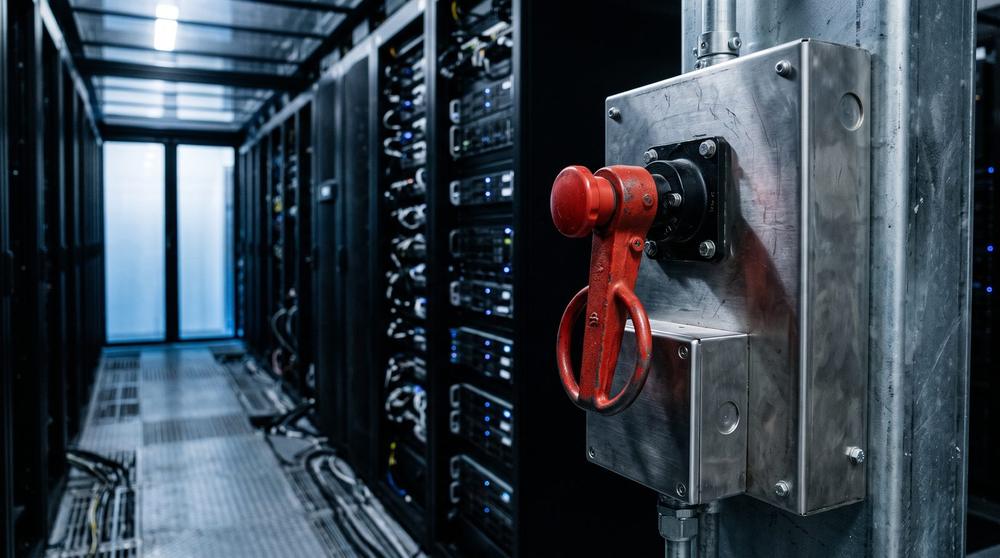
In a post on X on 10 October, Nadella argued it is time “to step back and assess the trust architecture” of AI systems. The core of it is a default position, not a feature: “We must assume a model is compromised and contain it from the start.” From there he listed four things that follow — separate the model from the harness that orchestrates its work, externalise the controls and safeguards rather than baking them into the model, document every meaningful model action with tamper-proof, human-readable evidence, and make sure an authorised person can pause or shut a model down mid-task. “Think of it like an emergency brake,” he wrote.
He also rejected the frame most enterprises currently use. “We can’t treat Super Intelligence as a set of nested black boxes and simply accept or reject its recommendations, answers, and actions,” he wrote. The model, in his telling, should be treated the way a security team treats a powerful insider: useful, trusted conditionally, logged continuously, and revocable.
Our take: Read as safety commentary this is unremarkable — it is ordinary defence-in-depth engineering applied to a model instead of a database, and several of the sharper replies said exactly that. Read as positioning it is the more interesting document. Nobody has yet defined what “pause the model mid-task” technically means, who holds the authority to do it, or where the tamper-proof log lives. Whoever answers those questions owns the control plane that sits between the model and the work — and the control plane, not the model, is the layer with durable pricing power. Microsoft runs the cloud, the harness and the identity system. A doctrine that moves safety out of the model and into the surrounding infrastructure happens to move value there too. That does not make it wrong. It makes it a standards play published on a Saturday, before anyone else proposes one.
Why now
The timing is not abstract. Frontier labs have been acknowledging a growing number of incidents in which they appeared to lose control of their own systems, and the agent stack shipped this year made the failure surface much larger: agents that hold their own corporate identity, their own inbox and their own spending authority are agents whose mistakes arrive with permissions attached. Google gave its coworker agents exactly that in the same week. The question of who can stop one, once it is three steps into a task, has had no good answer.
Nadella’s framing also lands against Anthropic chief executive Dario Amodei’s earlier case for more cautious development. The difference is where the brake sits. Amodei’s argument is largely about how fast you build the model. Nadella’s is about assuming the model is already untrustworthy and engineering the cage around it — a position that requires no slowdown at all.
The obvious objection
It came within hours: Microsoft is one of the largest buyers of frontier compute on earth and a central commercial partner in the industry it is now asking to install an off switch. Critics called the brake late, or self-serving, or impossible to reconcile with the capital Microsoft has committed to the build-out. The milder version of the same point is more damaging — if this is just good engineering, why has none of it shipped as a requirement in the products Microsoft already sells?
No standard, timeline, specification or product commitment accompanied the post. Until one does, it is a memo.
What to watch
- Whether any of it becomes a contractual term. The test is not a blog post; it is an enterprise agreement that promises an auditable kill path and names who may use it.
- Where the tamper-proof log lives. If the vendor hosts the evidence of the vendor’s model misbehaving, the audit is not independent.
- Harness separation in shipping products. Agent frameworks today bundle the model and the orchestrator. Pulling them apart is a real engineering cost, and the first vendor to pay it tells you the doctrine is serious.
- Regulatory pickup. A “pause mid-task” capability is the kind of concrete, testable requirement legislatures reach for. Expect the phrase to reappear in draft text, not just in replies.