Olix announced a $312 million Series B on Monday — €270.5 million, at a €2.8 billion valuation, or $3.3 billion. Arm, Fundomo and Hudson River Trading took part, Netflix co-founder Reed Hastings came in as an angel, and the UK government’s Sovereign AI venture fund confirmed it had invested. Existing backers all increased. The company was founded in London in 2024 and has not shipped a chip.
The number that matters more is the last one. In February, Olix raised $220 million at a $1 billion valuation. Six months later the same company is worth three times as much, on the strength of a product still eighteen months from customers — first silicon is promised in the second half of 2027. PitchBook logged it as the largest semiconductor venture round Europe has done.
What Olix is building is narrower than “AI chip.” It is a suite of accelerators for inference specifically, with a different chip for each stage of producing a token. The company’s own framing: a data center is a factory whose product is the token, every stage of that production makes different demands on hardware, and every other factory on earth would assign each stage a purpose-built machine — while the token factory runs all of them on the same generalist part. The first accelerator, DX-1, handles decode, the stage where a model reasons and writes its answer. Olix claims Pareto-optimal decode on 100-billion-parameter models at more than 10,000 tokens per second per user, at better throughput-per-watt than general-purpose chips running large batches.
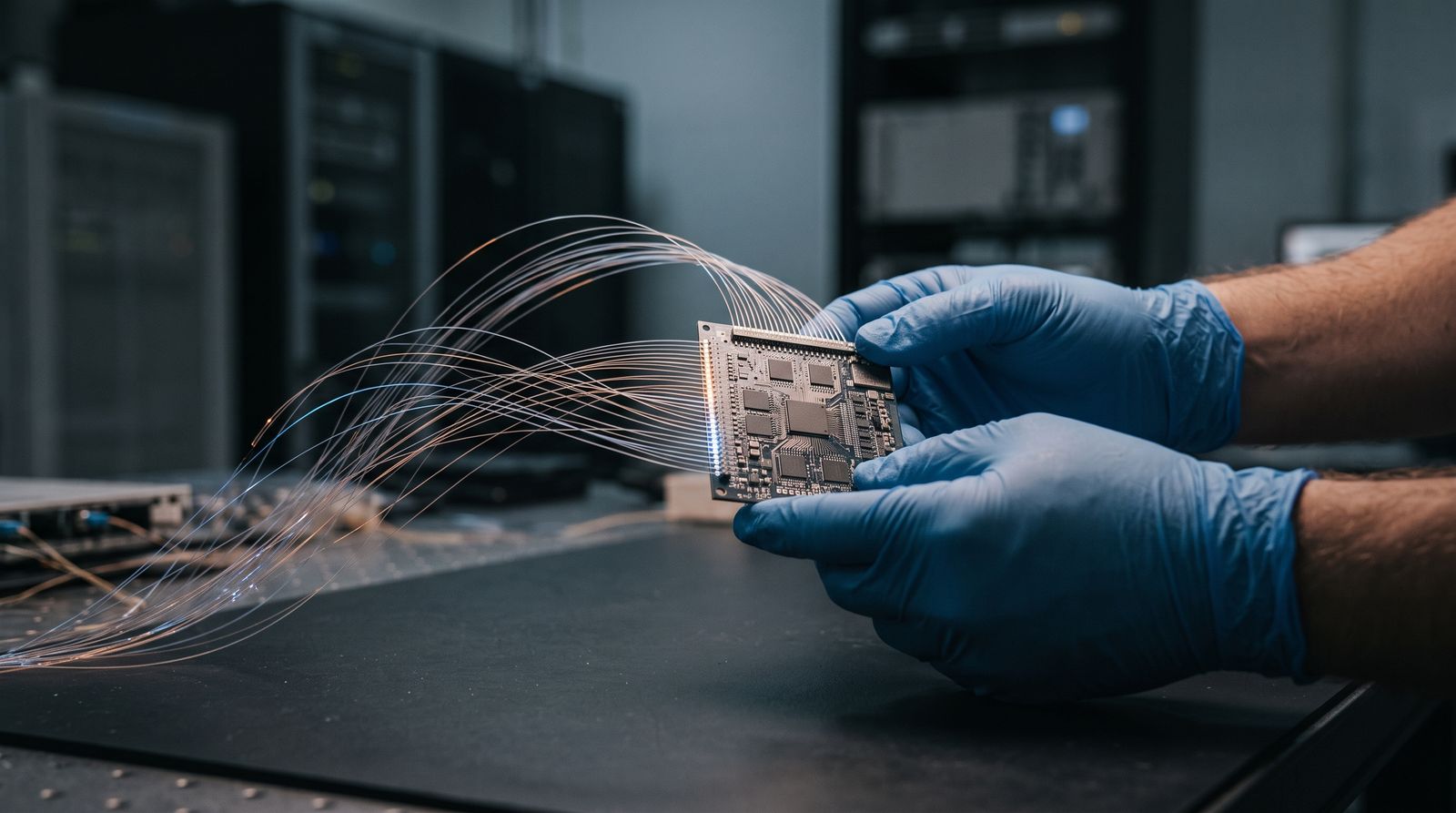
The design choice underneath is the story. DX-1 holds the model in on-chip SRAM and moves data between dies over a “slow and wide” optical interconnect — light instead of copper — scaling to roughly 10,000 chips in a single multi-rack domain. That means no high-bandwidth memory and no advanced packaging. Those are precisely the two components the entire industry is short of, the constraint that has been quietly rewriting other companies’ numbers all year: Qualcomm beat on revenue last week and still cut guidance because of memory costs. Olix’s architecture is not merely faster in theory. It is buildable in a market where being buildable is the binding constraint.
Our take: Most challenger-silicon pitches are a performance claim, and performance claims from pre-revenue chip companies are worth roughly nothing until customers benchmark them. This one is a supply-chain claim, and supply-chain claims are checkable today. If you cannot get HBM stacks or CoWoS-class packaging slots — and almost nobody outside the top three buyers can — then a design that needs neither has a real path to volume while better-funded rivals sit in a queue. That is also the honest risk: SRAM is expensive per bit and the whole approach depends on spreading a model across thousands of chips working perfectly in concert, which is a systems problem nobody has solved at that scale. Note who wrote checks. Arm is the incumbent architecture licensor. Hudson River Trading buys latency-sensitive compute for a living. And a government fund is now a seed investor in domestic silicon — the UK is doing openly what Korea did with a public scoreboard for its frontier labs. The state has decided chips are infrastructure, not an industry.
What to watch
- Silicon, not slides, in H2 2027. Everything here is a claim until a customer runs a model on DX-1. Photonics startups have a long history of missing tape-out dates; the interconnect is the hardest part and it is the whole thesis.
- Whether HBM stays scarce. Olix’s moat is somebody else’s shortage. If memory supply loosens by 2027, “no HBM required” converts from a differentiator into a specification tradeoff.
- The inference-versus-training split. Capital keeps rotating toward serving models rather than building them, which is where the recurring revenue lives — the same shift showing up in how hyperscalers are now accounting for their AI hardware.
- Who the market pays for AI compute. Amazon crossed $3 trillion Monday while the chip index it depends on fell 1.9%. Public markets are pricing silicon as a commodity input. Private markets just tripled a chip company in six months. One of them is wrong.