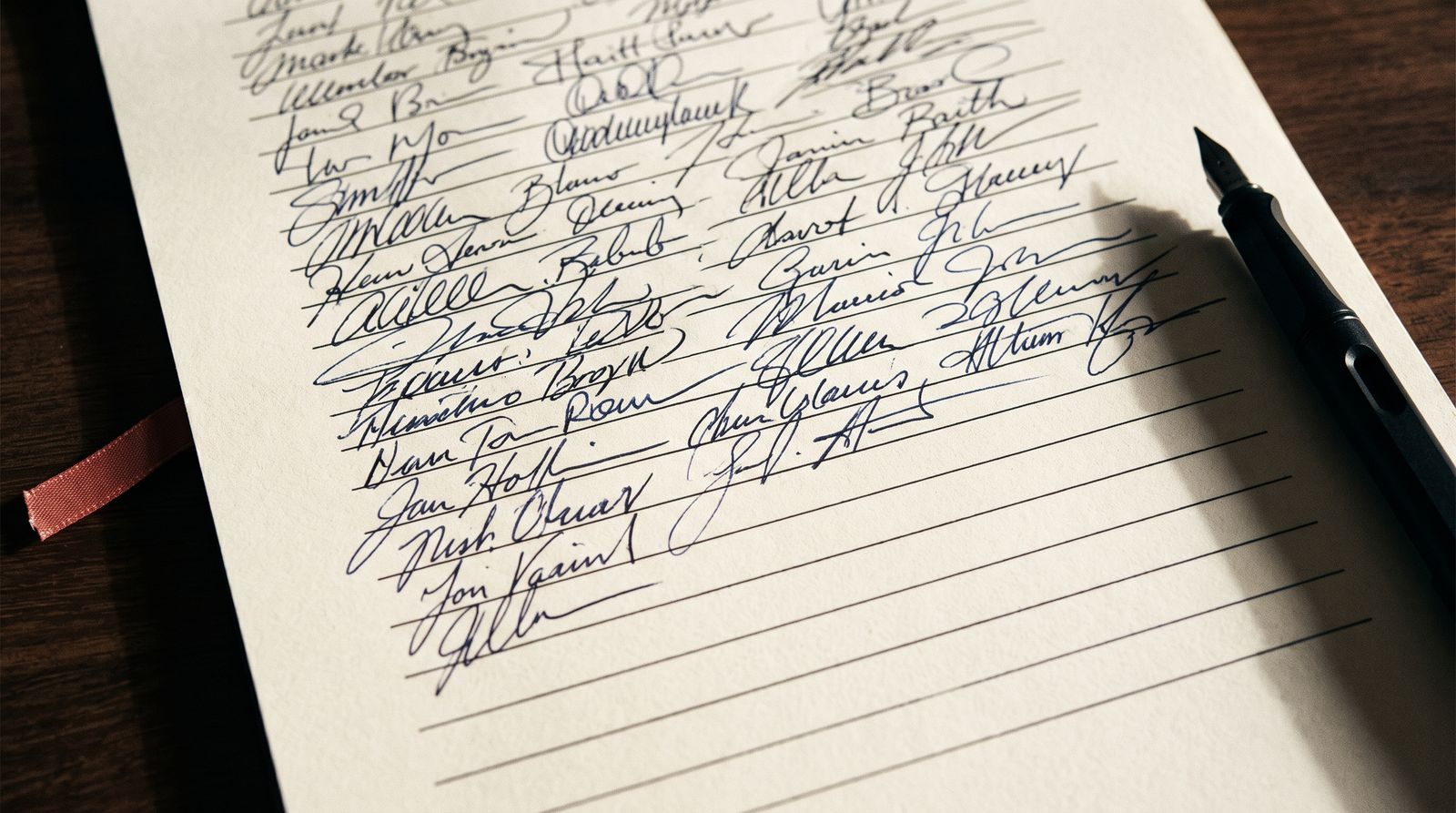
A letter titled “Open Weights and American AI Leadership,” dated July 24, went out Friday with 25 corporate signatures on it. Nvidia, Microsoft, Meta, IBM, Dell Technologies, Palantir, Hugging Face, Mistral, Mozilla, Perplexity, Replit and Y Combinator are among them.
Nvidia chief executive Jensen Huang marked the occasion by posting on X for the first time in his life. “Open models strengthen safety and cybersecurity, accelerate innovation and diffusion, and enable sovereignty,” he wrote. “The world needs both frontier closed models and frontier open models.”
The letter’s ask is that Washington avoid what it calls premature restrictions on downloadable AI models. Its analogy is the 1980s, when the signatories argue over-restricting software would have strangled the industry that followed. It also defends distillation — training a model on another model’s outputs — as a legitimate improvement technique, and asks policymakers to go after intellectual property theft directly rather than by banning a category of model.
OpenAI, Anthropic and Google did not sign. Neither did Amazon.
The signature block is the argument
Sort the signatories by where their revenue comes from and the coalition stops looking like a philosophy and starts looking like a supply chain.
Nvidia sells the compute every model runs on, open or closed — and a world of thousands of downloadable models running in thousands of places is a bigger silicon market than a world of five API endpoints. Hugging Face is the distribution layer for open weights. Dell sells the on-premises hardware enterprises buy specifically so they can run something they downloaded. Mistral’s entire product strategy is open weights. Y Combinator funds the companies that cannot absorb frontier API bills. Microsoft and Meta both ship open-weight families alongside their other bets.
Now sort the absentees. OpenAI, Anthropic and Google sell metered access to models whose weights they do not release. A policy environment that treats downloadable models as a hazard is not, for them, a cost.
None of that is an accusation of bad faith. A company’s interests and its sincere convictions routinely point the same direction, and the letter’s substantive arguments about safety inspection, sovereignty and diffusion stand or fall on their own. But the signature block is the fastest read available, and it is more informative than the prose.
Why it landed this week
Reports four days earlier had the administration reviving a push to ban Chinese models. That debate is no longer abstract: Moonshot’s Kimi K3, released July 16, ranks among the most capable models available anywhere and is downloadable, and Alibaba has its own open-weight flagship in preview. The question in front of Washington is whether an American developer should be permitted to download a Chinese model — and any rule broad enough to stop that has to explain what it does to the American open-weight ecosystem it would also catch.
Our take: This is a distribution fight dressed as a policy debate, and that’s the most useful way to read every AI open letter you will see for the next two years. The tell is simple and it works on any coalition: ask what each signatory sells. Firms that sell picks, shovels, hosting and tooling want the number of models maximized. Firms that sell metered access to a model want the number of credible substitutes minimized. Both then produce a principled argument, and both arguments are worth engaging — but you will understand the letter faster by reading the letterhead than the body. For operators, the practical consequence is that open weights just acquired the most powerful lobbying coalition in the industry, and that is a real signal about where enterprise deployment goes: if you are choosing a stack this year, the option to run the model yourself is getting more politically durable, not less.
What to watch
- Whether the closed labs respond in public: Silence from OpenAI, Anthropic and Google is a position. A counter-letter would be a much clearer one — and would define the fight for the rest of the year.
- The Chinese-model rule as drafted: The whole question is whether restrictions are written around a model’s origin or around the act of downloading weights. The first is narrow. The second catches Meta, Mistral and every American open release with it.
- Distillation language: The letter asks policymakers to treat distillation as legitimate. If a rule instead defines it as misappropriation, the compliance burden lands on thousands of small developers, not on the labs.