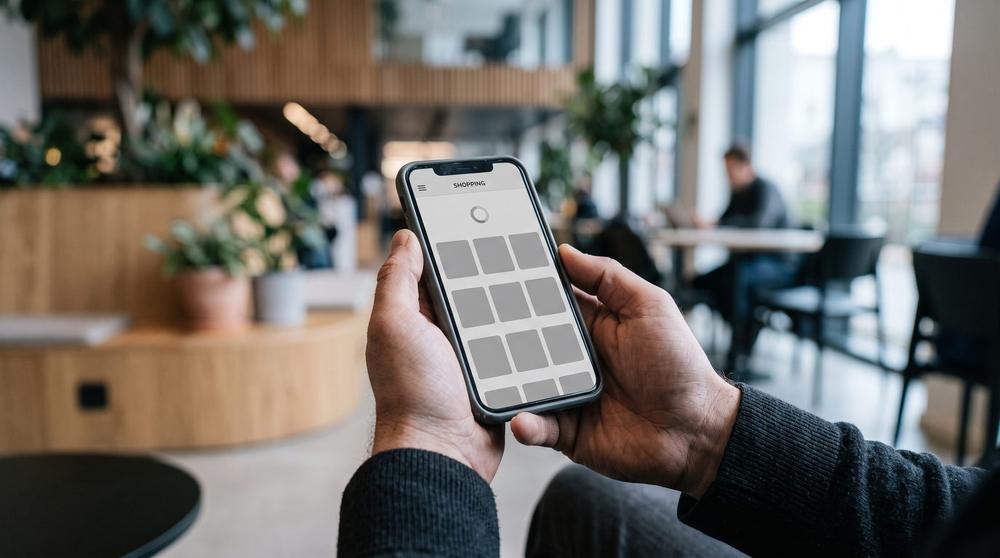
OpenAI began testing a visual ad format inside ChatGPT this week: product imagery that appears alongside — and during the loading of — generated images. The ads are labelled, kept separate from the user’s own output, and, OpenAI says, have no influence on the answers ChatGPT gives. Testing starts in the US in October with a small group of advertisers, on free and lower-cost tiers.
That is the part everyone will write about. It is not the part that matters.
Alongside the format, OpenAI announced roughly twenty measurement and brand-safety partnerships at once. Hightouch, Tealium and LiveRamp for moving conversion data in. AppsFlyer, Triple Whale, Adjust, DV Rockerbox, Northbeam, Branch, Singular, Kochava, Airbridge and Tenjin for web and app attribution. Fospha, Measured and INCRMNTAL for full-funnel analysis. Haus, Measured and WorkMagic for geo-based incrementality tests. DoubleVerify and Integral Ad Science are running brand-safety evaluations in controlled environments, without access to private conversations.
Ad formats are cheap. Measurement plumbing is not.
Any product with attention can invent an ad unit in a sprint. What stops a new channel from scaling is that no performance marketer will move real budget into a surface they cannot measure against the surfaces they already trust. Attribution, incrementality testing, and third-party brand-safety verification are the three things a media buyer’s finance partner asks for before signing anything, and they take quarters to build because each one is a separate integration with a separate vendor.
Shipping all three categories simultaneously is not a product launch. It is a channel launch. OpenAI is telling agencies that ChatGPT inventory can be bought the way Meta and Google inventory is bought, with the same dashboards and the same proof.
Our take: Count the partners, not the pixels. A company testing whether ads annoy users ships one format and waits. A company that has already decided ads are the business ships twenty measurement integrations on the same day. OpenAI has decided.
The two numbers OpenAI chose to publish
Early results cited: WeightWatchers recorded a cost-per-acquisition 15.3% below its paid-search benchmark, and Portland Leather saw 93% of its ChatGPT Ads traffic come from new visitors.
Treat both carefully. Early-channel case studies are selected, the cohorts are tiny, and low competition on a new surface flatters CPA in a way that does not survive the auction filling up. But the pairing is deliberate: one number says the channel is efficient, the other says it is incremental. Those are the two objections a performance team raises in order, and OpenAI pre-answered both.
The reach claim is the anchor underneath: 1.2 billion people a week. Visual ads arriving during image generation also places inventory at the moment of highest commercial intent in the product — a user describing what they want something to look like is, functionally, a shopper.
What to watch
- Whether the ads stay off paid tiers. The current split — ads on free and low-cost plans — makes the ad load a lever on subscription conversion. If ads creep upward into higher tiers, the business has shifted from subscriptions-with-ads to ads-with-subscriptions.
- Auction disclosure. No pricing or auction mechanics have been published. Until advertisers can see how placement is priced, budgets stay experimental.
- The brand-safety verdict. DoubleVerify and IAS are evaluating without access to conversations. Whatever standard they certify will define what “brand safe” means for conversational surfaces generally — and competitors will have to meet it.
- Who matches the stack. The twenty integrations are now the floor. Any rival monetising a chat surface has to replicate them or concede the performance budget.
The ad unit is the announcement. The plumbing is the strategy.