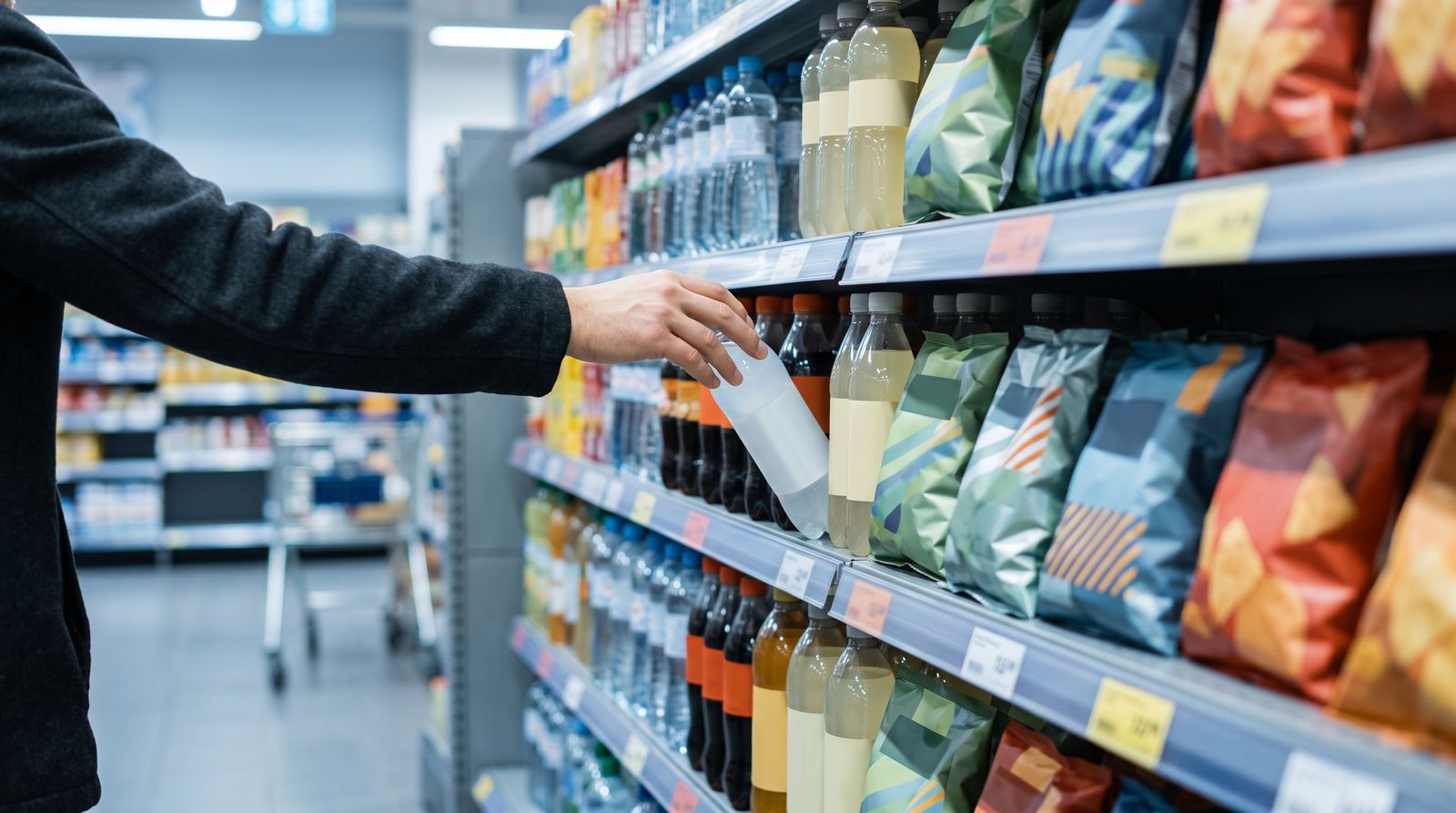
PepsiCo reported second-quarter results before the bell Thursday, and the headline was a beat: net revenue rose 6.4% to $24.18 billion, ahead of the roughly $23.95 billion Wall Street expected. Underneath it, the picture was softer. Core earnings came in at $2.20 a share, a penny below the $2.21 consensus, and organic revenue — the figure that strips out currency and acquisitions — grew just 2.4%. Management left full-year guidance untouched: organic revenue up 2% to 4%, core constant-currency EPS up 4% to 6%. The stock barely budged, hovering around $143.
The real story is geography. Globally, PepsiCo moved 3% more food and 2% more beverages by volume — but almost none of that came from home. Its overseas divisions across Asia Pacific, Europe, the Middle East and Africa all posted organic volume gains. North America did the opposite: food volume was flat and organic sales there slipped about 2%, while the North American beverage business saw volume drop 4%. The company that owns Pepsi, Gatorade, Lay’s and Doritos is being carried by everywhere that isn’t America.
And it isn’t for lack of trying to win shoppers back. Earlier this year PepsiCo cut prices on marquee snacks — Lay’s, Tostitos, Doritos and Cheetos — by as much as 15% and leaned into smaller, cheaper pack sizes aimed at budget-conscious buyers. Q2 is the scoreboard on that bet: the discounts helped hold the top line together, but they still weren’t enough to get North American volumes growing again.
Our take: Forget the one-cent miss — it’s noise. The signal is that PepsiCo marked down some of the most iconic brands in the American pantry by double digits and shoppers still bought less soda. When a company with pricing power like Pepsi’s has to choose between volume and margin at home and comes away with neither, that’s not really a Pepsi problem. It’s a read on a stretched U.S. consumer who is trading down, buying smaller, and skipping the cart-filler. The market shrugged because the international engine is quietly covering the hole — but “flat at home, growth rented from abroad” is a fragile way to make your numbers, and it rhymes with everything else the consumer economy has been signaling.
It also doesn’t stand alone. The same trade-down showed up when Walmart rolled out summer price cuts on beef and soda, and it sat right next to a record-spending July 4 weekend that leaned on experiences over groceries. For households fighting the same pressure PepsiCo is feeling, our Inflation-Resilience Playbook lays out the levers that actually move the needle.
What to watch
- That 4% beverage drop. North American soda volume is the ugliest line in the release. Watch whether Q3 stabilizes or the price cuts have to go deeper.
- Guidance credibility. PepsiCo held its 2%–4% organic and 4%–6% core-EPS targets on a soft first half. Watch whether a weak home market forces a trim later in the year.
- Smaller packs, private label. If shoppers keep buying less even at lower prices, the whole packaged-food group has a demand problem, not a pricing one.
- The dollar. The overseas business is doing the heavy lifting. A stronger dollar would blunt the one part that’s actually working.