The October producer price report landed Friday morning with a cool headline and a hot everything-else. Final demand prices rose 0.3% from September, under the 0.4% economists polled by Dow Jones had penciled in. That is the number that will be quoted. It is also the only part of the release that behaved.
Over twelve months, the producer price index rose 6.5% — the largest annual increase since November 2022, per Bureau of Labor Statistics figures reported by Bloomberg. Strip out food and energy and wholesale prices are still up 5.0% year over year. Strip out food, energy and trade services — the measure the BLS treats as its cleanest read on underlying pressure — and prices rose 0.5% in October alone, with a 4.9% annual rate.
Set that against what consumers are paying. Core CPI is running at 2.8% year over year. Core producer prices are running at 5.0%. That is a gap of more than two percentage points between what it costs to make and move things and what anyone has managed to charge for them.
Somebody is absorbing 2.2 points
A wholesale-to-retail spread that wide resolves exactly three ways. Producers raise prices and the consumer print catches up. Producers hold prices and margins compress. Or input costs roll over on their own. Nothing in the October detail suggests the third.
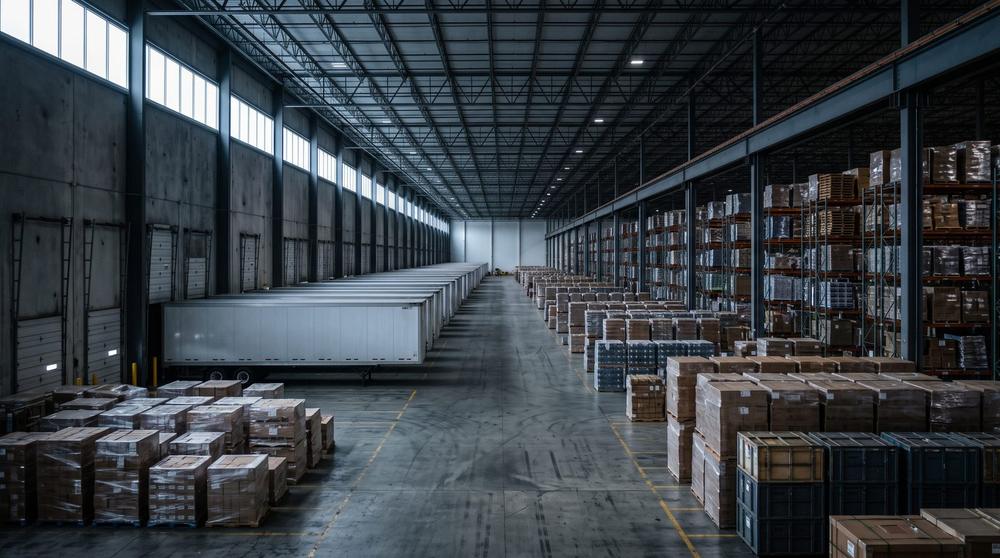
Goods prices rose 0.5% while services rose only 0.2%, and energy actually fell 0.1% after surging the month before — so this was not an energy pass-through month. Food prices climbed 1.3%, the most since February. Transportation and warehousing rose 2%, following an even larger September increase, and truck freight rates jumped by the most since April, running up nearly 25% from a year ago. Core goods rose by the most since May; electronic components and accessories by the most since April.
Carl Weinberg of High Frequency Economics put the mechanism plainly to Bloomberg: “Transportation costs are the channel through which energy prices bleed through into core goods prices.” Freight is not a line item that stays quiet. It gets rebid, and the rebid lands in next quarter's cost of goods sold.
Our take: The miss-versus-consensus framing is the least informative thing in this release. A 0.3% monthly print that leaves the annual rate at a four-year high is not disinflation; it is a high plateau with a slow month on top. The number that should change how you plan is the 2.2-point spread between core PPI and core CPI, because that spread is a margin forecast in disguise. If you buy physical goods or freight, your 2027 input costs are already set and they are not set at 2.8%.
The policy problem
This is the last major inflation reading before the Federal Open Market Committee concludes its meeting on December 9, and the Fed is widely expected to raise rates a quarter point — a tightening cycle, not an easing one. Tuesday's CPI ran hotter than expected while Friday's PPI ran cooler, which means the two October reports point in opposite directions going into that decision.
Governor Christopher Waller said on November 10 that a half-point move should be on the table if core CPI printed around 0.3% or higher. It printed 0.3%. Futures still put the odds of a half point in the low teens. Someone is wrong, and the October PCE release on November 25 is the next chance to find out who.
What to watch
- Core PCE on November 25. Vice Chair for Supervision Michelle Bowman has said core PCE likely rose to 3.3% over the twelve months through October. That is the Fed's preferred gauge and sits between the CPI and PPI readings.
- Freight rates into Q1. Truck rates up nearly 25% year over year do not stay out of finished-goods pricing for more than a quarter or two.
- Q4 gross margin guidance. If the PPI–CPI gap is real, it shows up as guided-down margins on goods-heavy earnings calls in January and February, not as a consumer price spike.
- Trade services. Margins in that category fell in October, which is why the narrow core ran hotter than the broad one. Trade services swing violently month to month; one print is not a trend.
The useful summary of October is not “inflation came in below expectations.” It is that producers are paying 5% more and charging consumers 2.8% more, and that arrangement has a shelf life.