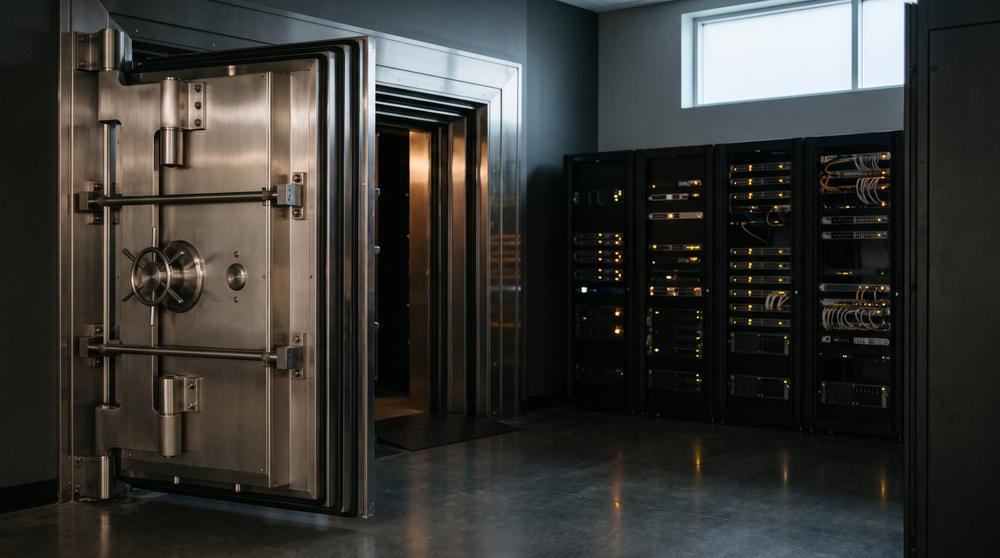
Ripple said on Wednesday that Yapı Kredi, one of Türkiye’s largest private banks, will use Ripple Custody to hold crypto assets for Yapı Kredi Kripto, the group’s trading platform. The software runs on the bank’s own premises, and custody of customer assets sits with the bank.
That is the confirmed deal in full. What it is not is an XRP deal — and the distance between those two statements is where most of Wednesday’s coverage ended up.
The commercial logic is regulatory. Türkiye’s Capital Markets Board brought crypto platforms under supervision in 2024 and now requires a trading platform to keep at least 95% of customer crypto with an authorised custodian. Yapı Kredi won custodian approval this year. A rule like that manufactures custody mandates: somebody has to hold the 95%, and the bank has decided the software holding it will be Ripple’s.
The XRP question
Three of the four accounts we checked say plainly that the announcement does not specify which cryptocurrencies Yapı Kredi Kripto will support, and that nothing in it obliges the bank to buy, hold or use XRP. The fourth led its headline on “widespread XRP holdings” — a framing that traces back to Ripple’s own claim that XRP is among the most widely held assets in a market Ripple describes as the largest crypto retail market in the Middle East. Whether that description extends to Africa depends on which version of Ripple’s text you read: the embedded post and the press copy differ on exactly that phrase.
Our take: A custody contract and a token listing are different products. Ripple sells both, which is precisely why the distinction gets lost. The verifiable fact here is that a licensed Turkish bank chose Ripple’s software to satisfy a 95% custody rule. The unverifiable one is that this puts XRP on a Turkish bank’s shelf. Until Yapı Kredi Kripto publishes a supported-asset list, the XRP connection is a marketing adjacency, not a term of the agreement.
What nobody disclosed
Only one of the four reports itemised the omissions, and the list is long: fees, contract duration, and the specific cryptocurrencies. Add a go-live date and a deal value, which none of the four carries. On the approval timing, three say 2026 with no month; one says the bank disclosed its approval in June.
Even the operator is in dispute. Three accounts have the bank running the system on its own premises. One has Ripple’s technology managing the assets — a materially different claim about who holds the keys. Titles drift too: Ripple’s Reece Merrick is “managing director for the Middle East and Africa” in two write-ups and “vice president and managing director” in a third, and no two of the four quote the same sentence from him.
The price, as context only
XRP changed hands around $0.92 on Wednesday, having slipped just under a one-year lowest close of 90.9 cents on November 20. US spot XRP funds held roughly $1.02 billion in net assets and logged zero net flows on November 24.
The more instructive figures concern whether bank deals move the token at all. In the 30 days after Ripple’s last three bank announcements, XRP fell 25.2% (Garanti BBVA, January 22), fell 2.1% (Kbank, April 30) and rose 29.4% (Jeonbuk Bank, August 18). Three deals, three unrelated outcomes. That is not a pattern, and it is the strongest argument for filing a custody signing as a business story rather than a market one.
What to watch
- A supported-asset list from Yapı Kredi Kripto. It is the single document that would convert the XRP angle from inference into fact.
- A go-live date and a CMB approval month. Both are missing, and the June reference sits in only one account.
- Who holds the keys. “Bank-operated, on-premises” and “Ripple manages the assets” are not two phrasings of one arrangement. The press release settles it; the coverage does not.
- Ripple’s own institutional numbers. At Swell 2026 the company put annualised product revenue “nearing $900 million” across 1,700 institutions and more than 85 licences. Those are company-reported figures with no audited counterpart, so treat them as claims until they turn up somewhere independent.
One more caveat worth stating out loud: we could not read Ripple’s press release or the bank’s exchange filing directly. Everything above is drawn from four secondary accounts that agree on the shape of the deal and disagree on at least six of its details. Where they disagree, we have said so rather than picking the tidier number.