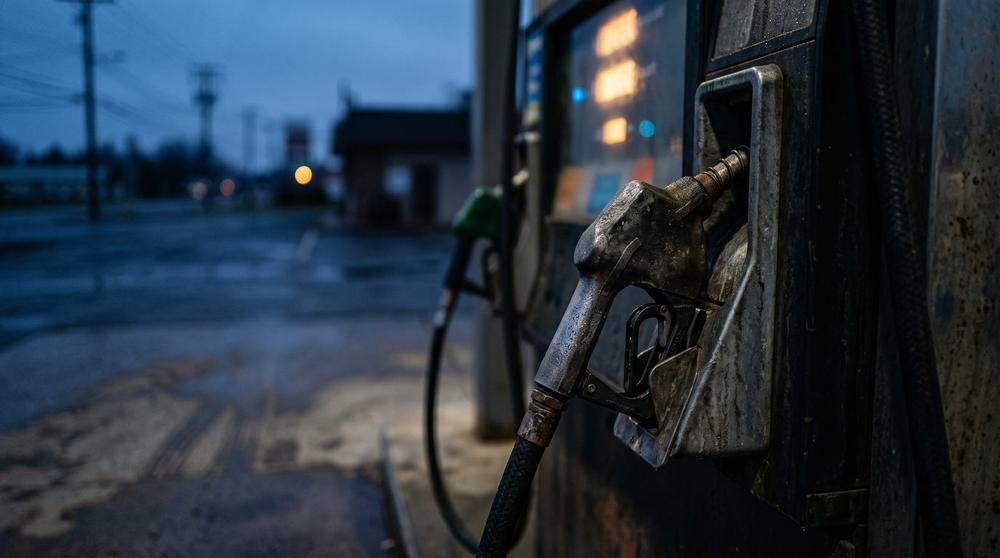
September consumer prices rose 0.6% on the month and 3.7% over the year, up from 3.4% in August and above the 3.6% economists expected. Gasoline alone rose 9.1% in a single month — more than half the headline increase — and is up 34.2% over twelve months. Energy overall added 5.2% on the month and 20.4% on the year.
On its own, that is the kind of print a central bank looks through. Oil shocks are not monetary policy failures, and the Fed has spent decades telling people so.
The problem is the rest of the report. Core CPI, which strips out food and energy, rose 0.3% against a 0.2% forecast, and the annual core rate accelerated to 2.6% from 2.4%. Shelter picked up to 0.4% from 0.3%, with owners’ equivalent rent at 0.3% and rent at 0.2%. Used cars and trucks added 0.7%. Airfares rose 1.2% on the month and 22.4% on the year. Food was flat, and food at home actually fell 0.1%.
The October meeting just got live
Before the release, CME FedWatch put the odds of a second consecutive hike at the 27–28 October meeting at 22%. Afterwards, Polymarket had a quarter-point hike at 43% against 57% for no change. The Fed raised rates by a quarter point on 16 September, to 3.75%–4.00% — its first increase in three years — and the median projection from that meeting already pointed to one more before year-end.
Rates markets moved accordingly, and moved at the short end, which is the tell. The two-year yield added 13 basis points to 4.93%. The ten-year added roughly 9 basis points to the 5.28%–5.31% area. The thirty-year added about 5 basis points to 5.59%–5.61%. A curve that flattens on an inflation print is a market pricing the Fed, not pricing growth.
Everything else followed the dollar. The dollar index rose 0.5% to 102.38. Gold fell 1.2% to around $4,095 an ounce and silver dropped 2.6% to $57.62. Bitcoin slipped 1.2% to about $82,600. Crude went the other way, with WTI up 1.3% to $95.37 — the input that caused the print in the first place. Equity futures opened the session lower across the board, with the Russell 2000 down 1.4%, worst of the four, before the cash indexes steadied into a mixed open.
Our take: Read the shelter line, not the gasoline line. Energy at +5.2% in a month is a supply story the Fed can defensibly ignore, and the small-cap selloff says the market knows the real risk is the policy response rather than the pump price. But core re-accelerating to 2.6% while shelter speeds up is not a look-through story — it is the part of the index that moves slowly and stays moved. The Fed hiked in September for the first time in three years and told you one more was likely. This print did not change the destination. It changed how hard it is to argue for waiting.
What to watch
- Thursday’s producer price index, where economists expect a 0.5% monthly rise. A hot PPI on top of this makes the October hike close to a coin flip in name only.
- Whether gasoline’s contribution reverses in October. Crude above $95 says no.
- The shelter path. Two consecutive accelerations would be the first serious challenge to the disinflation case in the core index.
- The two-year. If it keeps climbing toward 5%, the market has stopped treating an October hike as a risk and started treating it as the base case.
Inflation at 3.7% with a policy rate at 3.75%–4.00% leaves almost no real cushion. That, more than any single component, is why a 9.1% move in gasoline has the whole curve nervous.