SpaceX reported third-quarter revenue of $14.6 billion after Tuesday’s close, up 161% from $5.6 billion a year earlier and well clear of the roughly $12.7 billion Bloomberg consensus. Net income was $4.4 billion against a $1.1 billion loss in the same quarter of 2025. Shares rose on the print; premarket reads ranged from about 5% to 10.5% across trackers on Wednesday morning.
The segment table is the story. The Super Intelligence unit — the AI business — booked $7.6 billion, up from $813 million a year ago, including $608 million from Cursor, acquired mid-quarter on 14 August. Connectivity, the Starlink business, booked $5.2 billion, up 69%. Space, the rockets, booked $1.8 billion, up 6%.
So AI out-earned Starlink for the first time. It did not out-profit it. Of $2.8 billion in total operating profit, Starlink contributed $2.4 billion and Super Intelligence $431 million — or about $1.6 billion excluding $1.2 billion of Cursor-related stock compensation. The rocket business lost $7 million.
The capex line
Third-quarter capital expenditure was $19.6 billion, up from $6.9 billion a year earlier, of which $16.4 billion went to AI compute. Management guided fourth-quarter capex to $35–40 billion. Backlog stood at $63 billion including $17.5 billion of deferred revenue, with about $42 billion expected to be recognised within a year. First-quarter 2027 revenue was guided to $33–37 billion.
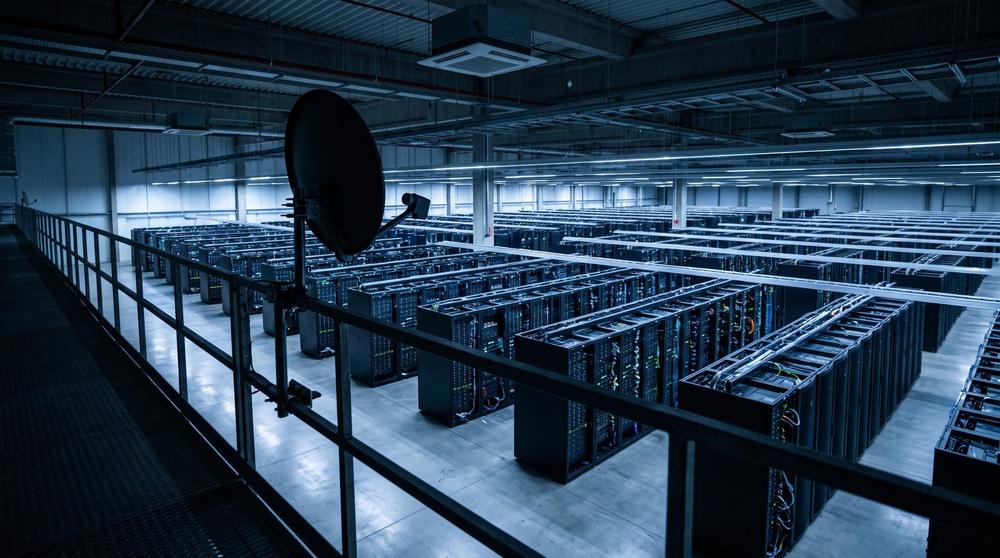
On compute, the company put nameplate capacity at 1.7 GW at quarter-end, about 2.2 GW by the end of October and 2.5–3 GW by year-end, with Elon Musk saying he is highly confident of adding 10 GW during 2027. Management said new deployments pay back in under a year at current pricing, and that funding will come from operating cash flow, investment-grade debt and possible partnerships while preserving the investment-grade rating.
Our take: Revenue crossing over is a milestone with no cash in it. Starlink earned 86% of the quarter’s operating profit on 36% of the revenue; the AI unit earned 15% of the profit on 52% of the revenue while consuming 84% of the capex. That is a subsidy, and it is explicit: a connectivity business with 13.6 million consumer subscribers at $69 ARPU and 55% gross margin is funding a compute buildout whose fourth-quarter spend alone is guided at up to $40 billion — nearly three times the whole quarter’s revenue. The under-a-year payback claim is the load-bearing assumption in the entire plan, and it is a claim about pricing that holds only while compute stays scarce. Note too what guidance does not promise: Musk’s $500 billion to $1 trillion ARR talk for end-2027 is not formal guidance, and management said so.
What to watch
- Whether Q4 capex lands in the $35–40 billion range or slips. A miss to the low side reads as discipline; a miss to the high side with flat revenue does not.
- Starlink’s gross margin ex the roughly three points of one-time benefit, mostly tariff refunds. Underlying margin is the number funding everything else.
- The payback claim. Any softening of the language on compute pricing matters more than the gigawatt count.
- Financing mix. Management named investment-grade debt and partnerships; the shape of the next raise tells you how tight the funding gap is.
- Cursor’s contribution net of the $1.2 billion stock-comp charge once a full quarter is in the numbers.