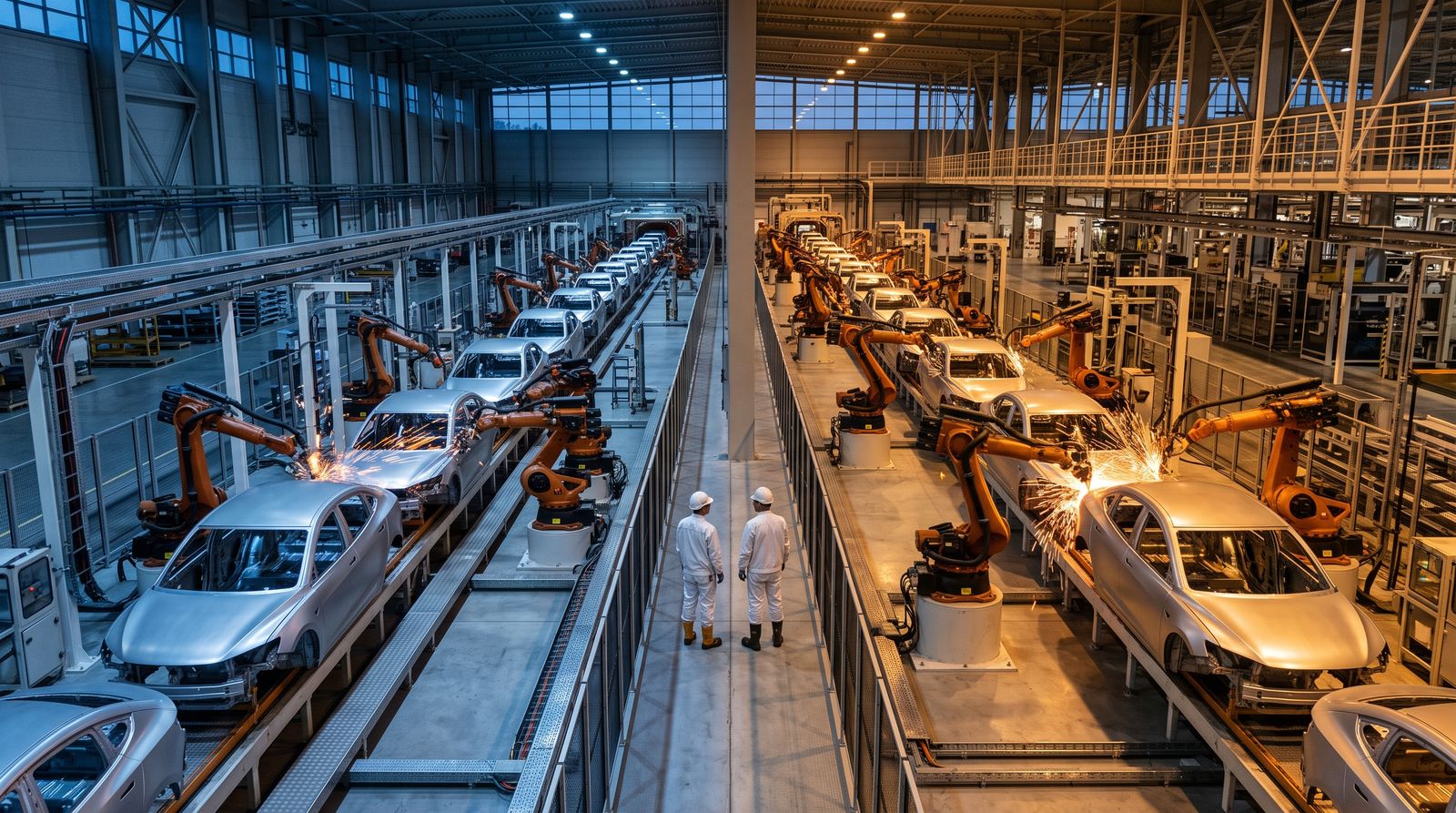
Giga Shanghai is the best factory Tesla has ever built. Roughly a million units of annual capacity, more than 95% of the parts in the China-made Model 3 and Model Y sourced locally from over 400 domestic suppliers, and the four millionth car off the line in December. It is the plant that turned Tesla from a company that lost money on every car into a mass-market manufacturer. On Friday, the Wall Street Journal reported that some Tesla executives have been told to prepare to give it up.
The reported options are a spinoff, an outright sale, or winding the operation down. Nothing is decided, the timing is unclear, and the plan could change — this is a report about preparation, not a filing. Chinese outlet Yicai quickly cited an insider at Tesla China calling the report untrue, without elaborating. Tesla and SpaceX did not comment.
The reason any of this is on the table is SpaceX. Musk has spent months publicly circling a Tesla–SpaceX combination, and on last week’s earnings call he pointed to “more and more overlap” before stopping himself: a merger “has got to be done with the appropriate process,” he said, then handed the question to Tesla’s general counsel. SpaceX is a top-tier U.S. defense contractor — classified launches, connectivity in active war zones — and U.S. government sales made up 20.9% of its business in 2025. Merge the two and an American defense contractor directly owns factories in China, with the data of roughly two million Chinese Tesla owners attached. That is a problem in Washington and a bigger one in Beijing.
Our take: The leak is the noise. The signal is in Tesla’s own second-quarter numbers. Tesla delivered 126,157 vehicles in China last quarter, down 2.05% year over year and just 26.28% of global deliveries — the first time China has been under 30% since the fourth quarter of 2020. In the same three months, Giga Shanghai exported 128,394 vehicles, out-shipping its domestic deliveries for the first time ever. Shanghai has quietly stopped being Tesla’s China sales engine and become its cheapest export plant. Separating a sales business is a wrenching strategic retreat. Separating an export contractor is a supply agreement. The second one is negotiable in a way the first was not, and that shift happened before any of this leaked.
The self-dealing problem nobody has priced
SpaceX raised about $75 billion in June at $135 a share, the largest IPO on record, and by Thursday’s close was worth roughly $1.48 trillion against Tesla’s $1.22 trillion. Musk sits on both sides of that table. Restructuring the manufacturing base of one public company to clear a regulatory path for a merger with another — where the same person controls both — is a governance question, not a logistics question, and it arrives before shareholders have seen terms, a ratio, or a special committee.
It is also not new thinking. Musk had already told executives to run a “laser” between the U.S. and China sides of the business, worried about dependence on Chinese LFP cells and about a Taiwan conflict severing chip supply, with the separation groundwork aimed at 2026 or 2027. What changed is the reason. The split was insurance against geopolitics; now it is the price of a deal.
What to watch
- A separate export sales entity. Executives have reportedly discussed one, along with walled-off office systems that bar China-based staff from other units. That plumbing shows up long before any announcement does. It is the leading indicator.
- Q3 China retail and export mix. If exports out-run domestic deliveries a second consecutive quarter, the “Shanghai is an export plant” framing hardens and a separation gets cheaper to argue.
- Governance mechanics. A special committee, an independent banker, a fairness opinion. Any merger this size without them is a story about control, not strategy.
- Beijing’s posture. Tesla’s Shanghai operation is China’s first wholly foreign-owned automotive business and a showcase for market opening. A forced unwind is not politically free for either side.
- Who could even buy it. A plant this good with this much local sourcing has a short list of credible acquirers, and every one of them is a competitor.
Tesla has spent two years telling investors it is an AI and robotics company that happens to sell cars. Selling the operation that builds half those cars would convert that pitch into a balance sheet. Investors who bought a carmaker should read the next proxy statement carefully.