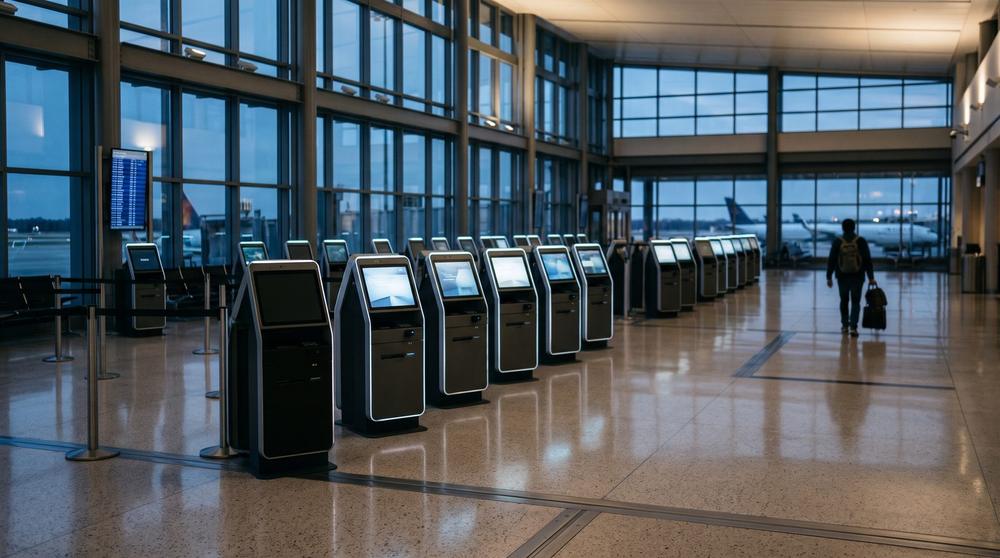
United Airlines said on Thursday it will shut third-party AI assistants out of its booking and reservation systems. The airline’s statement says it is “taking steps to restrict access — directly within our digital platforms and indirectly via travel agencies and aggregators — to prohibit use by unauthorized, third-party personal AI agents or assistants,” and that the work “includes updates to our booking, ticketing and distribution policies.”
The reasons United gives are security and regulation. Sharing account credentials with a third-party assistant, the airline says, “can expose sensitive information,” and actions those tools take “may result in unintended purchases, account changes, or use of MileagePlus miles.” There is also a compliance thread: federal rules require a human to complete check-in and acknowledge that checked bags contain no prohibited items, which is not something an airline can let a software agent attest to on a passenger’s behalf.
What the announcement does not contain is almost as notable as what it does. There is no effective date. There is no definition of “unauthorized” or “personal” agent. There is no statement of whether United’s own assistant, or any partner agent, is exempt. There is no description of the technical enforcement — whether this is a terms-of-service change, a login-level block, traffic detection, or a contractual instruction to the agencies and aggregators that resell United inventory. And there is no number: United has not said how many agent-driven bookings it has seen.
Our take: The policy is the easy half. The hard half is detection, and United has not claimed it can do that half. An AI assistant acting with a customer’s own credentials, in a normal browser session, looks like that customer — which is precisely the problem the airline is describing, and precisely why a prohibition is cheaper to announce than to enforce. Read the phrase “and indirectly via travel agencies and aggregators” as the real mechanism: United cannot reliably spot an agent at its own front door, so it is pushing the obligation down its distribution chain, where it has contracts instead of code. That is a familiar airline move. It is also the reason this matters beyond travel: the first wave of agentic commerce is not being settled by capability, it is being settled by whoever controls the checkout page.
The access question nobody has answered
Agent builders have spent the past year assuming that “the user has an account, the agent uses the account” is a durable arrangement. United’s statement is a direct challenge to it, on grounds that do not go away with better engineering. Credential sharing is a security exposure whether the agent is good or bad. An unintended purchase is a chargeback and a customer-service call regardless of whose model made the mistake. And a regulatory attestation that must be made by a person cannot be delegated to a tool by agreement between the passenger and a vendor.
United is not the first large company to draw this line, and the surrounding week makes the pattern visible: banks, including Bank of America, warned customers in late October against sharing passwords with AI assistants. A warning is not a block, but it is the same reasoning arriving at the same destination. The institutions holding money and tickets are deciding, one at a time, that an agent is a counterparty rather than a customer — and that counterparties need to be authorized, not merely logged in.
The word doing the work in United’s statement is “unauthorized.” It implies an authorized category. Nothing published so far says how an agent gets into it, what it would cost, or what data it would have to hand over. Until that exists, the practical effect is a closed door with no listed knock.
What to watch
- The revised distribution policy text. United says it is updating booking, ticketing and distribution policies. That document, not the press statement, is where the enforceable definition of a prohibited agent will live — and where the agencies and aggregators find out what they have been asked to police.
- Whether an authorized tier appears. A named partner programme, with API access and a commercial rate, would turn this from a ban into a toll. That is the version most airlines would prefer, and the one agent companies should be budgeting for.
- Who follows. One carrier can be worked around. If two or three more adopt the same language in the next quarter, consumer travel agents lose booking as a capability and keep only search — a much smaller product.
- Enforcement evidence. Watch for the first reports of blocked logins or cancelled bookings. A policy with no visible enforcement for a quarter is a position statement; a policy with cancelled tickets behind it is an operating rule.
- The check-in argument’s reach. The prohibited-items attestation is the strongest card United holds, because it is law rather than preference. Expect it to be cited by every regulated industry that wants to keep agents out of its systems.
Quotations are from United’s published statement as reported on 12 November 2026; the airline has not disclosed an effective date, enforcement method or volume figures. Nothing here is investment advice.