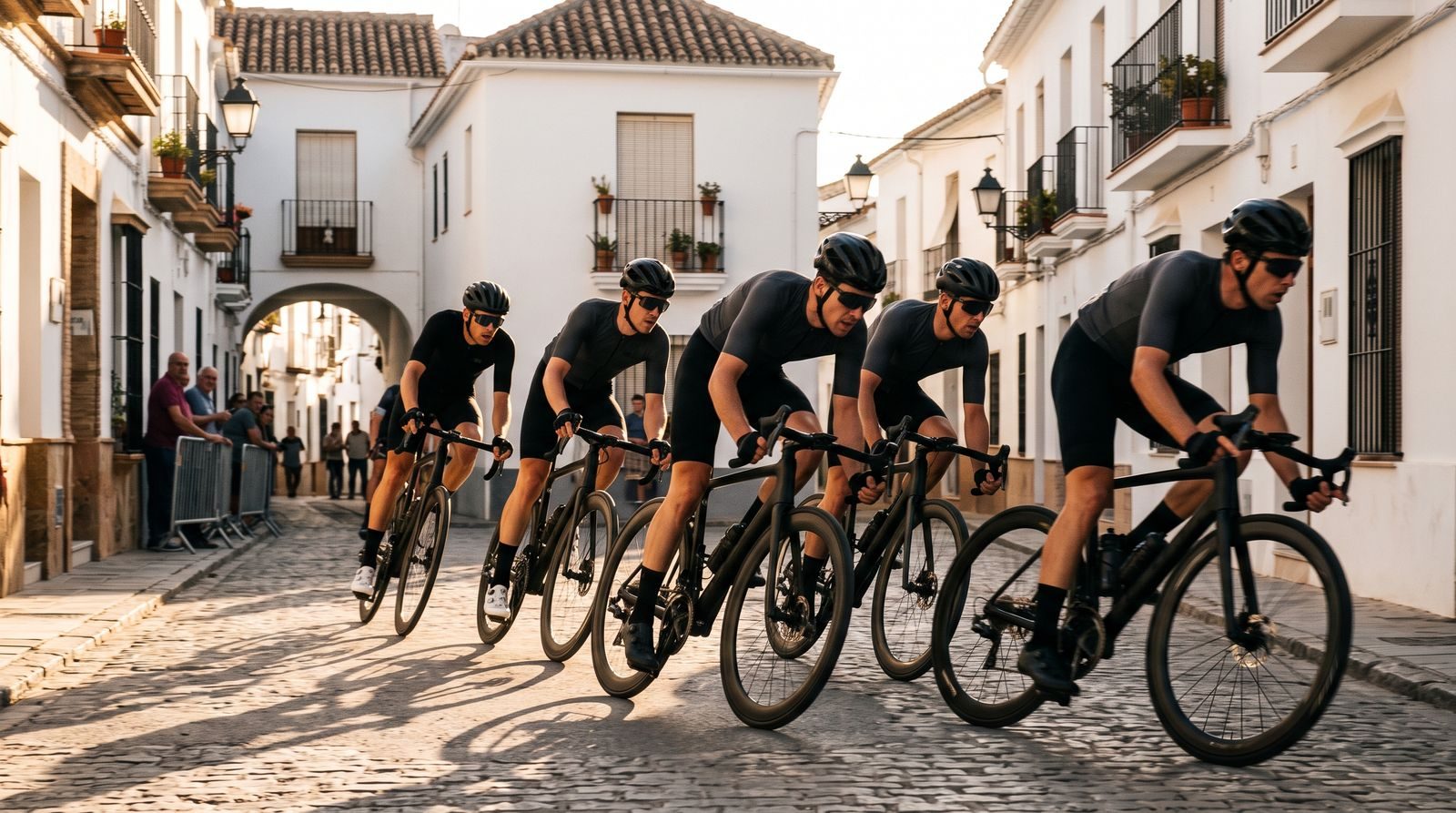
Wout van Aert won stage 15 of the Vuelta a España in Córdoba, making the decisive move, covering every late attack and then taking the sprint out of a five-man group. Alessandro Romele was second, Thibau Nys third. It is his second stage win of this race, after Loja on stage 13.
He now leads the points classification by 108, with Matthew Brennan second and Romele third — Romele the only one of the top three not riding for Visma.
The general classification goes into Monday’s rest day with Enric Mas in red, 2:06 clear of Felix Gall, with Primož Roglič a further four seconds back. The GC group finished 2:44 down.
The green jersey has changed shape
The points classification was designed as a sprinter’s competition and for most of its history it behaved like one: win the flat stages, survive the mountains, collect the jersey in Madrid.
That is not how this one is being won. Stage 15 was not a bunch sprint — it was a five-man selection on a lumpy Andalusian finish, the kind that drops pure sprinters long before the line. A 108-point lead assembled out of moves and consistent high placings is a structurally different jersey from one assembled out of six lead-outs, and it rewards a different rider: not the fastest over 200 metres, but the one who can climb well enough to still be there and sprint well enough to win once he is.
The performance point underneath it
There is a training lesson here, and it is not “be Wout van Aert.” It is about the shape of the demand.
A pure sprinter optimises for one output: peak power, delivered relatively fresh, for fifteen seconds. A rider winning out of a five-man move has to produce a near-maximal sprint after four hours of racing and a series of hard efforts to make the selection in the first place. Sprinting off fatigue is a physiologically different event from sprinting fresh — different substrate availability, different neuromuscular state, different pacing tolerance in the two minutes beforehand.
The trainable version is unglamorous: put the sprint work at the end of long sessions rather than the start, so the neuromuscular demand lands on legs that are already tired. Most amateurs do the opposite, because fresh sprints produce better numbers and better numbers feel like progress. The numbers that decide races are the ones produced in the fourth hour.
Our take: Green used to reward one specialism and now rewards a compound one — climb well enough to make the selection, sprint well enough to win it. That is why 108 points with six stages left looks close to decisive: the riders who could theoretically close the gap are the ones this route keeps removing from contention before the finish. Mas’s 2:06 in red is by far the more fragile of the two numbers.
What to watch
- Whether Brennan or Romele get a realistic scoring window before Madrid. With 108 to find, they need stage wins, not placings.
- Mas at 2:06 over Gall, with Roglič four seconds behind Gall. Two riders, one gap, one week.
- Whether Visma keeps attacking. Teams protecting a points lead usually stop; with no Visma rider in the GC top three, they have the freedom to spend riders.
- Form out of the rest day. Legs after a Grand Tour rest day are notoriously unreliable, and the stage that follows tends to punish whoever guessed wrong.