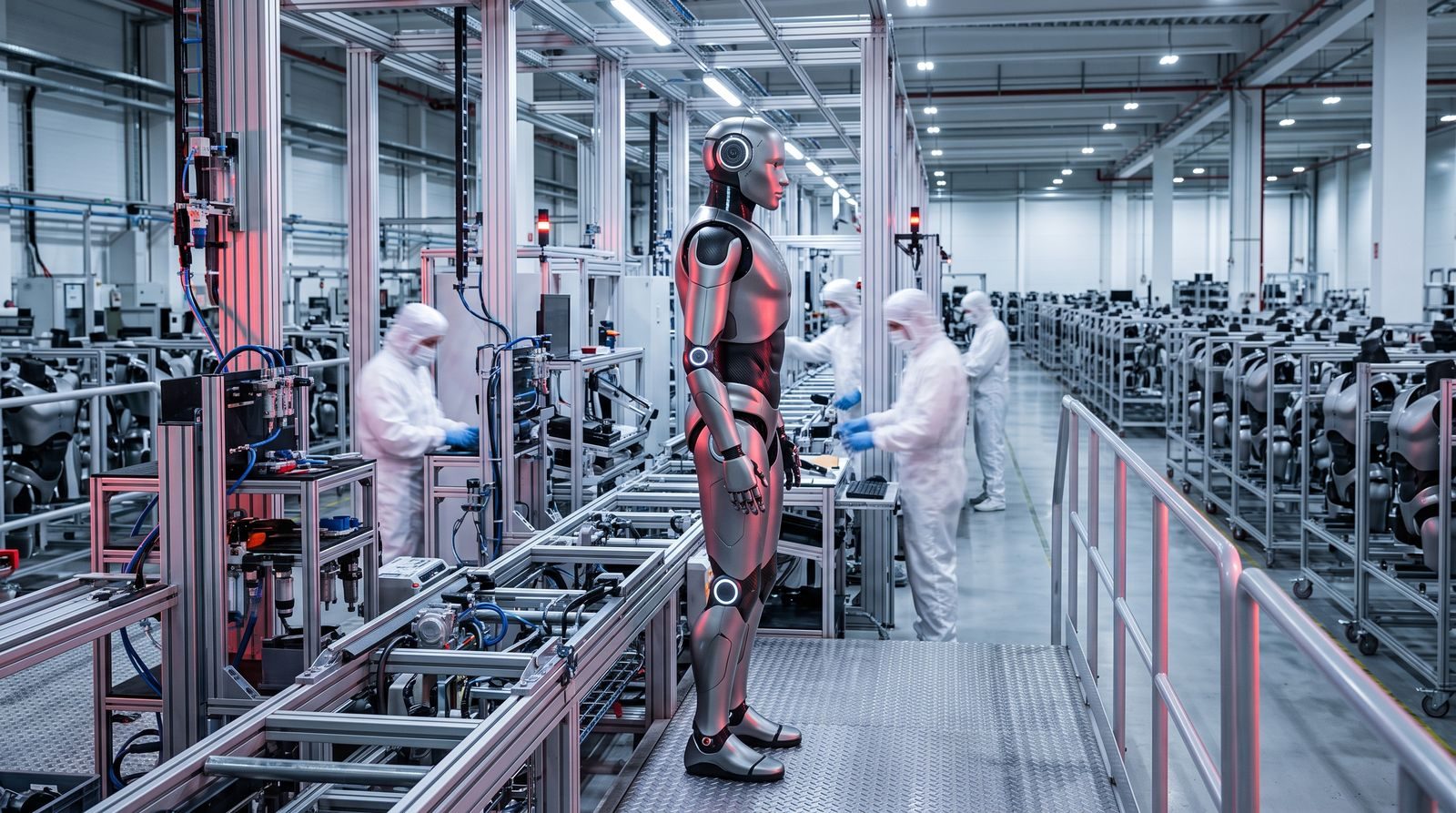
XPeng said Monday that its robotics business has raised more than $900 million in its first outside funding round, valuing the unit at over $6.3 billion post-money. IDG Capital led, Gaorong Ventures joined, and Tencent and Alibaba came in as strategic investors. XPeng calls it the largest single private financing China’s embodied-AI sector has ever seen — and the carmaker keeps control, with the unit still consolidated into its books.
The money buys a deadline. IRON — the humanoid XPeng unveiled last November — is scheduled to enter mass production before the end of 2026, roughly four months from now. First deployments go to XPeng’s own stores and campuses; commercial sales and deliveries in China and overseas begin in 2027. The round funds IRON R&D, the company’s “physical AI” foundation models, production facilities and commercial expansion. On paper the robot is a flex: XPeng cites 76 degrees of freedom, hands with 21 apiece, and three of its in-house Turing chips delivering up to 2,250 TOPS — enough, it claims, for IRON to work without a human teleoperator behind the curtain.
The context makes it bigger. This is the same morning Alibaba priced a $10.2 billion share placement to fund its AI buildout — and Alibaba’s name promptly showed up again on XPeng’s investor list. It’s also a bet on a different kind of agent: Alibaba spent the weekend bragging about AI that clicks screens; XPeng is wagering the bigger prize is AI that grips door handles. For valuation contrast, Figure AI’s investors marked the US humanoid leader near $39 billion last year — six times XPeng robotics — but Figure sells a promise, while XPeng is selling a factory date backed by an EV supply chain. Public investors didn’t swoon, though: XPEV’s US shares traded lower Monday morning in a tape that was already dumping chips and China tech.
Our take: The carve-out matters more than the check. Inside a carmaker’s budget, a humanoid program is a cost line that can be cancelled quietly; with its own shareholders at a $6.3 billion mark, it has to ship. China’s EV playbook — vertical supply chain, brutal pricing, scale first — is now pointed at humanoids, while the US leaders are mostly still selling demo reels. From here, watch deliveries, not demos.
What to watch
- Year-end: does IRON mass production actually start on schedule? First units go to XPeng stores and campuses — visible, checkable, hard to fake.
- 2027 pricing: the sticker when commercial sales open in China and overseas will say whether this is a product or a prototype.
- The response: whether Tesla’s Optimus, Figure or 1X answer with production dates of their own — the race just moved from valuations to calendars.
- XPeng’s next earnings: the unit stays consolidated, so the robot spend — and any early revenue — lands in the car company’s numbers.