Amazon.com launched an eight-part U.S. investment-grade bond sale on Tuesday, seeking to raise at least $25 billion across maturities that run from three years to 40. It is the company’s second jumbo deal of the year, and by one tally the order book peaked near $62 billion — oversubscribed, but only about half the demand its $37 billion March sale pulled in. Barclays, Goldman Sachs, JPMorgan and Morgan Stanley ran the books; initial price talk ranged from roughly 65 basis points over Treasuries on the three-year note to 145 on the 40-year. Amazon signaled it doesn’t plan to issue more debt this year.
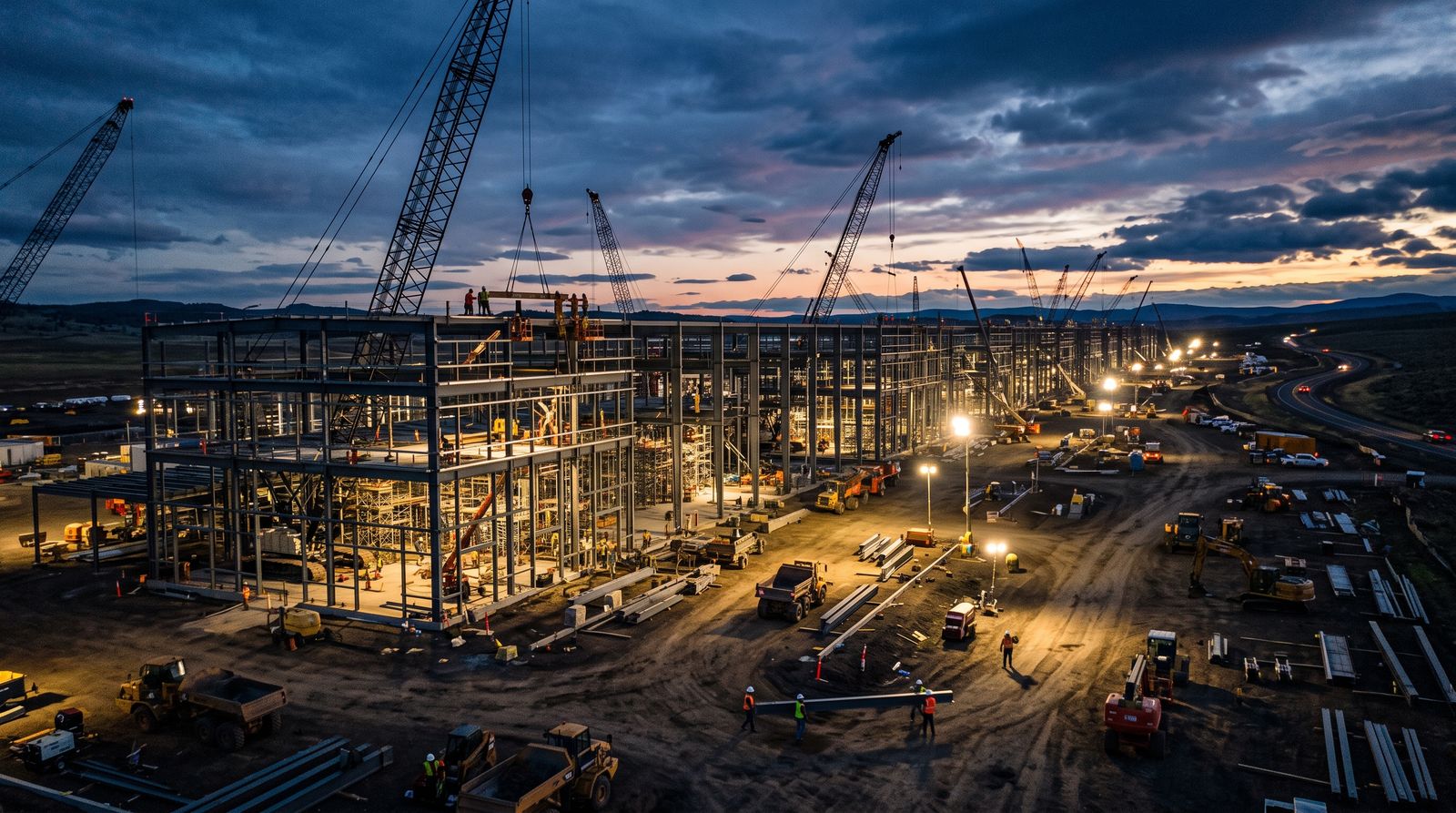
Here is the number that matters more than $25 billion: $200 billion. That is what CEO Andy Jassy has guided Amazon to spend on capital expenditure in 2026 — up roughly 50% from $131.8 billion last year, and well past the ~$147 billion Wall Street had penciled in. The vast majority goes to AI: data centers, custom silicon, and the AWS backbone underneath it all. Against a bill that size, a $25 billion raise covers about six weeks of spending. The rest has to come out of cash flow — which is exactly the problem.
Amazon throws off enormous cash, but the buildout is swallowing almost all of it: free cash flow has cratered, down more than 70% year over year by one recent count, as capex consumes nearly every dollar AWS generates. So the most cash-rich franchise in technology is doing what the compute crunch has pushed the whole industry toward — financing the AI arms race with other people’s money. It’s the same land-grab that had Anthropic sign a 20-year, $19 billion power lease and Google write checks into fusion — only Amazon is big enough to tap the bond market for it directly.
Our take: The tell isn’t the $25 billion — it’s that Amazon needs it at all. A company with AWS’s cash engine tapping the debt market to fund its own capex is telling you spending has outrun operating cash flow, full stop. The bond market is still glad to oblige: investment-grade paper, a $60 billion-plus book, tight spreads. That’s the bull case and the risk in one breath. Debt turns a great year of AI revenue into a great decade — and turns a soft one into a fixed bill that comes due whether the demand shows up or not. Watch the gap between what these data centers cost to build and what they earn. That gap is the whole trade.
What to watch
- The final size and spreads. Where the tranches price against that initial talk shows how much appetite there really is for hyperscaler debt at these levels.
- Free cash flow. The capex line is set. The open question is how far it outruns the cash AWS generates — and how long investors tolerate the gap.
- Who follows. Amazon just reset the size of a “normal” AI bond deal. Watch whether the other hyperscalers line up behind it.
- AWS growth. The entire $200 billion bet rests on cloud demand — AI and otherwise — scaling into all that new capacity. Reaccelerate and the math works; stall and the debt doesn’t care.