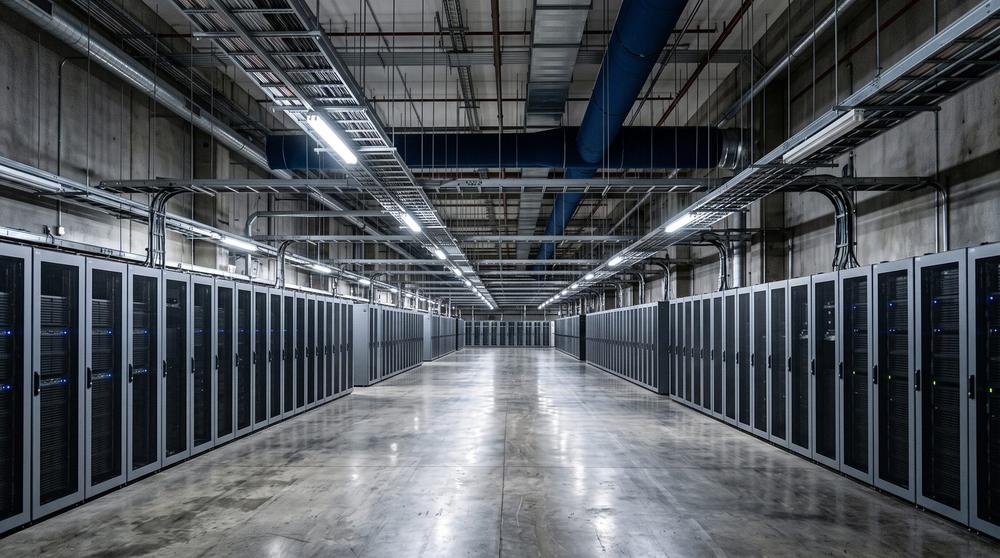
Amazon is exploring a structure that would move roughly $8 billion of Nvidia Grace Blackwell chips off its balance sheet and into a special-purpose vehicle funded by outside investors through debt — then lease the same hardware back to run AWS, according to the Financial Times. Amazon would retain an equity interest of as much as 10% in the vehicle. The chips are already installed, across more than a dozen US data centres in five states.
In the same week, AWS raised the price of renting Nvidia capacity. EC2 Capacity Blocks for ML go up about 15%, spanning everything from A100 through B300, with new rates effective in early October. For scale, a p5.48xlarge instance — eight H100s — lists near $41.53 an hour in major US regions.
Read those two moves together and the direction is unmistakable. Amazon is reducing the amount of AI hardware risk it carries while increasing the amount it charges for access to that hardware.
What a leaseback actually transfers
The appeal is not cash. Amazon has cash. The appeal is the accounting and the risk. Owned chips sit on the balance sheet as depreciating assets against a capex budget running near $200 billion this year — some reports put it higher — versus $131 billion in 2025. Leased chips become an operating expense, and the residual-value risk moves to whoever bought the debt.
That is the part worth pausing on. A leaseback is a bet by someone that an AI accelerator holds enough value across the lease term to service the paper written against it. Amazon is in a better position than almost anyone to judge whether Grace Blackwell silicon will still be worth owning in four years. It is choosing to own as little as 10% of that bet.
Our take: Hyperscalers spent two years telling investors that owning compute was the moat. The financing is now quietly arguing the opposite — that the depreciation schedule is the problem and the asset is best held by someone else. Amazon raising rental prices 15% in the same week it shops $8 billion of hardware to debt markets is a clean statement of the economics: compute is getting more expensive to supply, and the cost is going both directions at once, out to customers and out to bondholders.
This is becoming the template
Amazon is not first. Broadcom agreed to lend Anthropic up to $42 billion against a five-year chip leasing commitment, covering roughly a third of Anthropic’s $125.2 billion compute obligation, Reuters reported. Tencent is paying Oracle $7 billion to lease about 100,000 chips it cannot buy at home. Analysts now project something near $1 trillion of technology-sector borrowing by 2030.
The AI build-out is migrating from equity-funded capex to debt-funded leasing, and it is doing so into the most expensive long-rate environment in two decades — the 10-year touched 5.34% this week. Every SPV priced from here pays that.
What to watch
- Whether the deal closes and on what spread. Exploration is not execution. The coupon investors demand on four-year-old GPUs is the real price signal.
- Residual value assumptions in the documents. This is where the market’s actual view of accelerator depreciation finally becomes legible.
- Microsoft, Google and Meta. If one more hyperscaler does this, off-balance-sheet compute stops being a structure and becomes the standard.
- Who ultimately pays. AWS customers just absorbed 15%. Watch whether that repeats when the lease payments start.
The concentration risk already visible in Anthropic’s disclosures and this financing shift are the same phenomenon seen from opposite ends: an enormous amount of committed compute spending, and a widening circle of parties being asked to fund it.