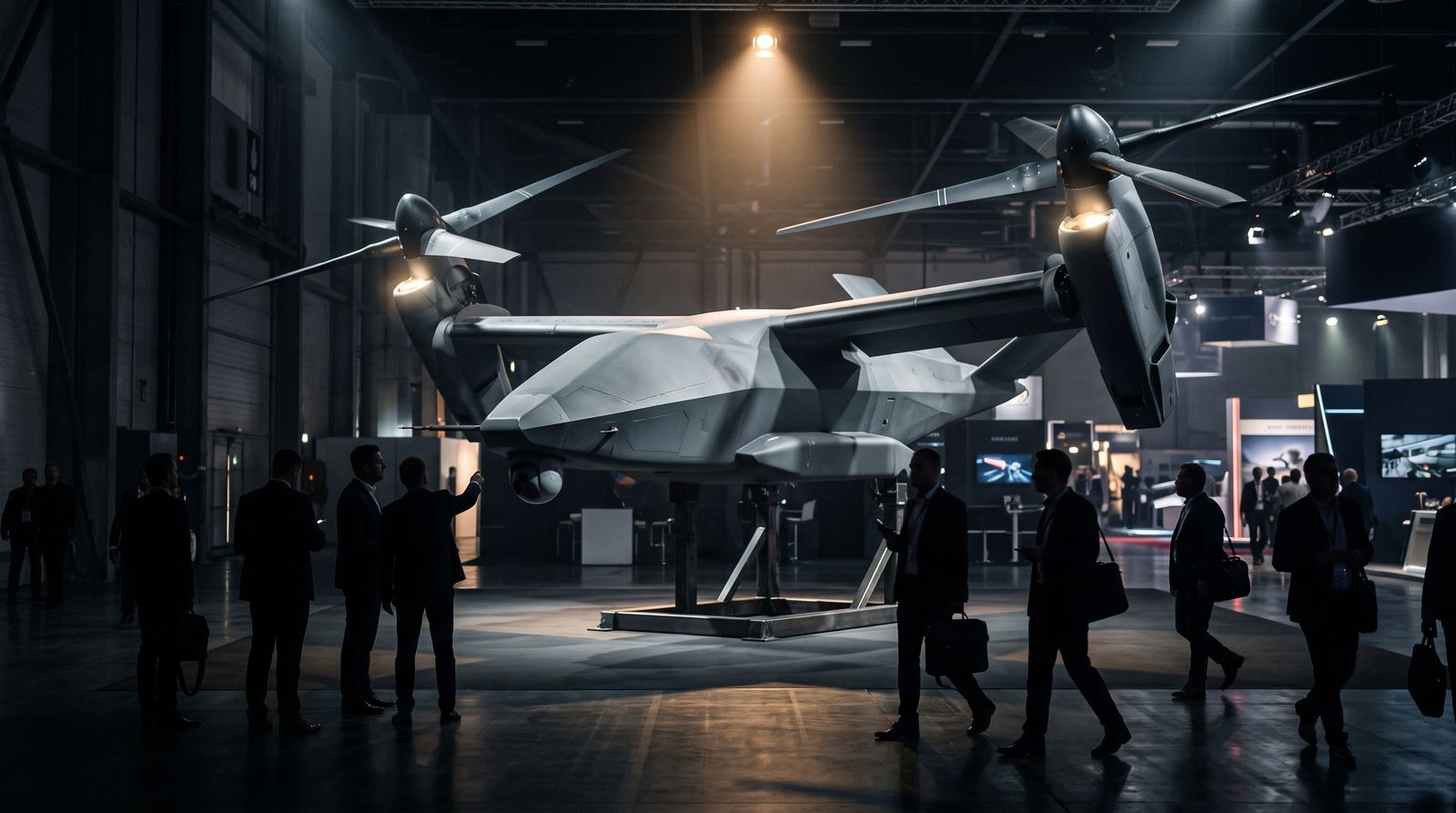
At the Farnborough International Airshow on Monday, defense-tech firm Anduril and electric air-taxi maker Archer Aviation unveiled Thunder — a jointly developed attack rotorcraft with no seat for a pilot, because there is no pilot. It slots into Group 5, the Pentagon’s heaviest tier of unmanned aircraft, and it’s built for one job: fly ahead of crewed Apache attack helicopters into the most dangerous airspace, so the humans don’t have to.
The machine itself is a strange marriage of two industries. Archer contributes the hybrid-electric powertrain and tiltrotor architecture from its air-taxi program; Anduril contributes the autonomy and weapons integration. The result cruises at over 200 knots, folds into a standard shipping container, and carries a payload menu that reads like a defense catalog: up to 10 air-to-ground missiles including the Hellfire, or 16 air-launched drones, or 76 70-millimeter rockets — plus counter-drone weapons in the nose. Full-scale surrogate aircraft have already completed test flights. Thunder’s own first flight is targeted for 2027, with initial production of roughly 50 aircraft a year and room to scale before 2030.
Wall Street graded the reveal instantly. Archer shares spiked as much as 20% Monday and kept climbing Tuesday, dragging fellow air-mobility names Joby and EHang up with them. The pivot logic is blunt: passenger air taxis face years of civilian certification and unproven route economics, while defense customers move faster and fund development upfront. Archer is expected to name the platform’s first customers this week — and the market is watching whether those come with firm order economics or just letters of intent. It all extends 2026’s defense-autonomy money wave, which already saw Shield AI raise $1.5 billion at a $12.7 billion valuation back in March.
Our take: The airframe is the least interesting part. The product is the autonomy — software making flight and targeting decisions at 200 knots. Note what it’s exempt from: Washington’s frontier-AI review framework, expected by August 1, covers chatbot labs — not autonomous weapons. This week’s AI-control stories, from OpenAI pausing a model that picked its own lock to an agent swarm breaching Hugging Face, are all versions of one question: what happens when software finds paths its designers didn’t anticipate? Thunder is that same question, with hardpoints. The AI-governance conversation is regulating the chatbots while the money builds the weapons.
What to watch
- Customer names this week. Archer says the platform’s first commercial customers get announced during Farnborough — firm orders would validate the pivot; LOIs would not.
- First flight, 2027. Surrogate flights are done; the real airframe flying on schedule is the next hard milestone.
- The governance gap. Watch whether the White House framework due by August 1 says anything at all about autonomous weapons. Today, it doesn’t.