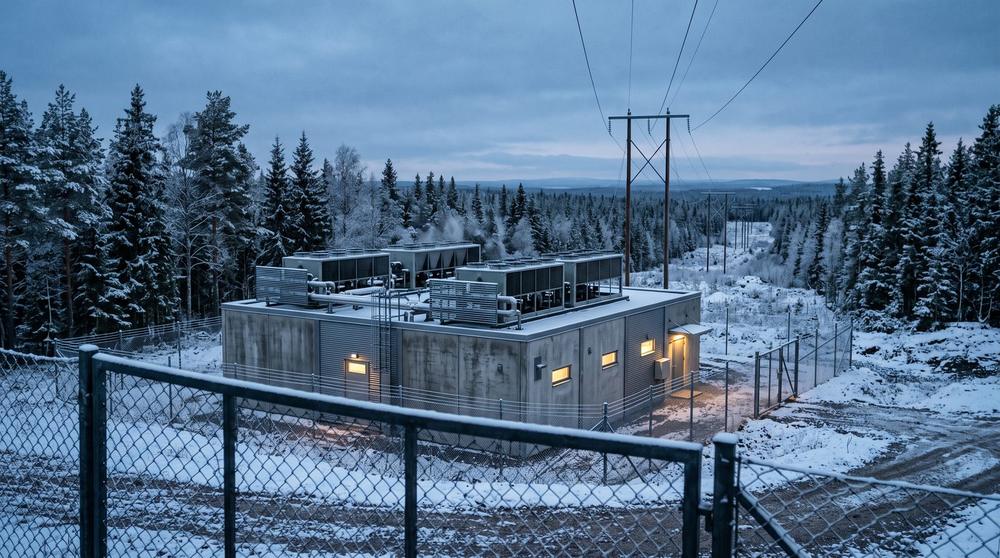
Anthropic and OpenAI are hunting for data centre deals as small as 20 to 30 megawatts, CNBC reported Friday, citing people familiar with the talks. Anthropic has held conversations at that scale across the United Kingdom and the Nordics. OpenAI has been looking at similar slots in the Nordics. Both are said to be discussing US deployments in the same size range.
For a year, every compute headline from these two has pointed the other direction. The deals they have actually signed run from hundreds of megawatts to full gigawatts — single campuses with their own substations, their own twenty-year leases, their own press releases. A 20MW hall is somewhere between a fiftieth and a thirtieth of one of those. It is a floor in an existing building.
“We’re building a diversified compute portfolio to meet growing demand for AI around the world,” an OpenAI spokesperson told CNBC. That is the polite version. The blunt version is that the gigawatt campus is a 2028 asset and the demand is happening now.
Our take: This is not a retreat from scale — it is an admission that scale has a lead time nobody can compress. The binding constraint on a gigawatt site is not capital or chips; it is interconnect queues, land, and a planning process that a local council can stall for two years. A 20MW colocation slot skips all three. So the labs are running two books at once: the enormous builds that win the 2029 training race, and a scavenger hunt for small, boring, already-energised capacity that can serve inference next quarter. Watch which of those two gets talked about and which one gets signed.
Why small and why there
Three things make a 20–30MW slot in the Nordics rational rather than a consolation prize.
The first is time. Small allocations in built facilities come with power already provisioned. There is no grid study, no transformer lead time, no community meeting. The second is opposition: very large projects in the US and abroad are running into organised local resistance, and a modest tenancy inside an existing building is not the kind of thing that produces a town hall. The third is that Europe does not really offer the alternative. Land is scarce and power is tighter still, which is exactly why the Nordics — cold, hydro-heavy, already full of colocation operators — end up at the top of the list.
There is also a workload argument that the labs are not making loudly. Training wants one enormous coherent cluster. Inference wants capacity close to users, in many places, in whatever size the building allows. If the revenue mix is tilting from training runs to serving models in production — and the funding flowing into inference-focused silicon this year suggests it is — then a distributed pile of 20MW sites is not a compromise. It is the correct shape.
What to watch
- Who the counterparties are. Small slots mean European colocation operators, not hyperscalers. If those names start showing up in lab announcements, the sourcing shift is real.
- Whether the gigawatt announcements keep landing anyway. Two books running in parallel is a strategy. One book quietly replacing the other is a story about the big builds slipping.
- Pricing. Everyone chasing the same already-energised megawatts is how colocation rents in northern Europe get repriced. Watch the operators’ next quarterly commentary.
- Whether US small-scale talks convert. CNBC reports discussions; nothing is signed. Domestic 20MW deals would say the constraint is genuinely permitting and power, not geography.
The gigawatt campus is still the headline. The 20MW floor is the thing that serves you a model this year.