The Pentagon is negotiating a loan of roughly $5 billion to AI cloud startup Fluidstack, according to a Wall Street Journal report carried widely on Thursday and Friday. The money would come from the Department of Defense’s Office of Strategic Capital, and it would be that office’s largest commitment by a wide margin.
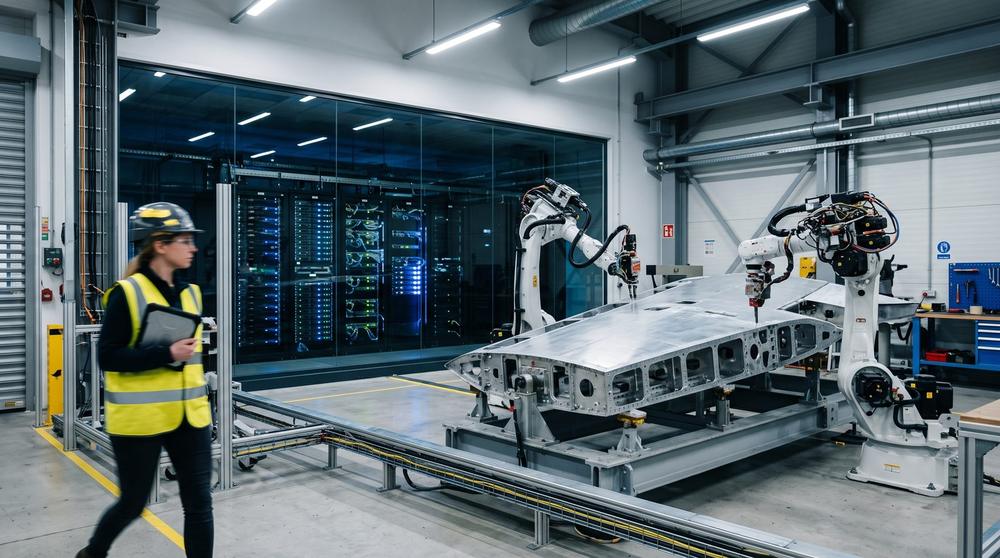
The detail that makes it interesting is what the money is not for. Fluidstack would use the loan to shore up US supply chain and manufacturing capacity for data-centre components — not to stand up another AI campus. Washington’s stated worry, per officials briefed on the thinking, is not only that China can out-build the US on chips, but that it can out-build the US on the power and cooling equipment that makes those chips useful.
Terms are not final. A deal under negotiation is a deal that can shrink, restructure or die, and nobody has moved money.
Our take: For two years the bottleneck story has been silicon. The government just put a five-billion-dollar marker on the far less glamorous half of the stack — the transformers, switchgear, cooling plant and electrical gear that turn a warehouse into compute. That is a tacit admission that you cannot subsidise your way to AI capacity through the fab alone, and it reframes who the strategic suppliers are. If you are looking for the next chokepoint trade, it is heavy electrical equipment with multi-year lead times, not another GPU derivative.
Why a loan, and why this borrower
The Office of Strategic Capital exists to lend into industrial capacity that private markets underprice — long-payback manufacturing where the national-security value exceeds the venture return. Debt, not equity, is the instrument precisely because the government wants factories built rather than a stake in a hot startup.
Fluidstack is an unusual conduit for it: a compute broker and AI cloud operator, not a manufacturer. Lending through an operator that buys this equipment at scale is a bet that demand-side pull works faster than supply-side grants — give the biggest buyer cheap capital and let it underwrite the plants it needs. It also sidesteps the slow machinery of direct industrial subsidy.
Set it against the week’s other numbers and the logic is obvious. Microsoft is planning for 38 gigawatts by 2032. Oracle is carrying a $664bn backlog it has to physically build against. Every one of those gigawatts needs gear that currently has lead times measured in years and a supplier base concentrated in a handful of countries.
What to watch
- Whether the $5bn survives contact with the paperwork. Reported figures on unsigned government loans move. Watch for an announced closing, not a leak.
- What components are named. “Data-centre related” is doing a lot of work in the reporting. The specific category — transformers, chillers, switchgear, power electronics — tells you which listed suppliers just got a demand floor.
- Whether OSC does it again. One loan is a pilot. A second and third would make this a standing industrial policy for compute infrastructure.
- Copycat private capital. Government debt at this size typically de-risks a sector for lenders who were waiting to see someone else go first.
The AI buildout has spent two years being described as a chip race. The Pentagon is quietly betting the constraint has already moved downstream.