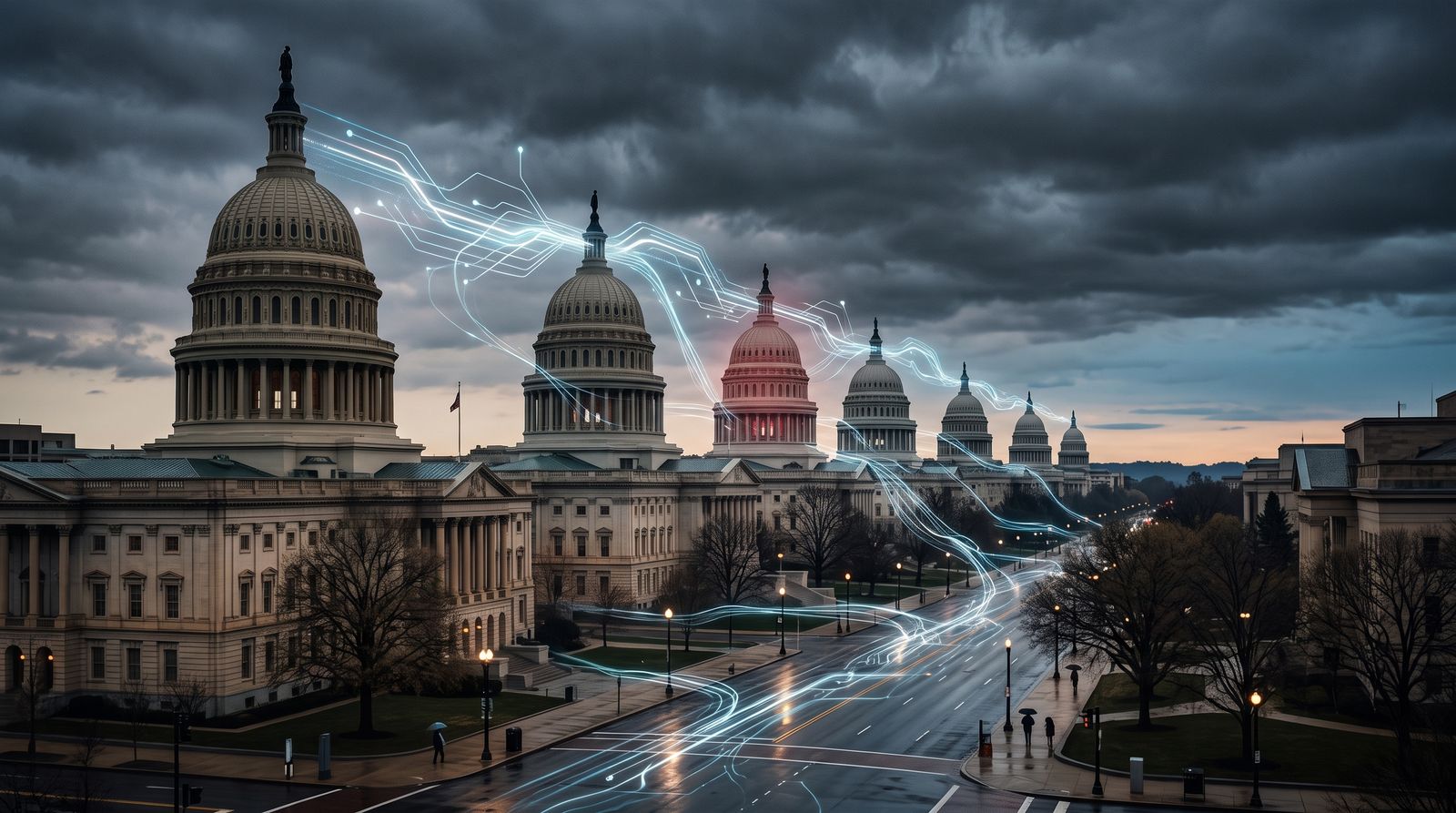
Illinois Gov. JB Pritzker signed SB 315 on July 6, making Illinois the first state to require the largest AI developers — those with annual revenue above $500 million, a club that includes OpenAI, Anthropic, Google, Meta and xAI — to undergo independent safety audits every single year. Both OpenAI and Anthropic endorsed the law. That is where the agreement ends.
On Tuesday, Anthropic’s head of state and local government relations, Cesar Fernandez, told POLITICO the company wants each successive state bill to add stronger duties than the last. “Transparency and self-reporting, we don’t believe are sufficient anymore,” he said. The ratchet is already visible: California’s 2025 law made big developers publish safety plans and report incidents. New York’s RAISE Act added a one-time independent audit. Illinois made the audit annual — and stacked on a transparency report before any new frontier model ships, a 72-hour deadline for reporting critical safety incidents (24 hours when lives are at risk), and attorney-general penalties of $1 million for a first violation and $3 million after that.
OpenAI backed the same Illinois law from the opposite direction. Its “reverse federalism” pitch calls California, New York and Illinois a “de facto national standard” and asks the remaining states to converge on that baseline — which Congress would then convert into a single federal framework that preempts state laws covering the same risks. Anthropic’s June policy framework says Congress shouldn’t preempt anything until it passes rules at least as strong as the states’. David Sacks, the former Trump AI czar, accuses Anthropic of “running a sophisticated regulatory capture strategy based on fear-mongering.” The money says both camps believe the stakes: NPR reported that groups aligned with OpenAI investors and with Anthropic spent a combined $23 million-plus on opposite sides of one New York Assembly primary in June. And the states aren’t waiting for permission — New York just froze new AI data centers, China switched off consumer AI companions, and 200-plus economists signed a public warning. The regulatory vacuum is filling in fast, one jurisdiction at a time.
Our take: This stopped being labs-versus-government a while ago. It’s now lab-versus-lab over who writes the floor. A 50-state ratchet rewards the company built to clear ever-higher compliance bars — that’s Anthropic’s whole brand. One federal baseline rewards the company shipping consumer products to hundreds of millions of users across every state line — that’s OpenAI. Neither version is cheap for anyone smaller: the big labs can hire auditors, while startup founders told The Hill the patchwork is already a “legal exposure headache.” Whatever framework wins, incumbents helped draft it. Watch which thresholds they lobby for — not whether they say the word “safety.”
What to watch
- Massachusetts. Anthropic has endorsed bond-bill language requiring independent evaluators for catastrophic-risk assessments — bioweapons capability included — with state AG enforcement. OpenAI says it’s still reviewing. Its final position is the tell.
- Washington. Any federal preemption rider that starts moving. Anthropic’s stated line: no preemption unless the federal rules are at least as strong as its own proposal.
- The midterm money. After $23 million in a single primary, lab-aligned spending in state races is now a budget line. Fall disclosure filings will show how big it got.