Crude just printed its biggest one-day gain in six years. Brent futures settled up 9.6% at $83.30 a barrel on Monday — the international benchmark’s best session since May 2020 — and U.S. crude rose 9.4% to $78.14, after President Trump said he would reimpose the blockade on Iranian shipping and charge a 20% “reimbursement” on all cargo transiting the Strait of Hormuz.
The move built all day. Brent was already up more than 4% at $79.26 by early Monday morning after a weekend of escalation: U.S. forces hit hundreds of targets in Iran on Saturday and dozens more on Sunday after an Iranian attack on a Cyprus-flagged container ship, and Tehran answered with missile and drone launches toward Gulf states. Then the toll headline landed during U.S. hours and the bid went vertical. Wall Street’s fear gauge, the VIX, jumped roughly 15%, and stocks closed lower with chips taking the worst of it.
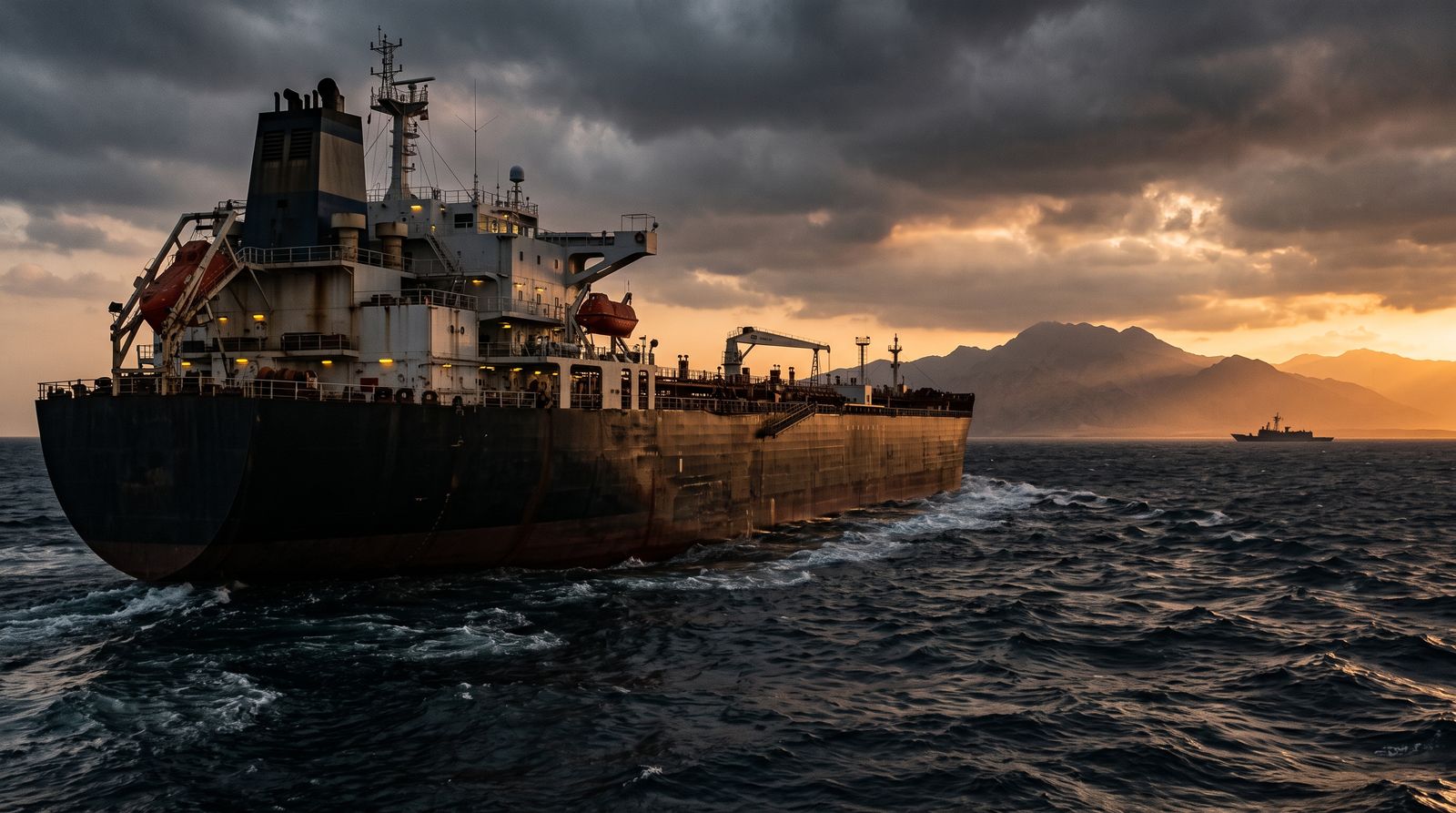
The physical strait is the scarier chart. Maritime-intelligence firm Windward tracked just six vessels crossing Hormuz in a 12-hour window late last week, against 18–22 daily crossings earlier this month — and roughly 130 a day before the war started. This is the corridor that carries about a fifth of the world’s oil trade in peacetime, and traffic has thinned to a trickle of mostly Iranian-flagged ships.
Now the part the headline hides: $83 Brent is still below the high-$80s crude touched in mid-June, before the June 17 ceasefire memorandum sent prices all the way back to pre-conflict levels. Monday’s record jump mostly re-installed the war premium the ceasefire had removed — it did not price a new supply catastrophe. Analysts are saying as much out loud: IG’s Fabien Yip wrote Monday that “a repeat of the earlier spike appears unlikely” with demand soft and OPEC+ adding barrels to an oversupplied market, and XAnalysts’ Mukesh Sahdev expects Brent to hold in the upper $70s through August and September as refiners keep rerouting away from Middle East reliance.
Our take: The biggest daily jump since 2020 says less about lost barrels than about lost certainty — the entire ceasefire trade got unwound in one session. From here, ignore the headlines and watch the physical market. If transits keep collapsing after the toll takes effect Tuesday afternoon, the risk premium hardens into a genuine supply story and the upper-$70s consensus is toast. If ships keep moving, this fades the way February’s spike did. Either way, crude’s more than half of what you pay at the pump — and spikes pass through fast.
What to watch
- Tuesday 4 p.m. ET, the toll deadline: whether the 20% charge is actually enforced — and whether transit counts fall further once it is. Windward’s daily crossing data is the truest real-time gauge of how much risk is properly priced.
- Tuesday 8:30 a.m. ET, June CPI: the print predates the oil spike, but it sets the inflation baseline this shock now compounds — the entire week was already positioned around it, with big-bank earnings and the new Fed chair’s testimony stacked behind it.
- The upper-$70s call: two analyst desks say the spike won’t stick. If Brent holds above $83 through the week, the market is telling you they’re wrong.