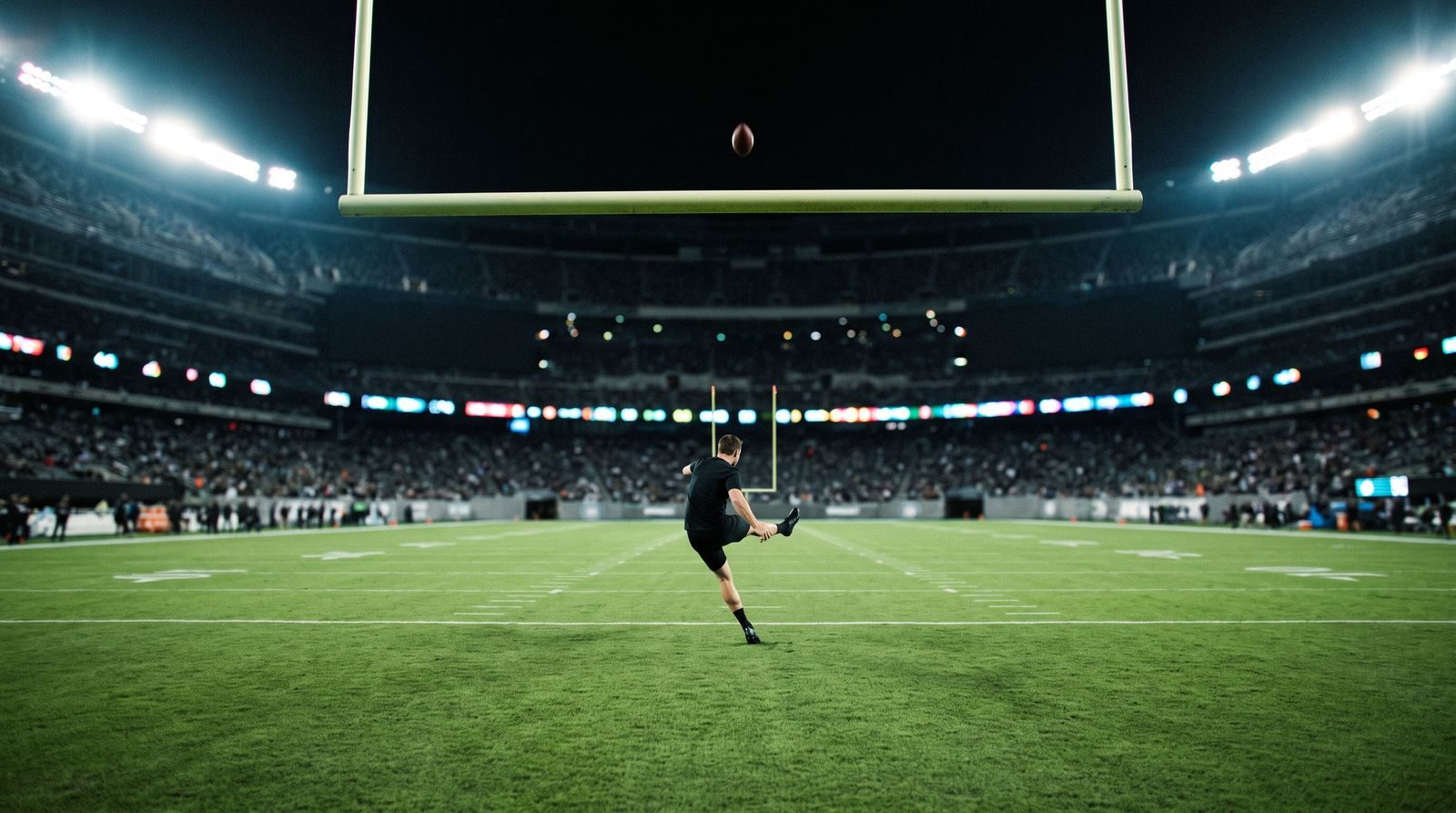
Harrison Butker lined up for a 69-yard field goal just before halftime on Saturday night and made it look routine. The ball cleared the crossbar with daylight to spare and hit the net behind the posts. Kansas City still lost to Tampa Bay 16–15.
It will not appear in the record book. Preseason kicks do not count toward official NFL records, so Cam Little’s 68-yarder for Jacksonville against the Raiders last November remains the longest field goal in league history. Little also owns the longest kick made in any professional football game — a 70-yarder in the 2025 preseason that is equally unofficial. By CBS Sports’ tally, Butker’s kick is tied for the second-longest anyone has made in a real football game, level with Abilene Christian’s Ove Johansson in 1976.
The other detail from Saturday matters more than the highlight. Butker made from 58 and from 45 — and missed from 43 in the fourth quarter. Same leg, same stadium, same night.
The rule change behind the record
Ahead of the 2025 season the NFL rewrote its K-ball procedures — the rules governing the footballs used for field goals, extra points and kickoffs. Under the old system a team got three brand-new balls roughly 60 to 90 minutes before kickoff, with almost no time to break them in. Under the new one, teams receive a supply of kicking balls before the preseason starts and each ball can be used across multiple games.
Kickers now get to prepare the exact object they are kicking. One league source told Pro Football Talk the change is worth five to seven yards; kickers surveyed by ESPN put it around five. Those are estimates, not measurements. The scoreboard is less ambiguous.
What the 60-yard line looks like now
NFL kickers went 12-for-22 on field goals of 60 yards or longer in 2025, by Pro Football Talk’s count. In 2024 they went 4-for-15. In 2014 they went 0-for-5. In the entire 20th century there were four made field goals from 60 yards or beyond.
Human legs did not gain thirty points of accuracy in twelve months. The equipment preparation rules changed, and a distance that used to be a desperation heave became a coaching decision.
Our take: The interesting question is never “did the record fall.” It is “did the conditions that produce the record change.” A jump from 4-for-15 to 12-for-22 in a single off-season is almost never a jump in the humans — it is a change in the setup. Worth remembering the next time a team, a fund or a model posts a sudden leap and everyone credits the talent. Butker’s missed 43-yarder is the control condition: the leg was the same all night. What changed is the distance at which the setup still works.
What to watch
- Whether 70 falls in a real game. Little has already made one in preseason. With the official record at 68 and moving annually, the first 70-yarder that counts is a question of opportunity, not capability.
- Fourth-down math. If a 60-yarder is closer to a coin flip than a prayer, coaches start kicking from field positions where they used to punt. Watch attempt volume, not just make percentage.
- Whether the competition committee blinks. Rules that make scoring too easy tend to get revisited — the kickoff format has already been adjusted more than once since 2024.
- Butker’s regular-season long. It stands at 62. The gap between what he can do in August and what the record book will accept in October is the whole story here.
Records are supposed to measure people. Sometimes they are quietly measuring the gear.