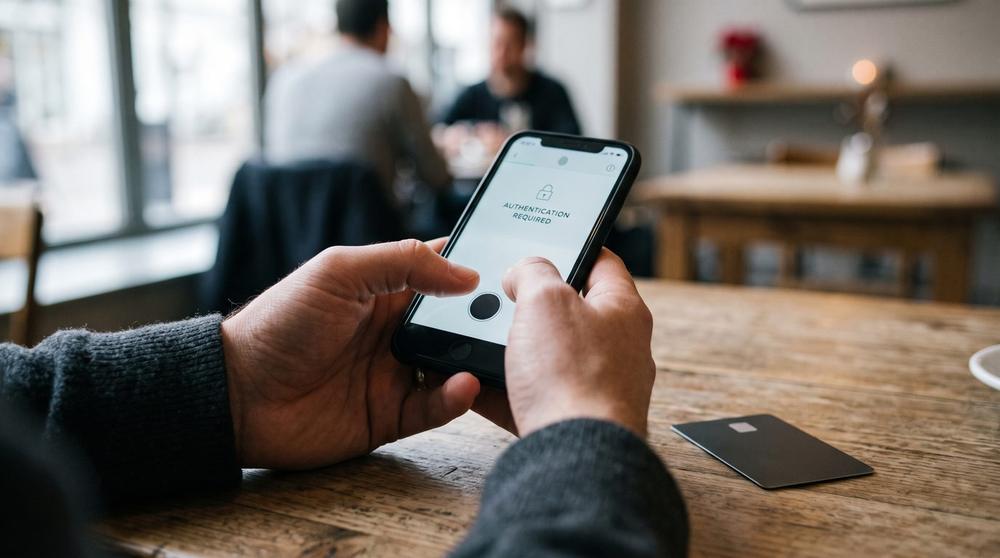
OpenAI launched ChatGPT Wallet on Friday, and the feature it led with is a restriction: before a dot — OpenAI’s always-on agent, introduced 29 September — can complete a purchase, the user clears a security check on their own device. Face ID or a fingerprint, every order, with no setting to switch it off.
That is a conservative launch and the right call. It is not the part worth reading twice. The part worth reading twice is what is absent: there are no spending limits. Not low ones. None. OpenAI says limits by amount, category and time period are coming, along with pre-approved purchases carrying what it calls enhanced safeguards. It has not given a date.
What ships today is an agent that can reach any merchant’s ordinary checkout on the open web, with a tokenised card the merchant never sees the real number for, capped only by whatever the card itself allows. The brake is a human thumb on a screen. That is the whole control surface.
What is actually live
The rollout is narrow everywhere else: ChatGPT Pro subscribers only, United States only, 18 or over, with eligible US-issued cards on American Express, Mastercard or Visa. No issuer list has been published. It works inside dots, not ordinary chat.
The mechanics are the clever part. Once a card is approved, the network issues a payment token — a substitute number with its own security code and expiry — and that is what reaches the merchant. The real number never touches the merchant or the agent. The dot fills the merchant’s existing checkout form, so the merchant builds nothing: no protocol to adopt, no integration, no waiting list. That is why this can be everywhere at once instead of at six launch partners. Each approval logs exactly what was authorised, and card rewards and dispute protections survive for eligible disputes.
The gap nobody will name
Merchants stay responsible for pricing, fulfilment, returns and service. For a defective item, the user goes to their card issuer, as always.
A defective item is the easy case. The hard case is the agent that buys the wrong thing — right merchant, right checkout, wrong product or quantity or size, approved by a human who skimmed the review screen. That is not fraud, so it is not a chargeback. It is not a merchant error, so returns sit at the merchant’s discretion. The announcement does not say who carries that cost, and no outlet covering the launch has extracted an answer.
Our take: The biometric check is not only a safety feature, it is a liability transfer. Every approval is a logged human authorisation, which makes every bad agent purchase something the user agreed to buy. OpenAI built the audit trail before it built the limits — and an audit trail without a cap documents the mistake instead of preventing it. The order is the wrong way round.
Late, not early
This is not a first mover. Coinbase shipped Agentic Wallets in February, spending within preset limits. Circle’s Agent Stack arrived in May. Mastercard launched Agent Pay on 11 January, Microsoft put checkout in Copilot on 8 January with PayPal, Shopify and Stripe, and Google had Universal Cart in US Search and Gemini by October. Most named caps up front as core design rather than roadmap. Visa’s January design goes further still, issuing a cryptogram only after matching the purchase against the user’s original prompt — an intent check rather than an identity check. OpenAI’s edge is distribution: 1.2 billion weekly ChatGPT users and no merchant permission required. Its problem is that the distribution arrived before the guardrails.
What to watch
- A date for spending limits. Until one exists, the only cap is the card’s.
- Whether the per-purchase check becomes optional. Pre-approved purchases are on the roadmap. When approval becomes a default rather than an act, the liability question stops being theoretical.
- A published dispute path for wrong-item agent purchases. Whoever writes that down first sets the category standard.
- Fees. None stated for users or merchants, and OpenAI has not disclosed what it may take from partners. Free is a launch condition, not a business model.
Demand is also less settled than the launch cadence implies: a Salesforce survey published 12 November found three in four holiday shoppers uninterested in an agent buying for them. The practical move, meanwhile, is unglamorous. If you add a card, add the one with the lowest limit you own — that is the spending control the product does not ship with, and you can implement it yourself this afternoon.