China’s National Bureau of Statistics published July inflation on Sunday. The consumer price index rose 0.5% from a year earlier, half of June’s 1.0% pace and below the 0.8% economists had penciled in. Core CPI, which strips out food and energy, rose 0.9%. The producer price index rose 3.5% year on year — positive, but short of the 3.8% expected and a three-month low, with the growth rate narrowing 0.6 percentage points from June.
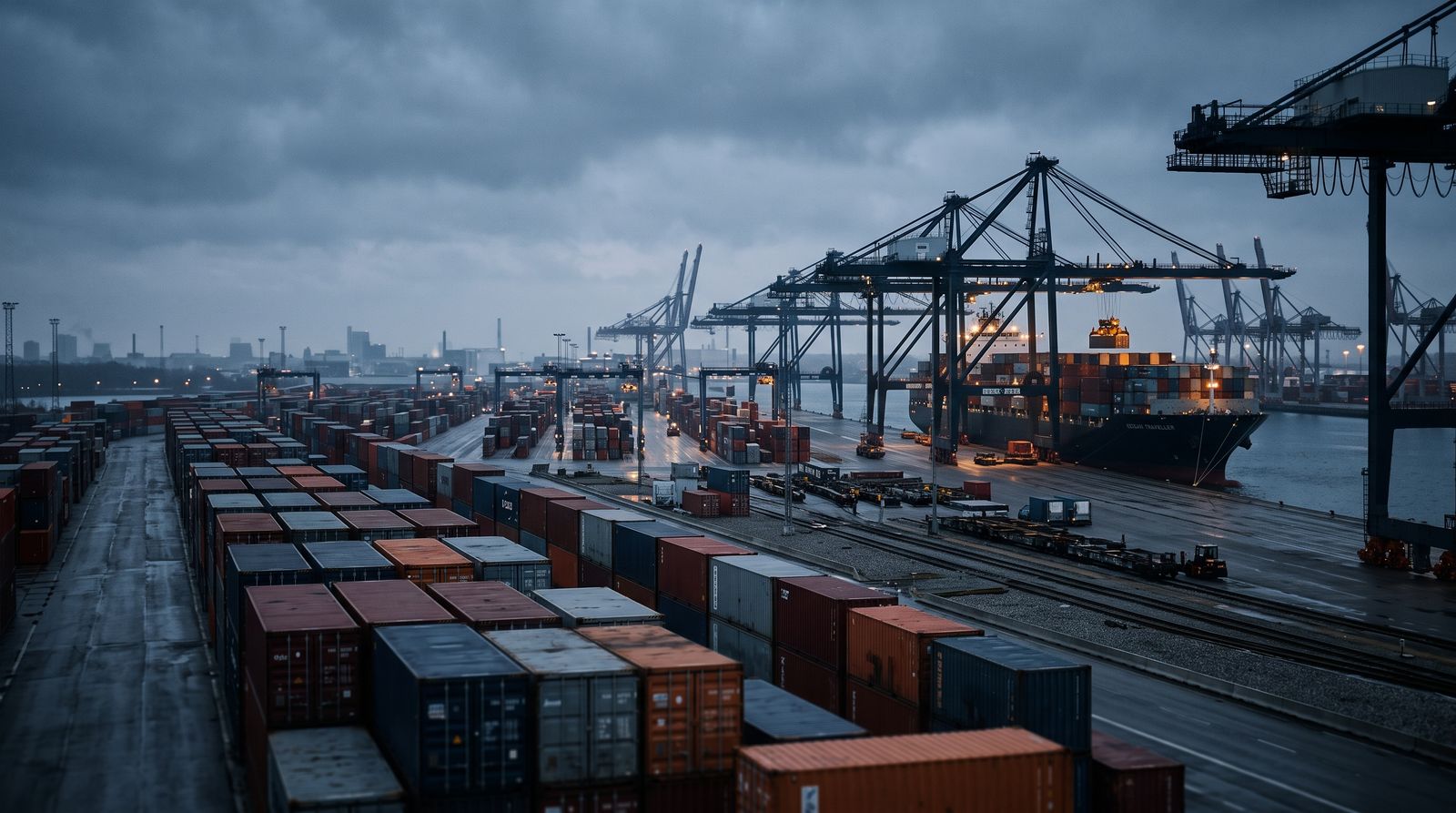
Two days earlier, customs had released the other half of the picture. Exports rose 23.9% year on year to $397.85 billion. Imports rose 27.5% to $285.35 billion. The trade surplus came in at $112.5 billion, ahead of the roughly $107 billion consensus but narrower than June’s $125.62 billion — because imports grew faster than exports, which is not the complaint anyone usually makes about Chinese trade data.
Inside the export number, the composition matters more than the headline. Semiconductor exports nearly doubled in value from a year earlier. High-tech products as a category rose 40.7%. Two things are driving that: genuine demand for AI-related hardware, and manufacturers pulling shipments forward ahead of possible new U.S. tariffs.
Our take: Read these two releases together and you get the single most useful fact for Wednesday morning: China is still exporting goods disinflation into a U.S. inflation print that traders are betting will behave. A 0.5% CPI with 0.9% core is not an economy that can raise prices on the things it sells you. But the export half comes with a bill attached — front-loaded shipments are borrowed demand, and the quarter that borrows is not the quarter that repays.
Why consumer prices halved
The statistics bureau put most of the deceleration on one line: gasoline. International oil prices fell through July and Chinese pump prices followed, down 10.7% month on month — the single biggest drag on the index. That is a mechanical, energy-driven cool-down rather than evidence that Chinese households suddenly stopped spending harder than they already were.
It is also fragile. The oil price that produced a 10.7% gasoline drop in July is not the oil price of the last two weeks, with Hormuz still shut and Brent finishing Friday near $83.50. The energy tailwind that flattered July’s CPI is the same variable that could reverse the August print.
The more durable signal is the wedge between the two indexes. Producer prices up 3.5%, consumer prices up 0.5%: factory-gate costs are climbing seven times faster than what shows up at the till. Someone is eating that gap, and it is not the household. It is margin.
What the export mix is telling you
Semiconductors nearly doubling by value is a real datapoint about the AI hardware cycle, and it is one of the few that is not filtered through a single American company’s guidance. It says the physical build-out is still consuming components at a rate that shows up in national trade statistics.
The tariff front-running is the part to discount. Shipments accelerated in advance of possible new U.S. duties, which means some portion of July’s 23.9% is calendar, not demand. That pattern has a reliable second act: a strong month, then a soft one, then arguments about which was the trend. The same dynamic that made Q2 GDP look better than the retail sales line underneath it is at work here.
What to watch
- Wednesday, 8:30 a.m. ET. U.S. July CPI. Goods disinflation out of China is one of the few things still pushing that print down; energy is pushing the other way.
- The August gasoline line. July’s CPI miss was largely a 10.7% pump-price drop. Crude has not cooperated since.
- Whether semiconductor export value holds in August. A second month near these levels separates AI demand from tariff timing.
- The CPI–PPI gap. A widening wedge is a margin story before it is a policy story, and it lands on Chinese manufacturers first.
Equities went into the weekend at a record on the bet that a softening labour market has taken a September hike off the table. China just supplied a small piece of supporting evidence and a reminder of how it was manufactured: cheap gasoline and shipments moved forward. Neither is a policy.