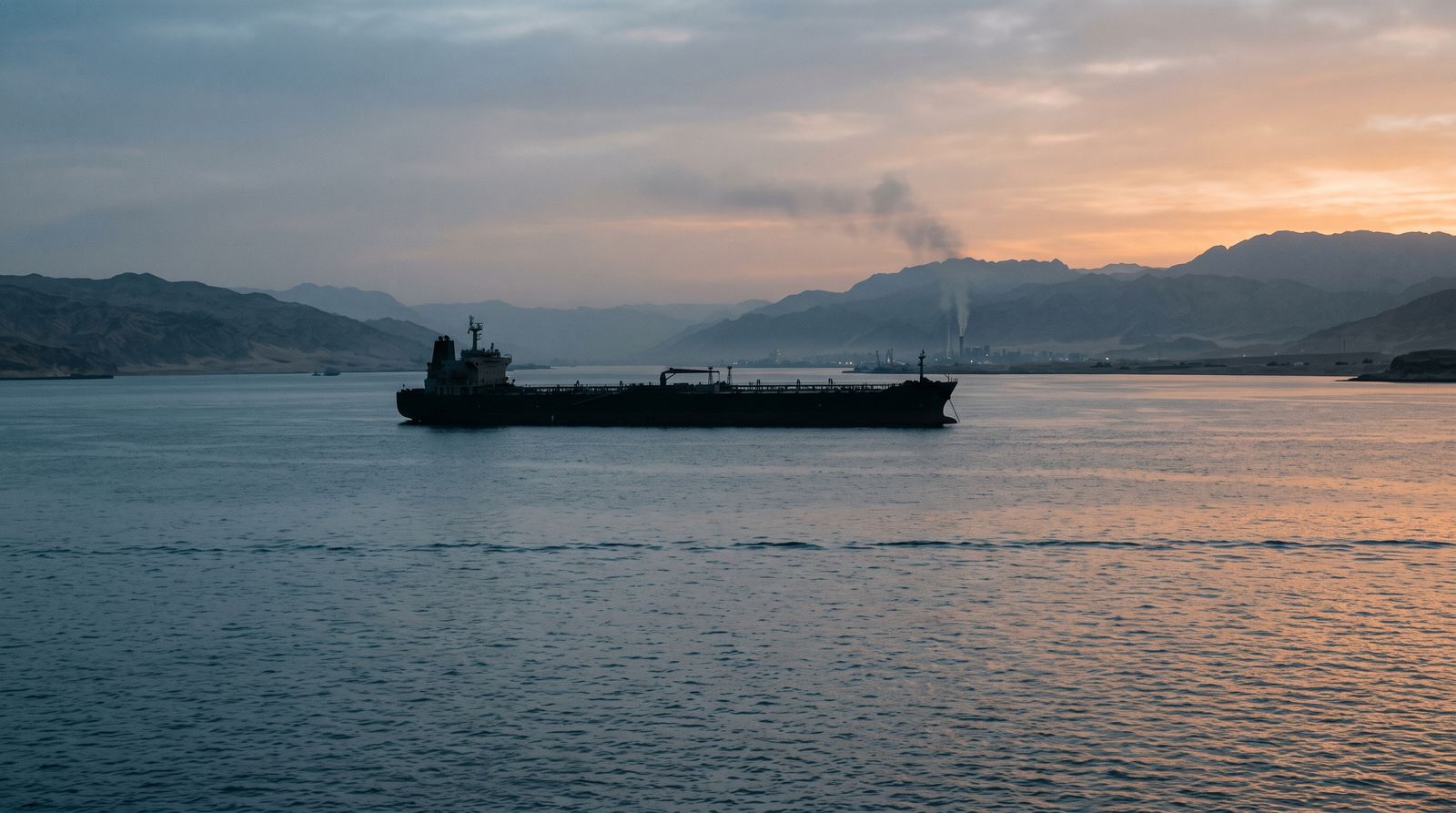
Iran spent Saturday putting a number on its terms. Mohammad Bagher Zolghadr, secretary of the country’s Supreme National Security Council, said the Strait of Hormuz will not reopen until the United States “corrects its behavior” — defined as lifting the naval blockade and sanctions, withdrawing American forces from the region, paying war reparations and releasing frozen Iranian assets.
Hours earlier, the UAE said an Iranian missile had struck a vessel owned by ADNOC, Abu Dhabi’s state oil company, as it transited the strait. There were no casualties. ADNOC says more than a dozen of its ships have been hit by missiles or drones since the war began in February. Qatar and the Gulf Cooperation Council both condemned the strike.
Then on Sunday morning, Yemen’s Houthis claimed a drone strike on Saudi Aramco’s Jazan refinery on the Red Sea coast. Saudi Arabia’s energy ministry said a fire broke out at dawn at one of the facility’s units and was put out by industrial firefighting teams, with no injuries. The $21 billion, 400,000-barrel-a-day plant has been out of service since a July 25 missile-and-drone attack that damaged its gasification complex and an oil storage area; repairs were reported to run into mid-August.
Our take: Friday’s record close was a bet on a quiet Fed. Nothing about the weekend was quiet. Equities read a 23,000-job drop in July as the end of hike risk — but the input that decides Wednesday’s CPI print is energy, and energy just spent 48 hours being shot at. The market’s Hormuz optimism and Iran’s stated conditions are not describing the same negotiation.
Two Irans, one negotiation
Foreign Minister Abbas Araghchi said Saturday that an agreement with Oman on a shipping route was “very close” — inbound traffic through Iranian waters, outbound through Omani waters. That is the version markets have been trading. The security council’s list is the other version, and it is not a shipping arrangement. It is a settlement of the war.
The draft plan published by state outlet Fars sits closer to the second: U.S. and Israeli ships banned outright, other nations that have harmed Iran barred until compensation is paid, and a penalty on violators equal to 20% of the value of the cargo aboard. Brent jumped about 4% to $82.72 the day it appeared, and finished Friday around $83.50.
Why a Sunday fire matters to a Wednesday number
About a fifth of the world’s oil supply moves through Hormuz under normal conditions, and conditions have not been normal since February. July CPI lands Wednesday at 8:30 a.m. ET, and energy is the line that has done most of the damage to the inflation print all year. Stocks rallied 3.6% last week on the theory that a softening labour market takes a September hike off the table. That theory survives a hot CPI only if the heat is not in energy — and the weekend pointed the wrong way.
Worth separating the two threats, because they price differently. An attack on a tanker is a freight and insurance event: it raises the cost of every transit without removing a barrel from the market. An attack on a refinery is a product event. Jazan is 400,000 barrels a day of conversion capacity that was already dark. Crude can be re-routed; refined diesel and gasoline cannot be conjured.
What to watch
- Whether the Oman route gets signed or shelved. Araghchi’s “very close” and the security council’s reparations demand cannot both be the operative position for long.
- Jazan’s restart date. Product cracks move before crude does, and this plant has now been hit twice in a fortnight.
- War-risk insurance on Gulf transits. That premium is the honest read on whether shipowners believe a deal is coming. Headlines are not.
- Wednesday, 8:30 a.m. ET. The July CPI print is the first hard test of a rally built on the Fed staying still.
Markets closed Friday at a record on the argument that the Fed has run out of reasons to hike. The Gulf spent the weekend supplying one.