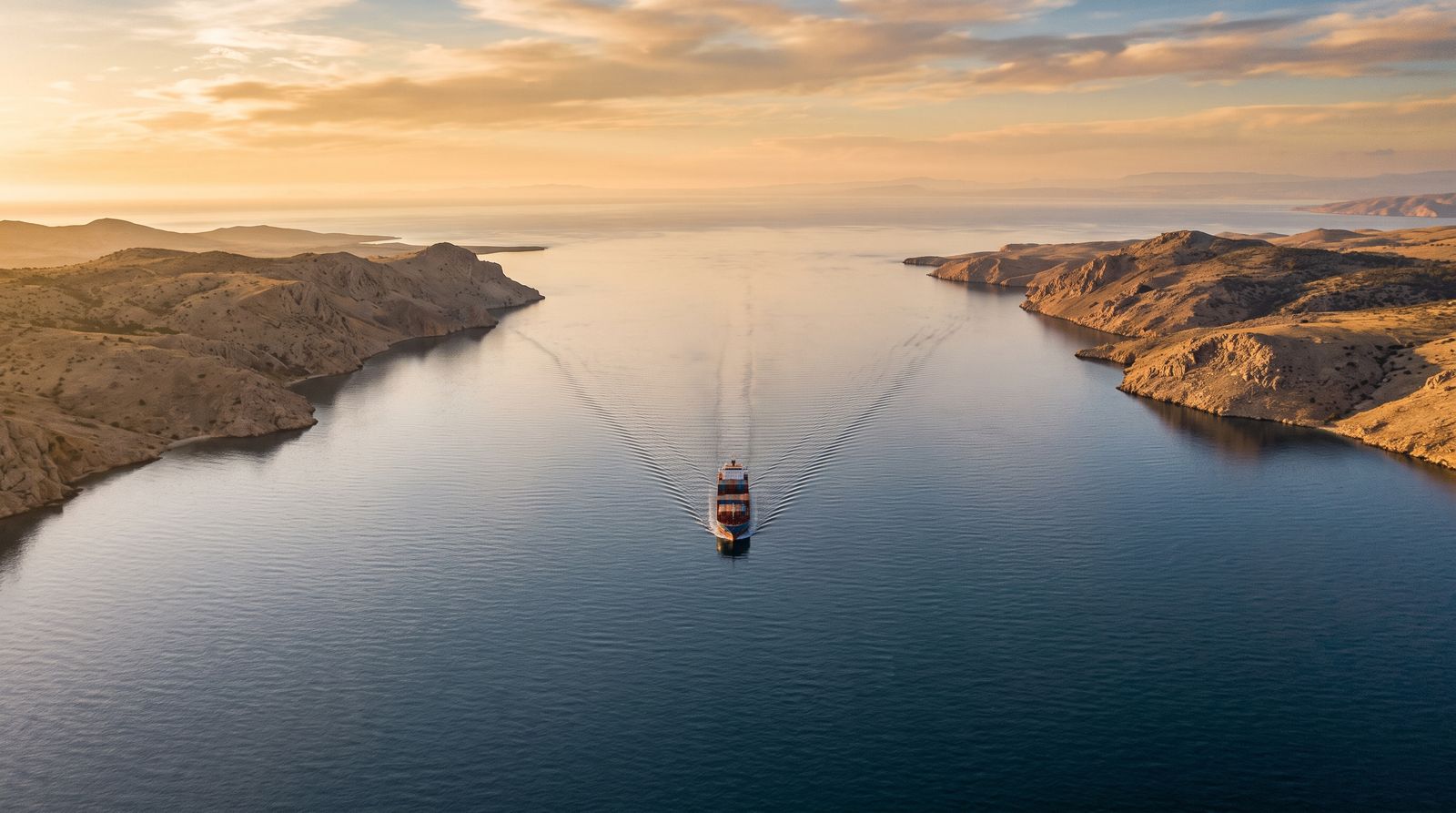
Treasury Secretary Scott Bessent went on CNBC’s “Squawk Box” Tuesday morning and said the quiet part on a timer: “There is a chance we may have a deal today or tomorrow to open the strait.” The terms he described are maximalist — guaranteed freedom of movement for commercial vessels, and no Iranian toll on the traffic.
The tape took him at his word. WTI crude fell roughly 5% to about $76 a barrel after trading above $82 earlier in the session. Brent slipped under $80. The 10-year Treasury yield eased to about 4.64% from 4.68% Monday. With Palantir and Caterpillar earnings already doing the heavy lifting, the S&P 500 set a new intraday record and the Dow held record territory. Exxon and Chevron fell about 2.5% each, which is what winning looks like when you are long the war.
Then there is the other market. On Polymarket, an August agreement on Hormuz was priced better than even — roughly 60%. The contract on strait traffic actually returning to normal by Aug. 31 was trading near 18%. September sits around 31%. And a 39% block of traders is betting shipping does not normalize at all this year.
Our take: Equities are pricing a signature. Prediction markets are pricing a shipping lane, and those are not the same asset. A deal is a document; a reopening is thousands of captains, charterers and underwriters each deciding the odds of being the test case. Insurers move last and unwind slowest — we walked through that mechanic when nobody closed the strait and the insurance market closed it anyway. If you are hedging fuel or freight, the useful trade is not guessing the headline. It is recognizing that the physical market can stay broken for months after the diplomatic one is fixed, and that today’s strip is quoting the fix, not the fixing.
A deal is not a reopening
Kpler data cited by Reuters counted six vessels with active transponders crossing the strait Monday, down from seven Sunday. Normal is north of 100 a day. Bloomberg reported traffic remains at a trickle as attacks on ships keep owners and crews away; a dry-bulk carrier was struck near the strait this week and abandoned. That is the supply side of the reopening, and no communiqué changes it by Friday.
The diplomacy is also fuzzier than the headline. Qatar’s foreign ministry said Qatar, Pakistan and Oman are shuttling draft proposals between Washington and Tehran. Iran continues to deny it is negotiating directly with the U.S. at all, saying its talks are with Oman over managing the waterway — the same denial that followed Monday’s $5 drop in crude. And the core dispute is exactly the clause Bessent ruled out: Tehran wants authority over vessels entering the Gulf and the ability to intervene in outbound traffic.
Which is why the sharpest number on the board is a different contract entirely. Polymarket puts a 70% chance Iran is charging Hormuz transit fees by year-end. Traders are simultaneously betting a deal gets signed and that the no-toll term inside it does not survive to December. That was always the fight — a toll on everything moving through the strait is the asset Iran has been trying to create all summer.
What to watch
- Transit counts, not communiqués. Daily Kpler and Lloyd’s List crossings are the only honest scoreboard. Ten a day is noise; forty is a reopening.
- War-risk premiums. Rates for a Gulf voyage have to fall before tonnage returns. Underwriters will lag the announcement by weeks.
- The toll clause. If any published framework leaves fee language ambiguous, the 70% year-end contract is the tell that the deal is a pause, not a settlement.
- Whether crude holds $76. Give the war premium back twice on the same story and the third headline stops paying.
The honest read on Tuesday: Wall Street bought the promise, and the market whose whole job is pricing ships is still standing on the dock.