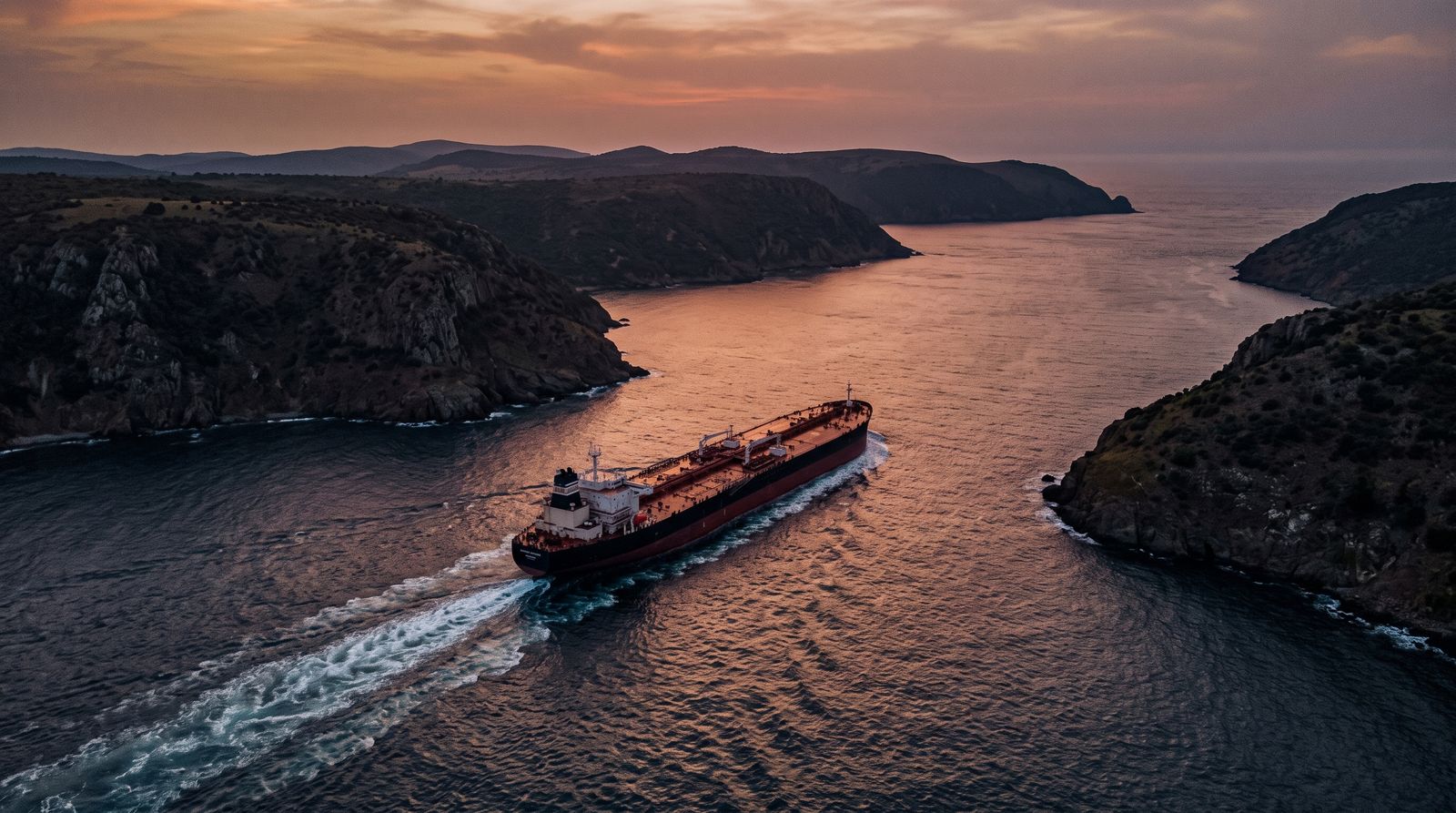
Here is the number that decides how much oil leaves the Gulf this week, and it isn’t Brent. Underwriters are now charging war-risk premiums of 3% to 10% of a vessel’s hull value for a single voyage through the Strait of Hormuz, with roughly 5% emerging as the market norm, according to reporting from The National and figures cited by the Lloyd’s Market Association. Before the war, that number was about 0.25%. For a $100 million tanker, one transit that used to carry a $250,000 insurance bill now costs around $5 million — twenty times more — and as much as $10 million at the top of the range. On a supertanker’s two-million-barrel cargo, the midpoint works out to roughly $2.50 a barrel in hull insurance alone, before hazard pay, rerouting, or the crude itself.
The premium is a live wire, and this week it moved for a reason. Rates had softened after Washington and Tehran signed a memorandum of understanding in June. Then came this month’s re-escalation — and three vessels attacked in a single week, including two UAE-operated supertankers, one strike killing a sailor. “War-risk rates have moved as risk has moved,” is how Neil Roberts, head of marine and aviation at the Lloyd’s Market Association, put it. The LMA’s own line is that cover remains available and that safety fears, not insurance capacity, are what’s cutting traffic — a distinction that matters less than it sounds when the result is the same: transits are down sharply, and some 6,000 seafarers are effectively stranded in the region while the International Maritime Organization works evacuation corridors.
This is the quiet half of the story that Friday’s $88.10 Brent close — up nearly 12% on the week — only partly captures. A strait doesn’t need mines or a formal closure to stop moving oil. It needs a spreadsheet: when the insurance line item alone can erase the margin on a voyage, owners stop sailing voluntarily, which is exactly the behavior the market first saw when Washington floated tolling the strait. And after Friday’s deaths of two US soldiers in Jordan crossed the war’s stated red line, underwriters will reprice before any government announces anything.
Our take: Insurance is the most honest market in this war. Equities trade narratives and oil trades headlines, but a war-risk premium is a cold, priced probability that a specific ship gets hit in a specific stretch of water — and it updates within hours, not at Monday’s open. That makes the premium the leading indicator and Brent the lagging one. Watch the sequence: if 5% becomes the floor rather than the norm, transit counts fall further and the supply shock arrives without a single new strike. The endgame to watch is underwriters pulling cover entirely — at which point governments step in as insurers of last resort, and the cost of the war stops being priced and starts being nationalized.
What to watch
- Tonight’s futures open. The first tape since the Jordan deaths — and the first chance for crude to price what underwriters already have.
- The premium range. Whether the norm holds near 5% or migrates toward the 10% top after this week’s attacks. That number moves before Brent does.
- Transit counts. The honest indicator. Falling crossings at flat premiums means fear is doing the rationing; falling crossings at rising premiums means the market is.
- Government backstops. Any talk of state war-risk cover — the historical tell that private insurance has hit its limit.
- The next hull. Every strike on a commercial vessel reprices the entire strait within hours.