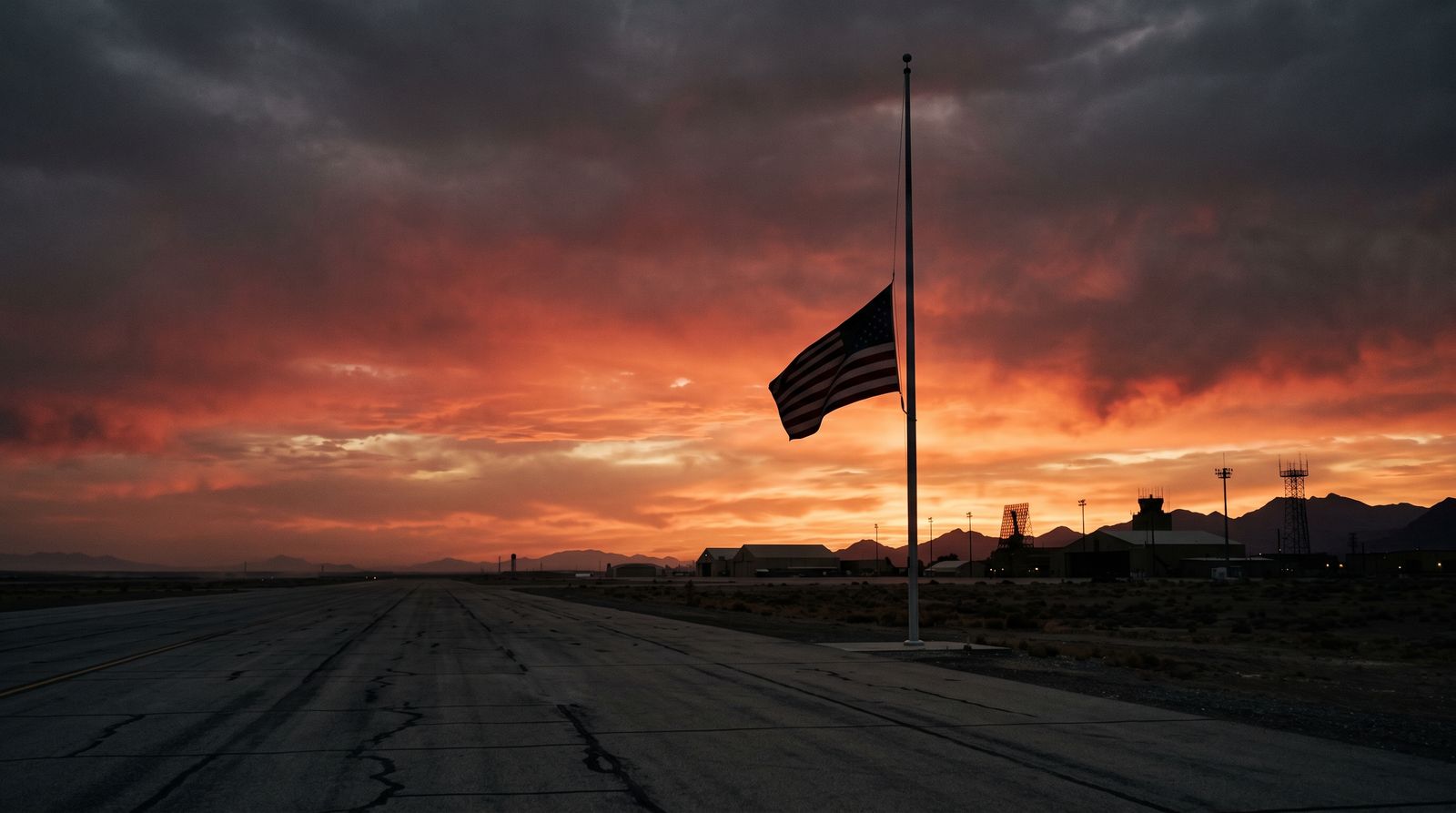
At least two Iranian ballistic missiles got through Friday at Muwaffaq Salti Air Base in Jordan, killing two US soldiers, leaving a third missing in action and sending four more to hospitals, US Central Command confirmed Saturday. US officials told CBS News it was the fourth Iranian missile attack to hit American forces on Jordanian bases in a week — earlier strikes destroyed several helicopters — and Jordan’s army said it shot down 10 Iranian missiles early Saturday. These are the first Americans killed by direct Iranian fire since the opening days of the war.
The response came within hours. CENTCOM ran its eighth consecutive night of strikes on Iran, and the mission statement changed shape: no longer just degrading Iran’s ability to threaten shipping, but to “swiftly punish” the Revolutionary Guard units that killed American soldiers. That word matters, because President Trump had made American deaths his stated trigger for resuming all-out war. The trigger has now been pulled, publicly, and the only open question is how far the escalation runs.
Here’s the market problem: Friday’s tape never saw any of this. The deaths were confirmed after markets closed. Brent settled at $88.10 — up 4.6% on the day from $84.23, capping a week of nearly 12% and its highest close in over a month — on infrastructure strikes, not on dead soldiers. Equities were already flinching at the margin, with the S&P 500 down 1.01% Friday to 7,457.69 and the Nasdaq off 1.4%, their worst week in months. Meanwhile the strait itself has become a two-sided shooting gallery: CENTCOM says it disabled a Curacao-flagged tanker, the M/T Belma, for trying to run its “steel wall” blockade, while ships crossing last week drew Iranian fire for using routes Tehran hadn’t authorized. Crypto, the only market open all weekend, sagged through it, with bitcoin drifting in the $63,000s.
Our take: Dead infrastructure and dead soldiers are different asset classes of risk. A strike on a desalination plant changes the probability that supply gets hit; American deaths compel a political response with a domestic constituency behind it — escalation stops being a choice and starts being a schedule. Two things cannot both be true at Monday’s open: equities treating this as an energy-sector story, and oil pricing open-ended escalation. And the calendar is merciless — the Fed is in blackout until July 28–29 and the earnings that could change the subject don’t land until Wednesday night. Between now and then, there is no scheduled institutional voice to calm anything. The war is the only programming.
What to watch
- Sunday evening futures. The first print on the deaths. Watch whether crude gaps toward $90 and holds it, and how hard equity futures open down.
- The shape of US retaliation. Strikes so far target shipping-threat capability. A shift toward leadership or economic targets is a different war — and a different oil price.
- The missing soldier. A recovery and a capture lead to very different political timelines.
- War-risk premiums and tanker counts. The strait doesn’t need to close to stop traffic; it needs to become uninsurable. Transit numbers are the honest indicator.
- Wednesday night. Whether Alphabet and Tesla earnings can pull the market’s attention back — or get run over by the war tape.