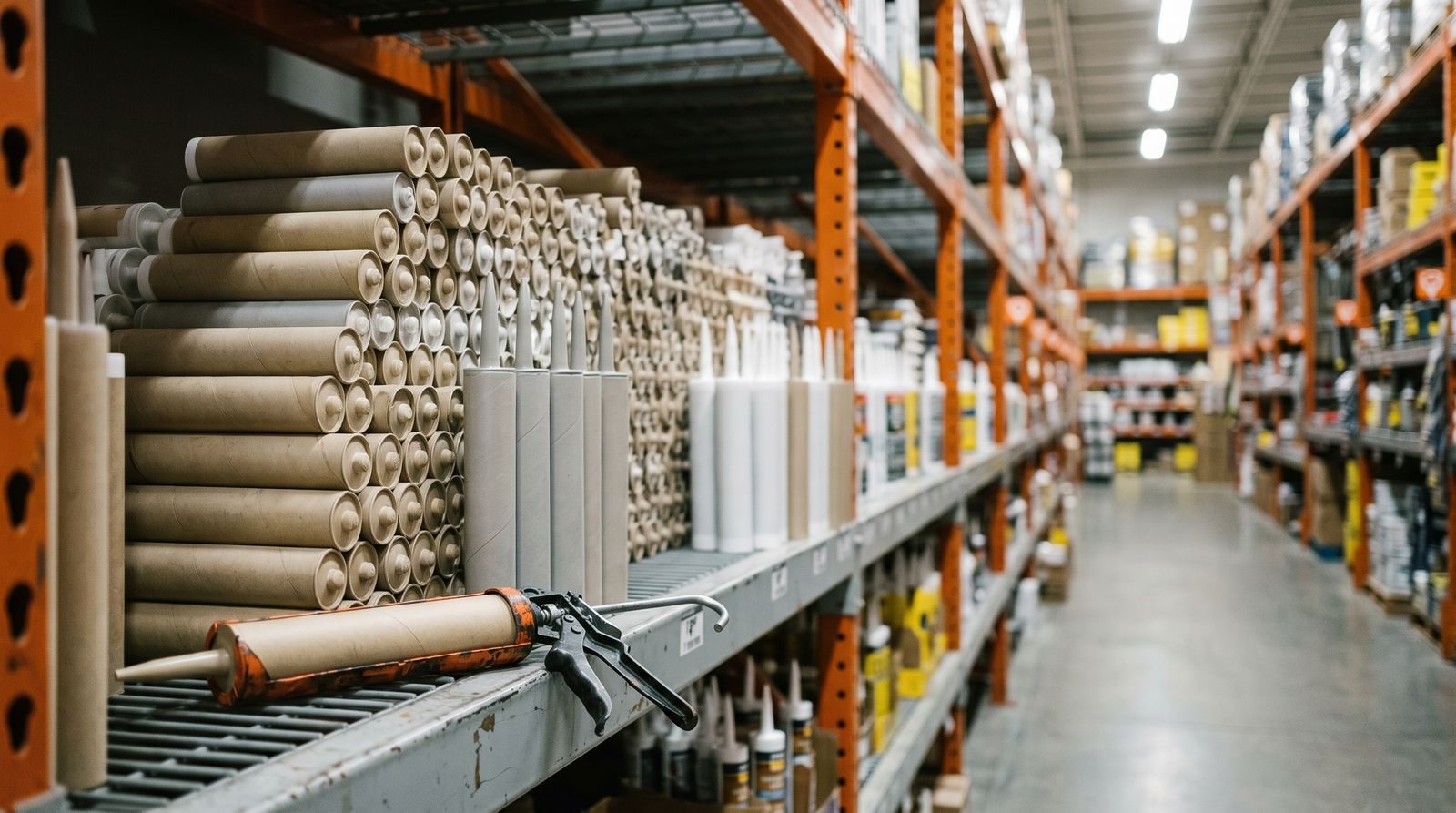
A federal judge has blocked Henkel from buying Liquid Nails. Judge Katherine Polk Failla of the US District Court for the Southern District of New York entered an order on 14 August enjoining Henkel’s $725 million purchase of A-Paint Topco — the Liquid Nails parent — from private equity owner American Industrial Partners, following a bench trial in Manhattan in July.
The Federal Trade Commission sued in December to stop it. Its argument: Henkel already owns Loctite, and Loctite and Liquid Nails are the two dominant construction-adhesive brands on the shelves at Home Depot, Lowe’s and Ace Hardware. “They are the Coke and Pepsi of the adhesive world,” an FTC lawyer told the court at the start of trial. The agency put the combined retail share at roughly 80% and said the deal would mean higher prices, lower quality and slower innovation for contractors and homeowners alike.
What the judge actually concluded is not public. The findings of fact and conclusions of law were filed under seal, with the parties directed to propose redactions on or before 11 September. The outcome is known. The reasoning is not.
Why a glue case matters
The contested question at trial reached well past adhesive. Can a manufacturer’s market power be measured by the share of shelf space it occupies within a category at chain retailers, when the same product also sells through non-retail channels? Henkel said no, and spent the trial arguing that the leverage in the relationship sits with the big-box buyers, who can delist a vendor at will. The FTC said yes, and argued that a supplier holding most of a category’s shelf has plenty of sway of its own when the negotiation starts.
Our take: $725 million is a rounding error for a company Henkel’s size, which is precisely why this one is worth your attention. The FTC did not pick a mega-merger. It picked a small deal in a dull category and attached it to the most politically live number in the country — what it costs to build a house. If the sealed opinion turns out to endorse the shelf-space market definition, the agency has a cheap, repeatable template for paint, fasteners, sealants, roofing, anything where two brands own an aisle. Deal lawyers will be reading the September unsealing more carefully than they read most Supreme Court opinions.
There is a second-order message here, and it is aimed at private equity. American Industrial Partners bought Liquid Nails to sell it, and the natural buyer for a category number two is the category number one. When antitrust closes that door, the sponsor is left with a longer hold, a smaller buyer pool, and an exit that has to come from operations rather than from strategic scarcity value. That maths now applies across every consolidated consumer-goods niche in a sponsor’s portfolio.
What to watch
- 11 September. The redaction deadline. The unsealed opinion is the only thing that tells you whether Failla accepted the shelf-space theory or blocked on narrower, deal-specific grounds — and those are very different precedents.
- Appeal or walk. Henkel can take it to the Second Circuit or take the loss. Merger challenges of this size usually end with the acquirer walking; the clock and the cost rarely justify the fight.
- What AIP does next. A second auction, a recapitalisation, or a longer hold. Each says something different about how sponsors are pricing antitrust risk into exit plans.
- The next building-materials case. If the FTC files another one in the same theory within a quarter, the template is real.
Merger enforcement is usually argued over billion-dollar tech platforms and read as a proxy war about market power in the abstract. This one was argued over caulk tubes and won in a Manhattan courtroom on a question about shelf space. The unglamorous cases are the ones that set the rules everybody else has to plan around.