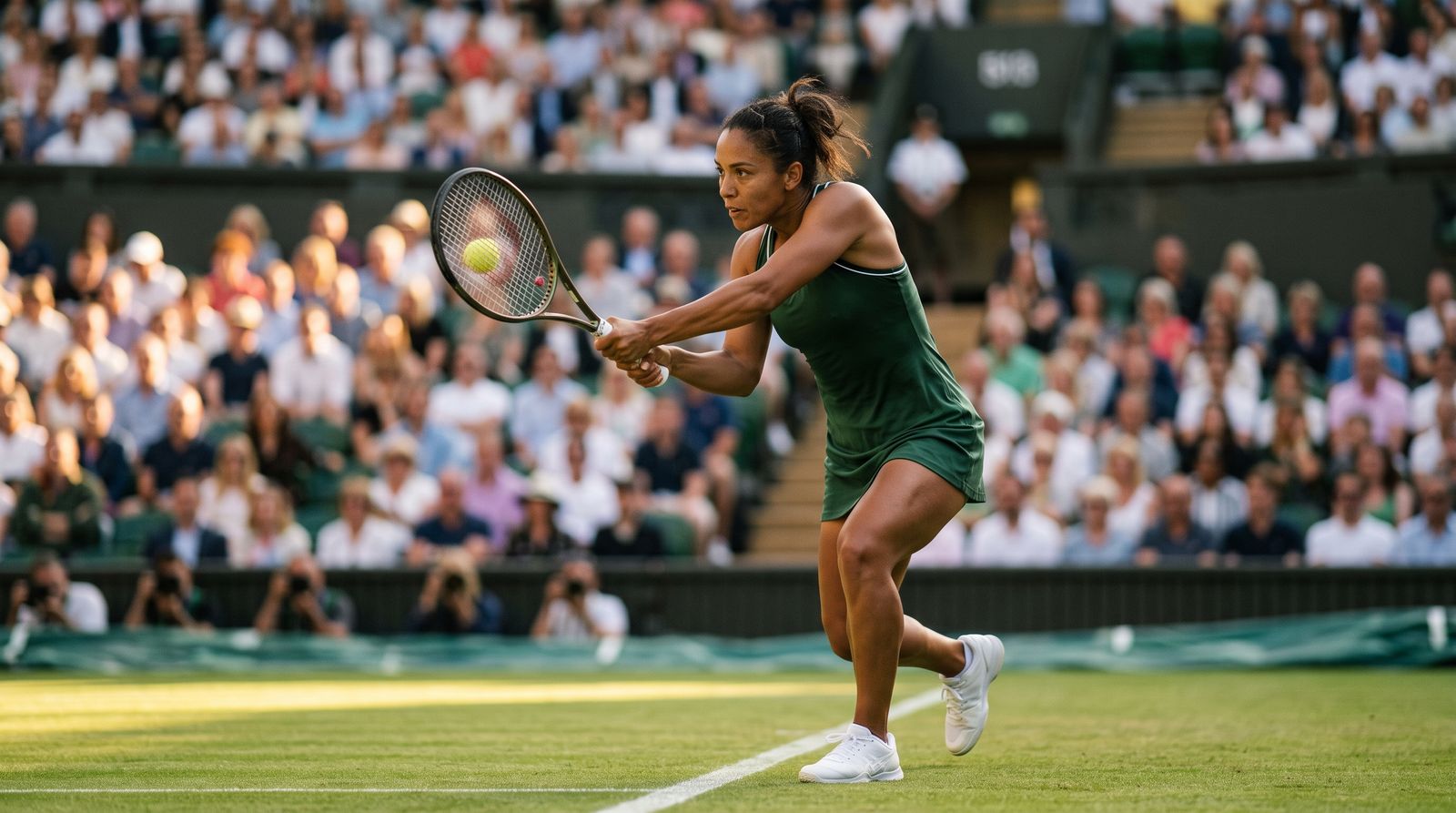
On Centre Court on Tuesday, seventh-seeded Coco Gauff lost the first set to fourth seed Jessica Pegula, then won the next two to close out a 4-6, 6-3, 6-3 comeback and reach the Wimbledon semifinals for the first time in her career. The score is not the remarkable part. The surface is. Grass is the only surface on which Gauff — already a two-time Grand Slam champion on hard and clay — has never won a title, and she came into these Championships without a grass-court win in two years.
She turned the match on the part of the game that travels worst to grass: the return. Gauff converted all five break points she earned; Pegula took three of seven. Down a set, she stopped forcing and started grinding, and an opponent who had controlled the opening 40 minutes suddenly could not hold serve.
“Honestly, pretty insane,” Gauff said on court afterward. “Considering I hadn’t won a match on grass in two years before this tournament. I’m definitely just really happy with how I played today.” She walks into the last four against Karolína Muchová, who ended another feel-good run at these Championships — Naomi Osaka’s — with a 7-6(4), 6-4 win of her own. Gauff leads their head-to-head 6-1.
Our take: The lesson here has nothing to do with tennis. Gauff had already won majors on hard and clay; grass was the one thing that kept beating her, to the point she hadn’t won a match on it in two years. She didn’t route around that weakness and lean harder on what already worked — she walked straight back into it, and when Tuesday started badly, she adjusted instead of pressing. That is the opposite of how most high performers operate. We compound our strengths and quietly avoid the thing we’re bad at, right up until a high-stakes moment drags it into the open. The durable edge is unglamorous: go work on your worst surface, and keep your composure when the scoreboard says the plan hasn’t paid off yet.
What to watch
- Muchová’s variety. The Czech just out-crafted Osaka on grass with slice, angles and a cool head in the tiebreak. That mixed-up game is exactly the kind of puzzle that has troubled Gauff on this surface before.
- The full set. Win two more and Gauff owns a title on every surface — and a first Wimbledon final. That is the difference between a great career and a complete one.
- A blown-open draw. World No. 1 Aryna Sabalenka is already out, beaten by Osaka earlier in the week. The top of the bracket is gone. This is the softest path to a Wimbledon title Gauff is ever likely to see.
Two years without a grass-court win, and now two matches from the trophy. The talent was never the question. The willingness to keep losing on her worst surface until she stopped — that was.