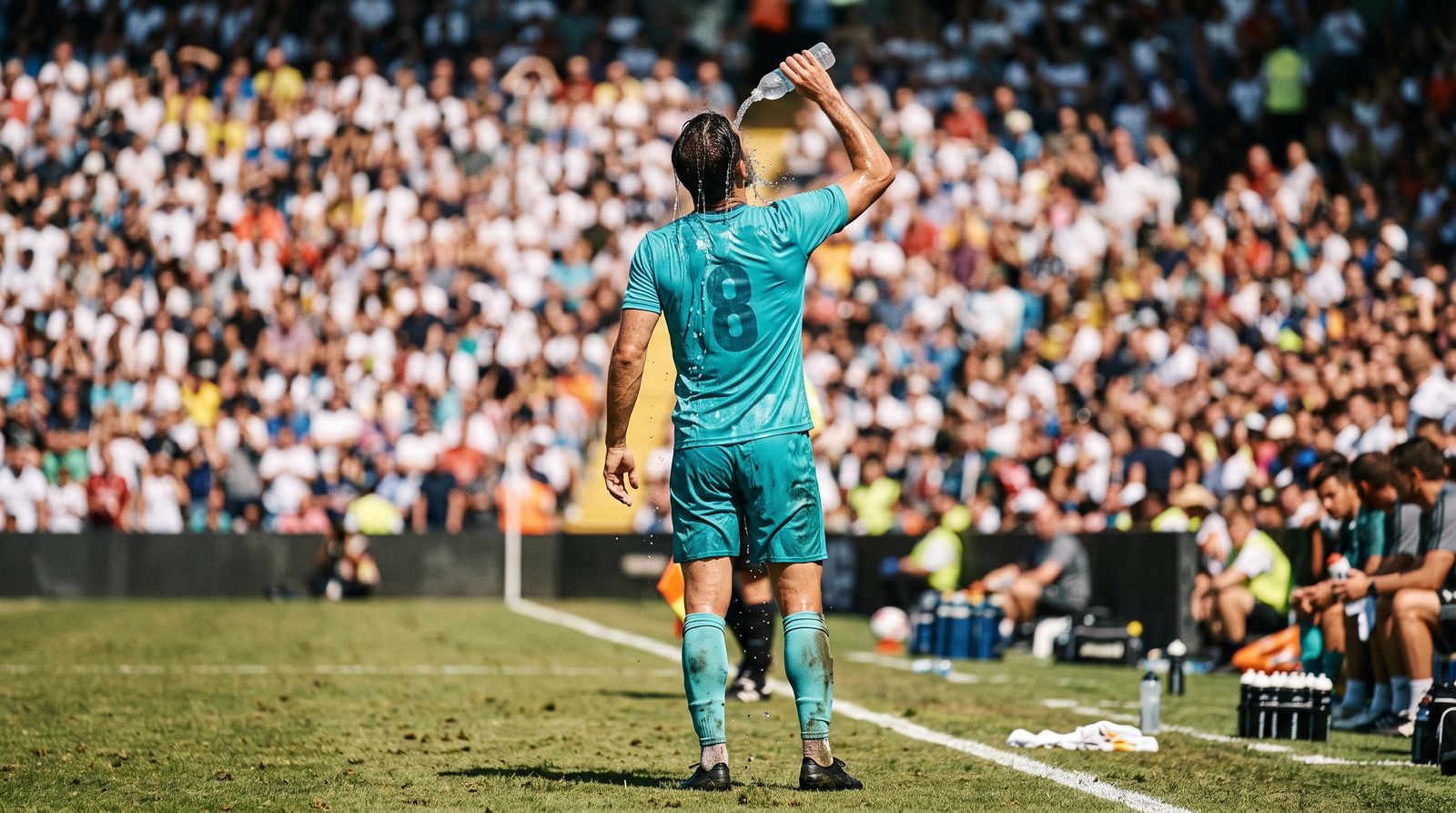
The biggest opponent at the World Cup this weekend isn't wearing a kit. This afternoon's knockout match between France and Paraguay in Philadelphia lands under an extreme heat warning that runs through tonight, with forecasts near 100°F plus the kind of humidity that pushes the feels-like reading well past it. Multiple forecasters say it could be the hottest match of the entire tournament — played in an open-air stadium in front of tens of thousands of fans.
The backdrop is historic. The heat dome parked over the eastern half of the country put more than 185 million Americans under heat alerts on Friday, with over 100 record highs and more than 200 record-warm overnight lows expected through Saturday. New York's Central Park hit 100°F, tying a mark last reached in 1966; Philadelphia and Washington are flirting with all-time records near 106°F. Heat indices across the corridor are running 105–115°F. This is the same weekend 72 million Americans are traveling — most of them into the hottest air of the year.
FIFA is adapting in real time: an extra water break per half, two mandatory three-minute hydration stops per match, and air conditioning installed on the sidelines. Earlier this week, French players cooled off under field sprinklers during a 90°F match in New Jersey. Colombia's squad has been wearing ice vests during breaks; Portugal's players favor chilled neck collars; kit suppliers have shipped teams cooling vests, insulating over-jackets, and even gel-packed overshoes to pull heat out of swollen feet.
Heat is a performance tax — on everyone
Here's why this matters beyond soccer. Heat degrades human output the same way it degrades a data center: the harder the system works, the more capacity gets diverted to cooling. When core temperature climbs, your cardiovascular system splits its budget between working muscles and skin-level heat dumping — so the same effort costs more, decision-making dulls, and recovery slows. Elite sport doesn't treat that as weather. It treats it as a measurable tax and engineers around it: pre-cooling before exertion, hydrating on a schedule instead of by thirst, shifting intensity to cooler hours, and cutting session length rather than skipping entirely.
What to steal from the pros
You're not playing 90 minutes in Philadelphia today, but the same physiology runs your holiday run, your yard work, and your Tuesday. The playbook transfers almost one-to-one: cool the body before stress, not just during. Schedule the hard thing early. Take the mandated break even when you feel fine — the pros do it at minute 30, not when they cramp. And treat sleep in a hot bedroom as the hidden variable: recovery is where the performance sleep protocol earns its keep in a week like this. The same logic — protect capacity before you spend it — is why we build deep-work hours around energy, not willpower.
Our take: Watch what the teams do, not what the broadcast says. Ice vests, scheduled breaks, and pre-cooling are boring, cheap, and they work — which makes them a perfect metaphor for most performance gains. Nobody's edge this weekend comes from trying harder in the heat. It comes from refusing to negotiate with physiology. The tournament just turned that into must-see TV.
What to watch
- Today's Philadelphia match. If conditions force extended breaks or substitutions spike, expect louder calls to move future kickoffs to evening slots.
- FIFA's scheduling response. The hydration-break rules are already controversial; a heat-related incident would make kickoff times the story of the tournament.
- The grid and the records. Two hundred record-warm nights is the stat to remember — overnight lows, not afternoon highs, are what break recovery for athletes and everyone else.
- Your own weekend plans. The heat dome holds through the weekend in much of the East. Early mornings are the arbitrage.