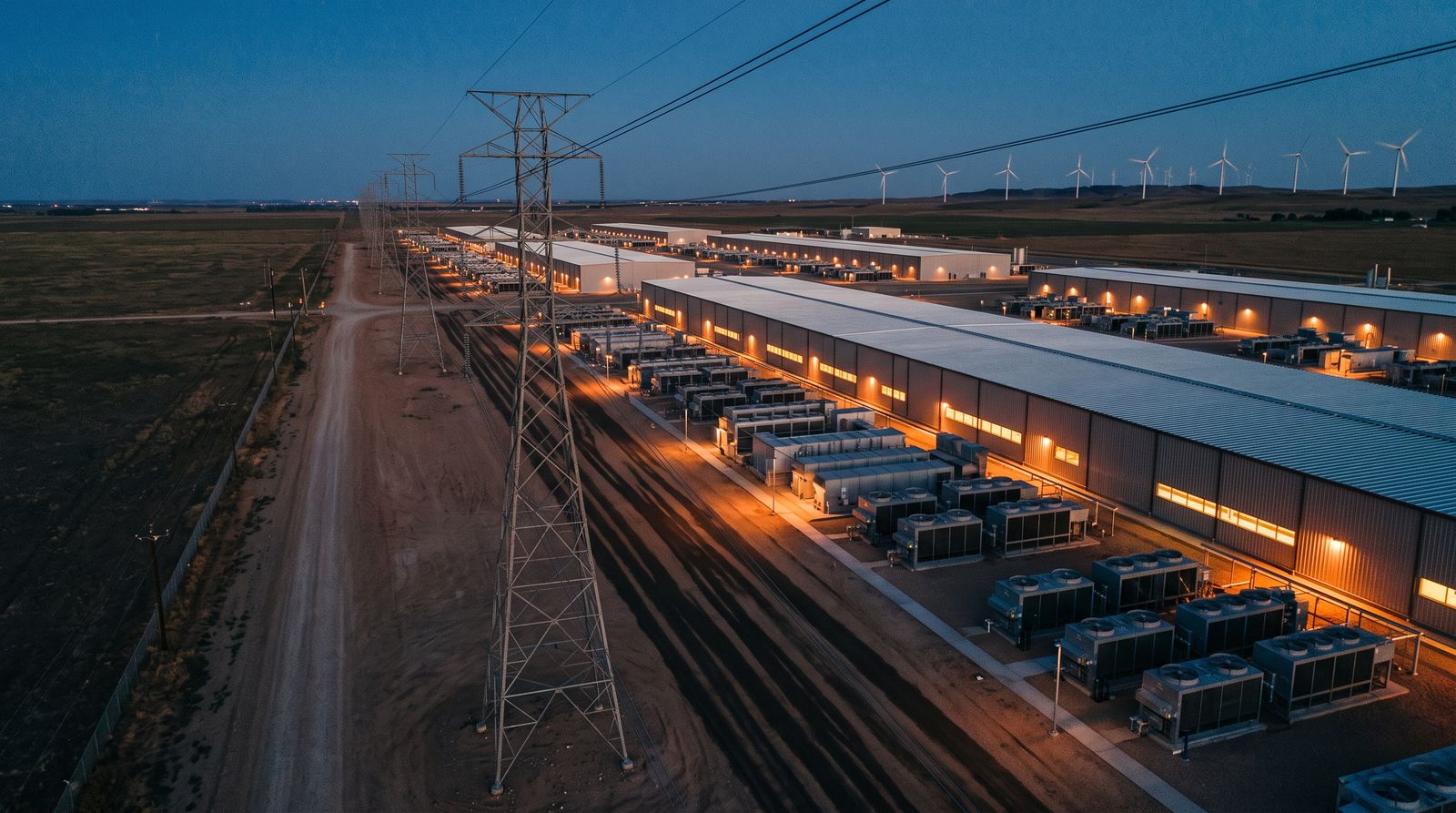
Forget leaderboards. The most honest AI benchmark of the week is a line item in Google's 11th annual Environmental Report, released Monday and still rippling through coverage today: electricity demand up 37% in 2025 — the largest annual load growth in the company's history. That's Search, YouTube, Cloud, and above all the data centers training and serving Gemini, all drawing from one meter that just spun faster than it ever has.
The headline Google wants you to take away is that it absorbed that surge while cutting operational emissions 2% and matching 100% of its electricity with renewable purchases for the ninth straight year. The machine behind that: more than 240 clean-energy agreements since 2010 totaling nearly 35 gigawatts, including over 12 GW of net-new deals signed in 2025 alone — enough, by Google's own math, to power Greece for a year once it's all operational. Add data centers that run on 83% less overhead energy than the industry average, and the company estimates its efficiency-plus-procurement playbook avoided 58 million metric tons of CO2 last year — without it, it says its footprint would have been five times larger.
Then comes the paragraph the press release buries: supply-chain emissions rose 25% year over year. Building AI infrastructure — the concrete, the steel, the silicon fabbed on Asia-Pacific grids still starved of carbon-free power — is getting dirtier even as operating it gets cleaner. Google's own framing is unusually blunt: its AI buildout is "accelerating faster than the grid is decarbonizing," and its net-zero and 24/7 carbon-free "moonshots" are getting harder, not easier. You can green the electrons you consume. You can't yet green the ones your suppliers pour into making your chips.
Electrons are the new GPUs
Read this report as strategy, not sustainability. Fifteen years of power-purchase agreements have become a moat: Google can grow load 37% and still hold its operational line because it locked up clean capacity before the AI rush made every megawatt a bidding war. It's now catalyzing nuclear restarts, enhanced geothermal, and fusion bets to keep that edge. Rivals starting their procurement clock today are joining an arms race where the chips are increasingly vendor-financed, entire national economies are being wagered on the buildout, and model prices keep collapsing — which means the margin, and the constraint, migrates to whoever controls the power.
Our take: The binding constraint of the AI race is shifting from GPUs to grid interconnects, and this report is the receipt. Google disclosing its biggest load jump ever while bragging about 12 GW of new supply isn't a contradiction — it's the new playbook: energy procurement as competitive weapon. The 25% supply-chain number is the part that won't bend to playbooks, because it's physics and geography: the fabs and construction sit on grids Google doesn't control. Watch for energy disclosures to become the earnings-call metric that model benchmarks never quite managed to be. When the power bill is the moat, everyone will have to publish one.
What to watch
- The other hyperscalers' reports. Microsoft, Meta, and Amazon all face the same load curve. Whether anyone else decouples emissions from a 30%-plus growth year tells you who did their power shopping early.
- Interconnection queues. Google flagged grid-connection waits, fragmented markets, and permitting as the real rate limiters. If those don't clear, buildout timelines slip no matter how many GPUs ship.
- Asia-Pacific supply chains. The 25% jump lives in fabs and construction on undersupplied grids. Clean-energy deals following the silicon eastward would be the first sign the number can turn.